



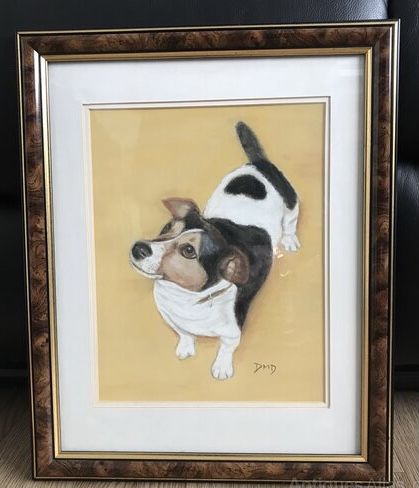


Antique Dog Picture Portrait
An antique dog picture portrait captures canine character through the centuries, offering collectors a direct link to historical pets and sporting animals.
Antique Dog Picture Portrait
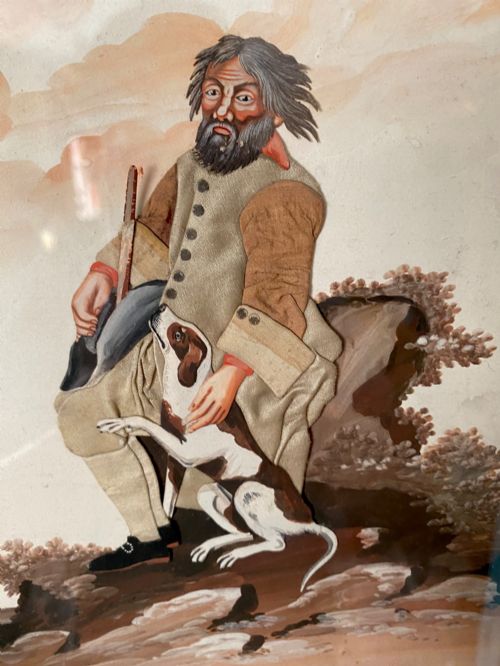
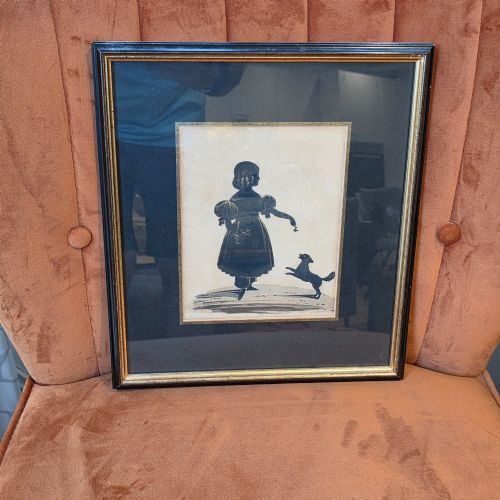
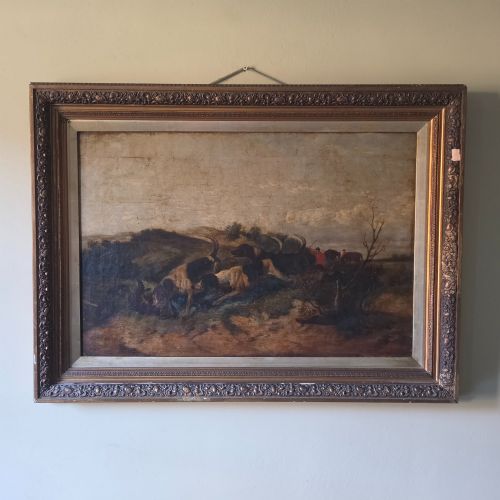
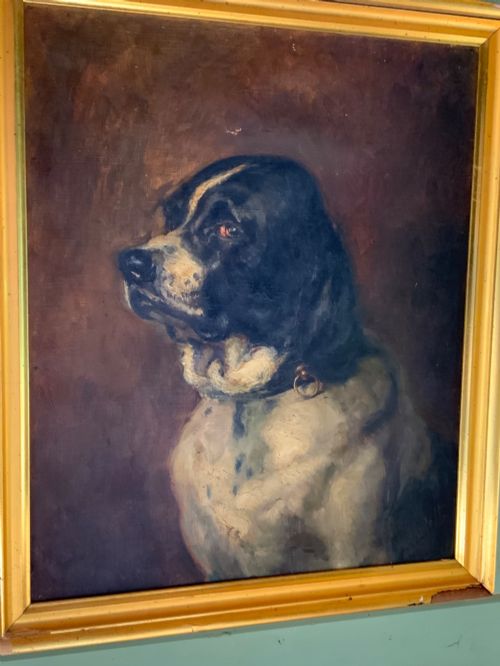
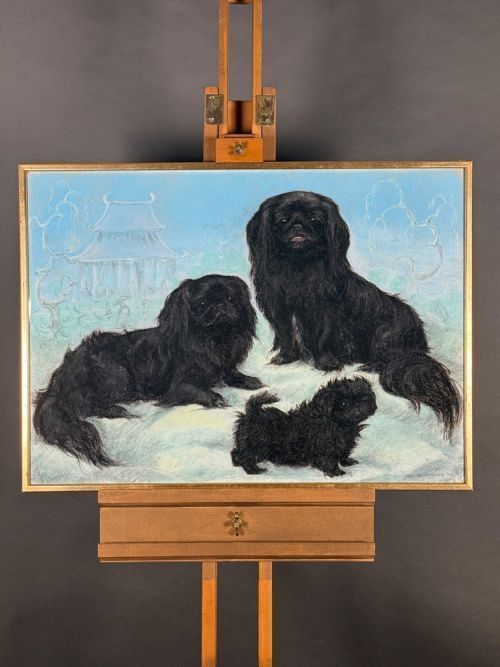
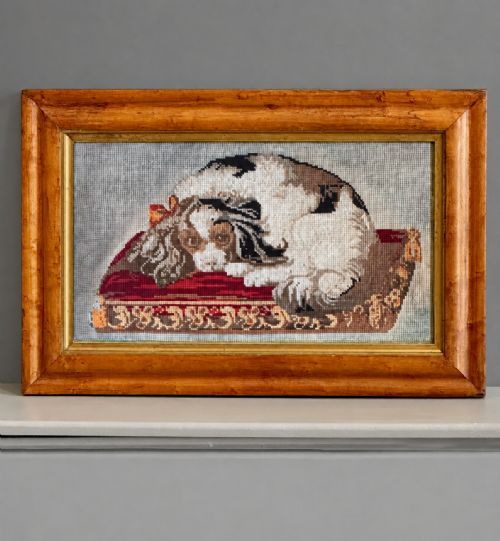
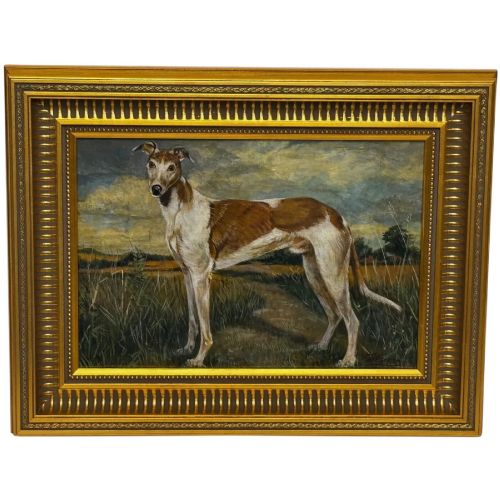
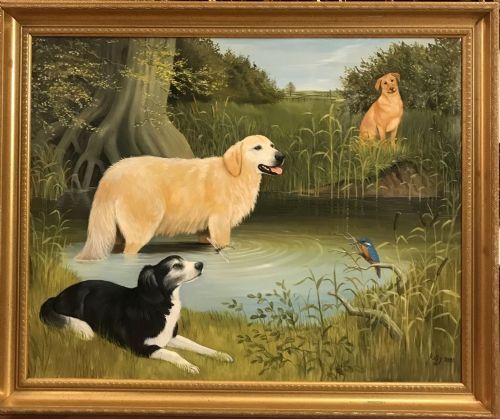
An antique dog picture portrait encompasses oil paintings, watercolours, pastels, silhouettes, and needlework spanning from the Georgian and Victorian eras into the twentieth century. These artworks record specific breeds, working dogs, and beloved family pets within landscapes or domestic interiors.
The most common examples encountered in this selection are nineteenth-century oil paintings and watercolours, often depicting sporting dogs, terriers, and spaniels in the manner of popular animal painters of the period.
Materials and technique
Artists relied primarily on oil paint applied to canvas or wood panels, alongside watercolours on paper and pastel drawings, frequently mounted in period gilt, wood, or burr maple frames.
Techniques range from highly detailed academic animal portraiture to folk art collages, cut paper silhouettes, and Berlin work needlework.
Antique Dog Picture Portrait Retail Price Guide 2026
Typical asking prices for dog picture portrait among the pieces listed under this phrase on Sellingantiques today, from the lower quarter to the upper quarter. They describe what is for sale here now, not the wider market.
Listings feature works spanning the 18th, 19th, and 20th centuries, executed in oil, watercolor, pastel, etching, and needlework.
Distinctions in execution
Quality rests upon the artist's ability to render canine anatomy, texture of coat, and individual expression convincingly rather than relying on generic formulas.
The sophistication of the surrounding landscape or interior, the preservation of the original medium, and the integrity of the frame contribute significantly to the standing of a piece.
William James Hubard·John Emms·Arthur Wardle·Samuel Raven·Sir Edwin Landseer·Colin Graeme Roe·Henri Schouten·Tom Carr·Charles Burton Barber·Herbert Dicksee·Thomas Blinks·John Parry·Samuel Fulton·Augustin Edouart
The Antique Dog Picture Portrait Glossary
- Berlin work
- A style of nineteenth-century needlework using wool on canvas, often following a charted design to create coloured pictures of animals.
- Gouache
- An opaque water-based paint that provides solid areas of colour and sharp detail in works on paper.
- Chromolithograph
- A multi-colour printmaking process used to reproduce paintings with high fidelity during the Victorian period.
- Etching
- A printmaking technique where lines are bitten into a metal plate with acid to hold ink for impression on paper.
- Folk art
- Self-taught artistic production that prioritises direct expression and pattern over academic rules of perspective and proportion.
Antique Dog Picture Portrait: Frequently Asked Questions
How do I identify the age of a dog portrait?
Examine the stretcher frames, the backing materials, and the style of the mounting for clues that match historical framing practices. The painting technique and pigment composition also offer firm chronological indicators.
Familiarise yourself with the prevailing costume of any human figures and the specific dog breeds popular during particular decades, as breeding standards shifted noticeably from the Regency period onward.
Are these works usually signed by the artist?
Many fine art oil paintings and watercolours bear signatures, monograms, or studio inscriptions, though a significant portion of folk art, naive pieces, and silhouette work remains anonymous.
Attributions are often established through stylistic comparison with documented works by established animal painters of the nineteenth and early twentieth centuries.
How should I care for antique works on paper?
Keep watercolours, pastels, and silhouettes away from direct sunlight to prevent fading of the pigments and discolouration of the paper support. Maintain stable humidity levels to protect both the artwork and the original framing.
Ensure that paper pieces are glazed with appropriate protective glass and sealed properly at the back to prevent dust and moisture ingress.
What is the difference between sporting art and pet portraits?
Sporting art focuses on working animals such as hounds, gundogs, and terriers actively engaged in the field, hunt, or shooting party alongside handlers and landscape elements. Pet portraits concentrate on individual domestic companions, often posed formally within a home environment to highlight their personality.