





Antique Document Safe
An antique document safe provides secure storage for paper and valuables, combining heavy-duty construction with period craftsmanship.
Antique Document Safe
An antique document safe is a secure receptacle designed to protect important papers, deeds, and currency from theft and fire. When you search for an antique document safe, you encounter a wide variety of forms ranging from heavy iron strongboxes to disguised wooden caskets.
The most common examples on this page date from the Victorian period through to the early twentieth century, utilising robust metals and sturdy timbers. These pieces often feature complex locking mechanisms, including original steel locks, combination dials, and patent systems.
How they were made
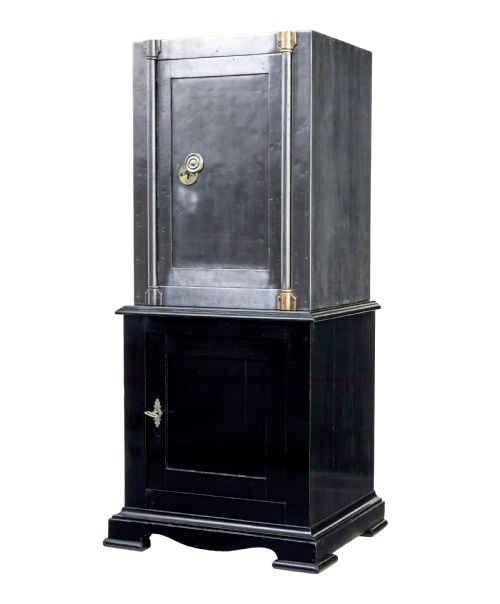
The construction of an antique document safe relies heavily on durable metals such as cast iron, polished steel, and brass. Blacksmiths and manufacturers forged these materials to create impenetrable outer shells and heavy doors capable of withstanding physical intrusion.
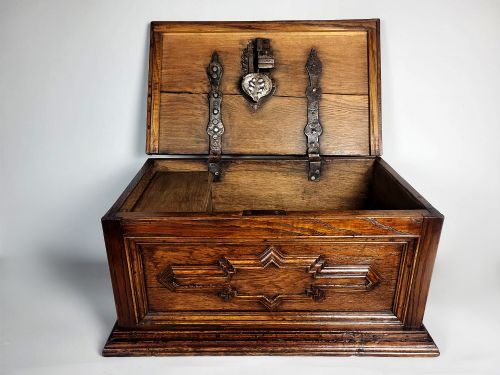
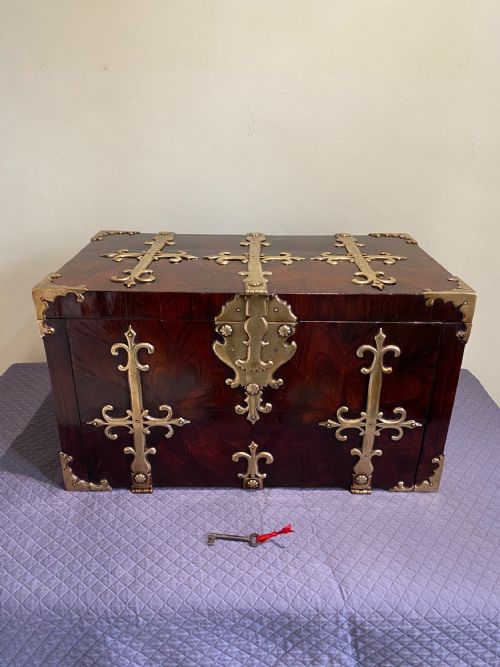
Wooden examples utilise dense timbers like oak and mahogany, often reinforced with internal metal plates or secured with intricate brass and steel locking mechanisms. Decorative versions incorporate fine details such as hand-painted finishes, tooled leather, and kingwood veneers to mask their protective function.
Listings feature document safes spanning the seventeenth century to the mid-twentieth century, constructed from iron, steel, oak, and mahogany.
What varies in quality
The quality of an antique document safe is determined by the sophistication of its locking mechanism and the integrity of its materials. Examples featuring complex original steel locks, dial combinations, or patented systems represent a higher grade of manufacture.
Execution of the outer casing also distinguishes finer pieces, whether through the precision of cast iron forming, the hand-painted decoration on wood, or the quality of tooled leather on faux book caskets. The presence of makers' names and fully restored internal fittings adds further distinction.
Milners of Liverpool·George Price
The Antique Document Safe Glossary
- Strongbox
- A heavily secured box or chest, typically made of iron or steel, used for storing money and valuable documents. These often feature reinforced corners and multi-bolt locking systems.
- Deed box
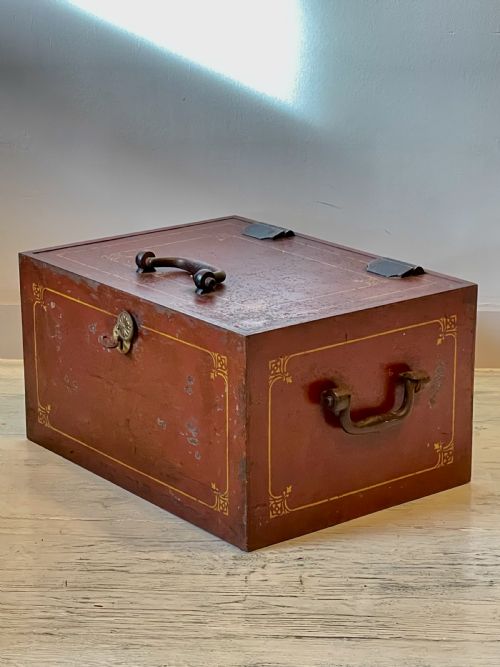
- A portable storage container traditionally used by legal professionals and landowners to hold land deeds and important papers. They are commonly constructed from painted iron, steel, or mahogany.
- Cofre forte
- A French term for a strongbox or safe, frequently encountered on decorative or luxury storage pieces. These often exhibit refined cabinetwork and exotic wood veneers.
- Patent safe
- A secure storage box manufactured under a formal patent, indicating an innovative locking or fire-resistant design. Milners is a notable producer associated with this category.
Antique Document Safe: Frequently Asked Questions
How do I open an old document safe?
Opening an antique document safe depends entirely on its locking mechanism, which may require a specific key, a combination dial, or a sequence of hidden levers. Many historical pieces survive with their original operational keys or functional combination settings.
If a mechanism is stuck or lacks a key, professional locksmiths experienced in antique hardware can often pick or decode the lock without damaging the surrounding metal or wood.
Are these safes fireproof?
While nineteenth-century and later metal safes often incorporated rudimentary fire-resistant packing between their double walls, their modern fire ratings cannot be guaranteed. Over time, insulating materials inside the panels can degrade or retain moisture.
Collectors view these pieces primarily for their security against theft, their historical mechanisms, and their decorative appeal rather than certified modern fire protection.
Where were these safes used?
Antique document safes were essential fixtures in Victorian counting houses, legal offices, banks, and wealthy domestic households. Bankers, merchants, and goldsmiths relied on them to store currency, ledgers, and trade secrets.
Smaller decorative versions and faux book safes were often kept in private studies, libraries, or ladies' chambers for personal correspondence and keepsake storage.
How do I clean and maintain the metal?
Maintenance of iron and steel surfaces involves removing light surface dust with a soft brush and applying a microcrystalline wax to prevent oxidation. Avoid abrasive cleaners or harsh chemical solvents that can strip original patination or painted finishes.
Moving parts and internal locks benefit from a very light application of appropriate oil to keep the mechanisms functioning smoothly without gumming up the internal levers.