

Antique Dining Centrepiece
An antique dining centrepiece anchors a formal table, bringing height, sparkle and conversation to the room.
Antique Dining Centrepiece
An antique dining centrepiece serves as the ornamental focal point of a formal table setting, drawing the eye down the length of the dining room. When searching for an antique dining centrepiece, buyers encounter an array of stately forms designed to command the surface of the table.
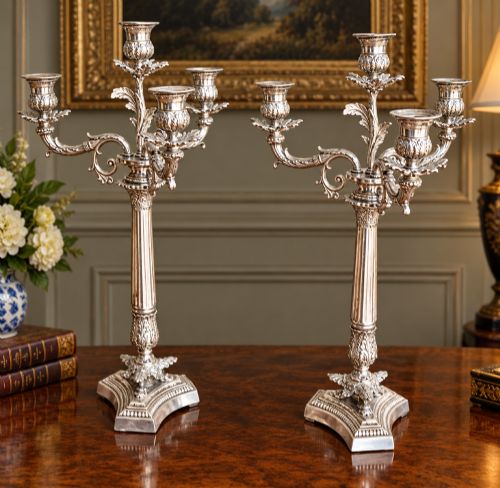
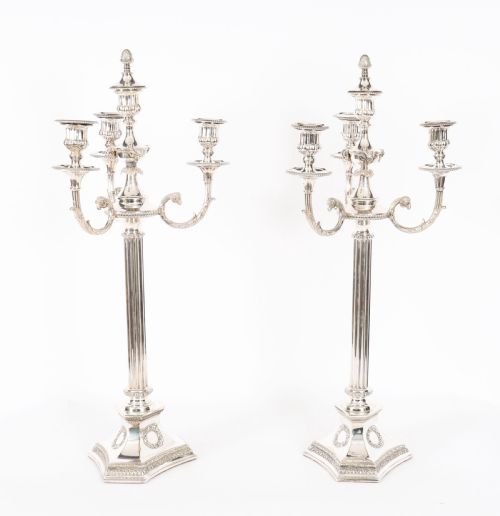
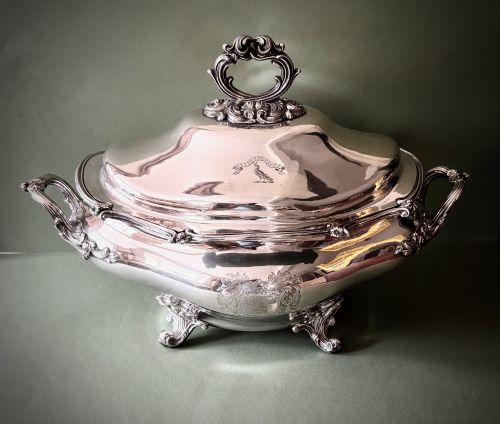
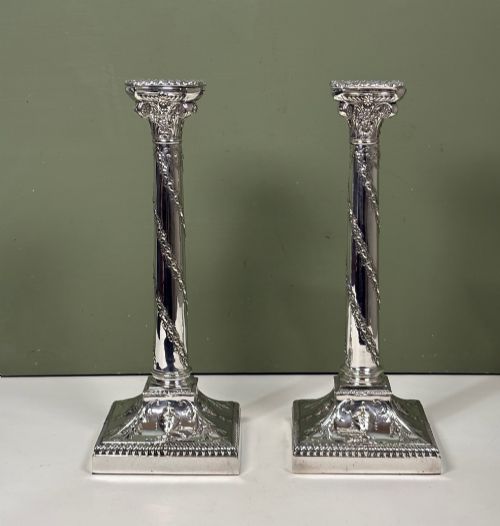
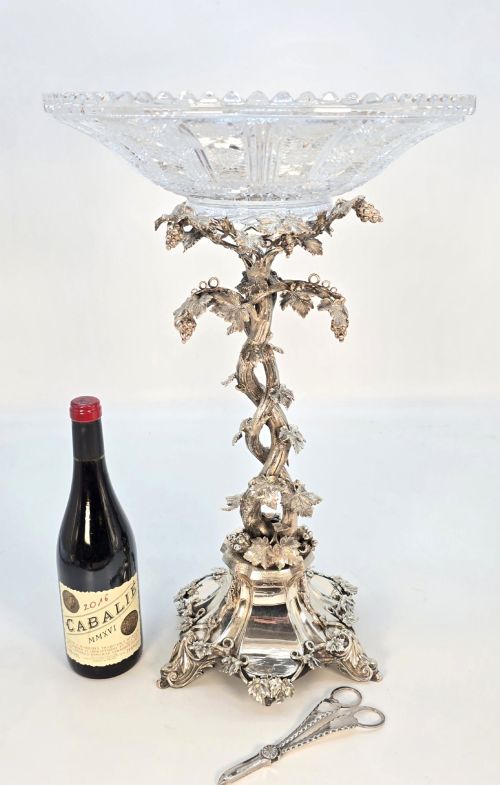
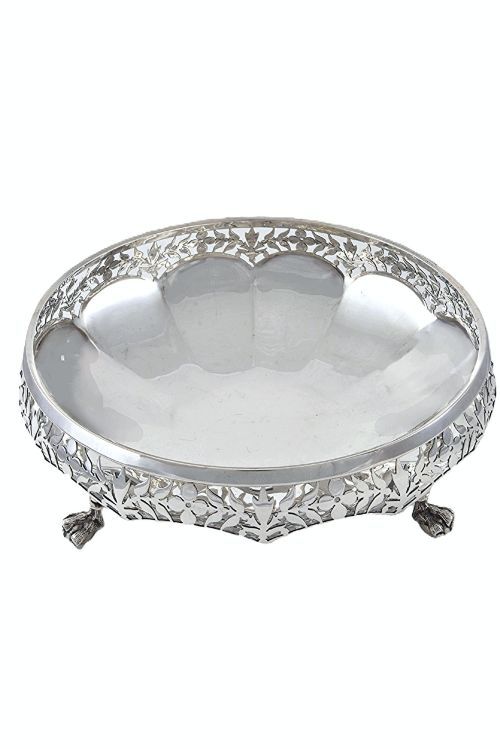
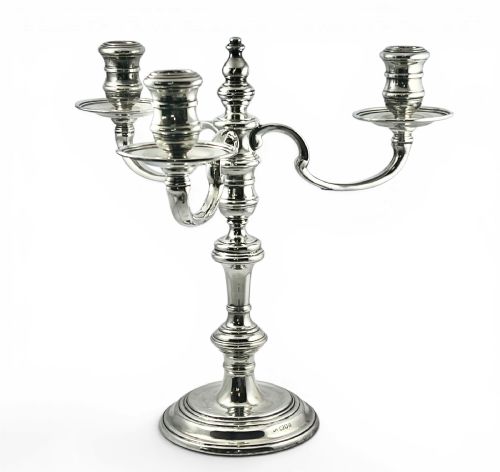
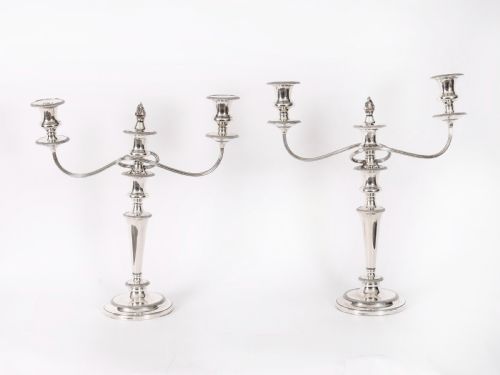
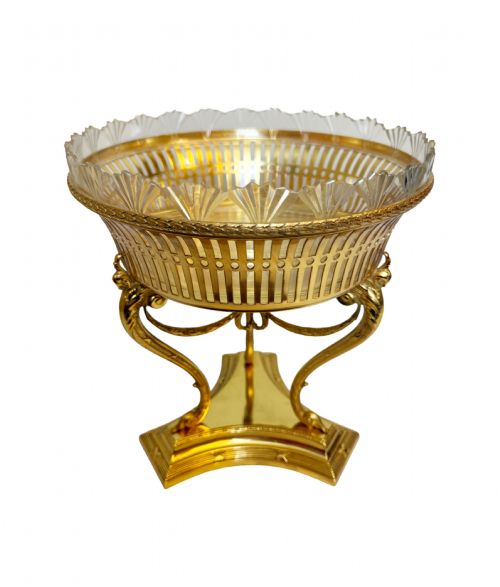
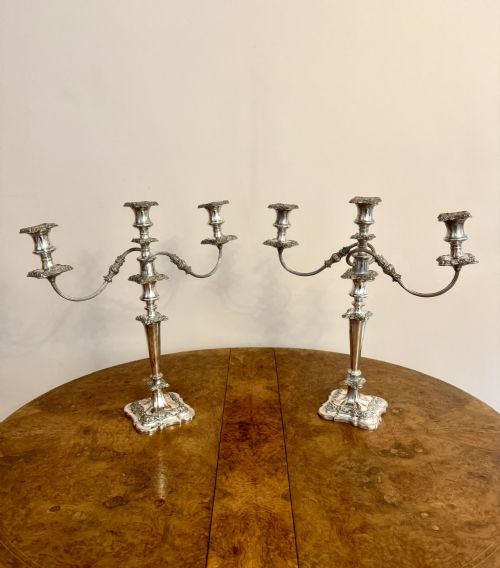
The selections available range from multi-branch candelabras and tall épergnes to large bowls, tureen sets, and revolving lazy susans. Victorian and Edwardian silver plated or sterling silver pieces dominate the offerings, alongside occasional Georgian and Regency mahogany dining accessories.
Makers shaped these items to hold fruit, flowers, or light, transforming everyday dining into a theatrical display. The typical specimen on this page combines metalwork with glass or ceramic inserts, reflecting the candlelight of nineteenth and early twentieth-century dining rooms.
How They Were Made
Silversmiths and manufacturers shaped these objects using sterling silver or by applying a silver plate over a base metal such as copper, brass, or old Sheffield plate. Many incorporate heavy cast components paired with pierced galleries, chased floral motifs, or applied borders.
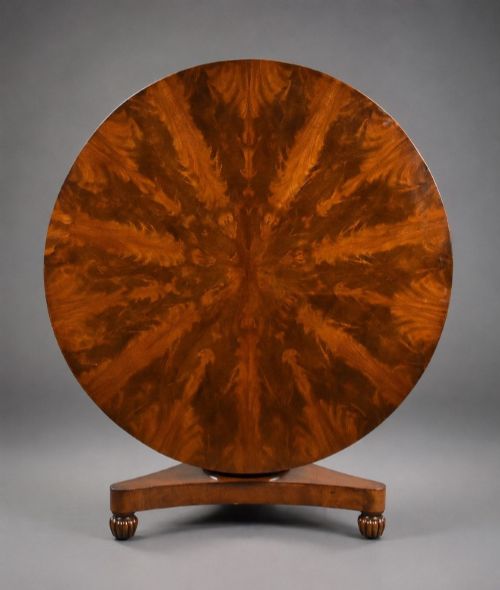
Cut, etched, cranberry, and coloured glass insertions provide contrast to the metal frames, often fitted specifically to hold floral arrangements or fruit. Flame mahogany and gilt bronze also appear, constructed with traditional joinery, turning, and fire-gilding techniques suited to high-status dining rooms.
Listings feature items spanning the Georgian, Regency, Victorian, and Edwardian periods, utilising silver plate, sterling silver, mahogany, and cut glass.
What Varies in Quality
Quality rests in the crispness of the chased detail and the weight of the metal used in the primary structure. Heavy gauge silver plating and substantial sterling construction separate superior examples from lighter, mass-produced alternatives.
The integration of materials dictates distinction, visible where cut or etched glass inserts fit their silver mounts without wobble. Maker attribution and the presence of original detachable components like sconces or drip pans further elevate a piece.
Garrard & Co·Walker & Hall·William Hutton & Sons·Martin Hall·Gioielleria Agliardi Cassino
The Antique Dining Centrepiece Glossary
- Épergne
- A tiered table centrepiece featuring a central basket surrounded by smaller hanging baskets or dishes, typically made of silver and glass. It was traditionally used to serve fruit, sweetmeats, or flowers.
- Sconce
- The small cup or nozzle at the top of a candlestick or candelabrum designed to hold the candle securely. Detachable versions simplify cleaning and replacement.
- Old Sheffield plate
- An early form of composite metal made by fusing a thin sheet of silver to a thicker copper base. This technique preceded modern electroplating.
- Candelabra
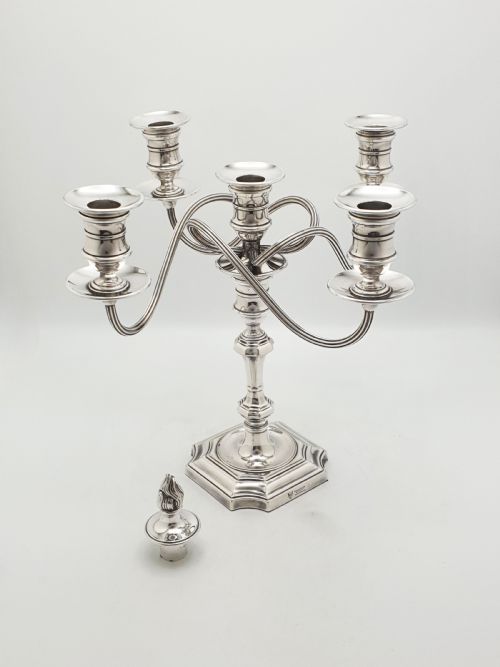
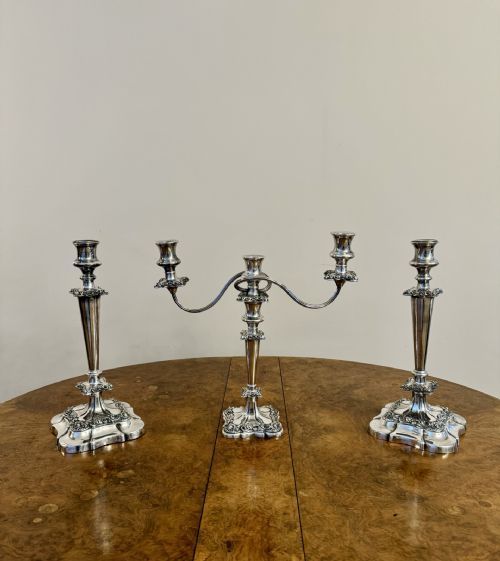
- A branched candlestick holding multiple lights on a single base. They provide illumination and height to formal dining arrangements.
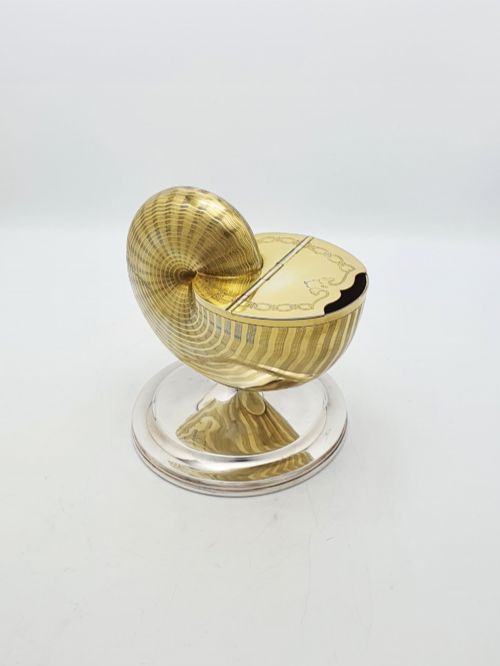
- Spoon warmer
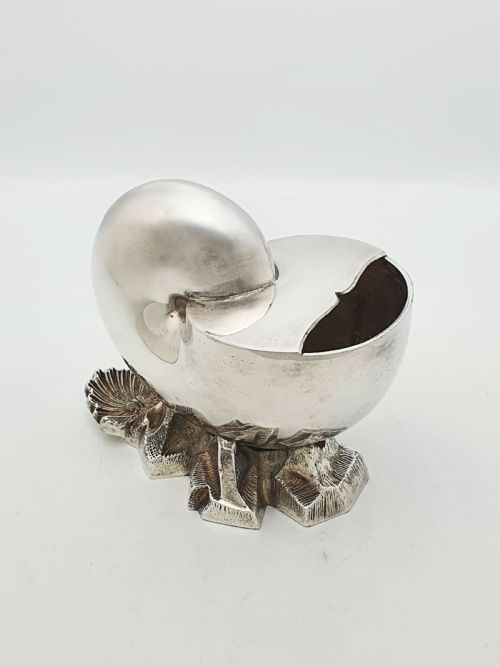
- A decorative vessel shaped like a nautilus shell, tureen, or urn, filled with hot water to warm silver spoons before serving course dishes. They sit upon the dining table or sideboard.
Antique Dining Centrepiece: Frequently Asked Questions
What is an antique dining centrepiece used for?
These large decorative objects were placed in the middle of the dining table to create visual height and display fruit, flowers, or light during formal meals.
They also served practical functions in nineteenth-century dining, such as holding condiments, warming spoons, or illuminating the table before the widespread use of electric light.
How do I clean a silver plated centrepiece?
Silver plated items require gentle washing in warm, soapy water with a soft cloth to remove dust and grease without damaging the underlying metal.
Avoid harsh abrasive dips and polishes that strip thin plating, opting instead for dedicated silver creams used sparingly on firm areas.
Can I use an antique épergne for fresh flowers?
Many épergnes feature original cut or coloured glass inserts specifically designed to hold water and fresh floral arrangements.
Carefully lift the glass bowls out of their metal frames for filling and cleaning to prevent moisture from damaging old silver plate or soldered joints.
How do I tell Victorian pieces from Georgian ones?
Georgian items often feature restrained neoclassical lines, simpler forms, and heavy sterling silver construction without the elaborate machinery of later decades.
Victorian pieces lean towards heavier ornamentation, ornate floral chasing, extensive silver plating, and more complex multi-branch configurations.