



Antique Silver Candlestick Branches
Antique silver candlestick branches, also known as candelabra, bring height and gleaming light to a dining table.
Antique Silver Candlestick Branches
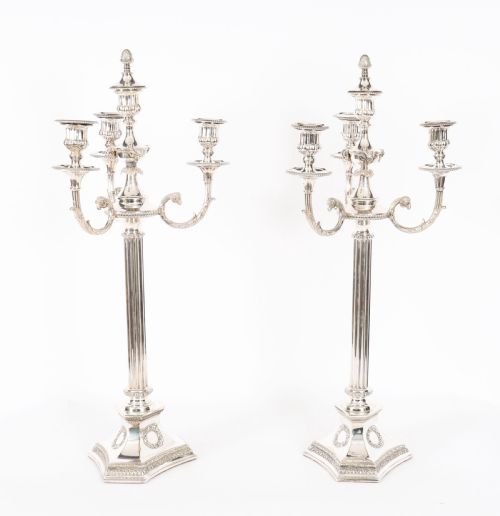
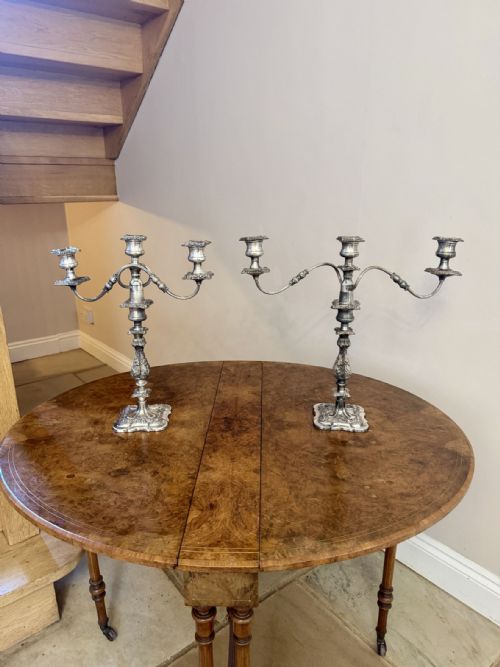
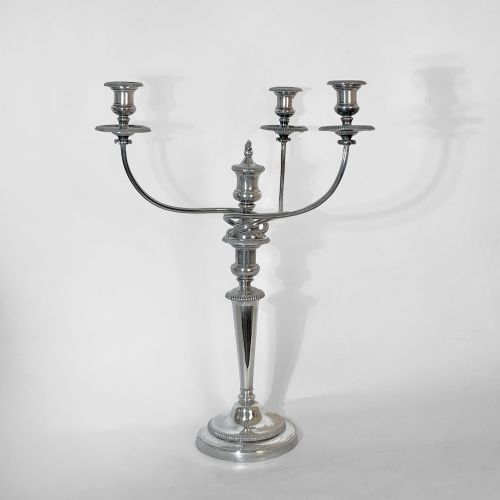
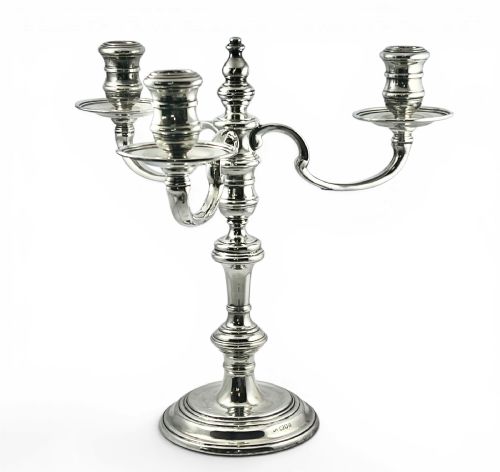
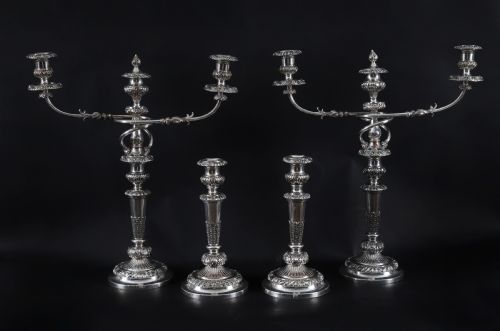
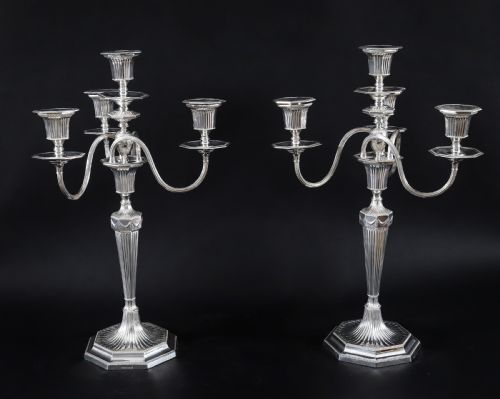
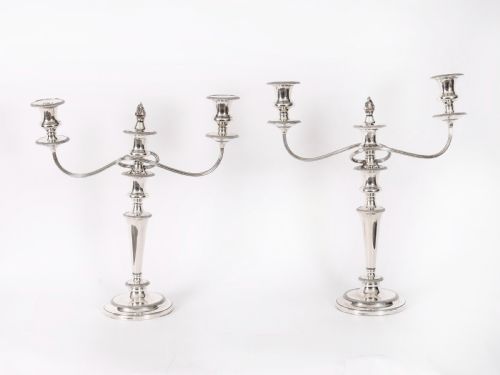
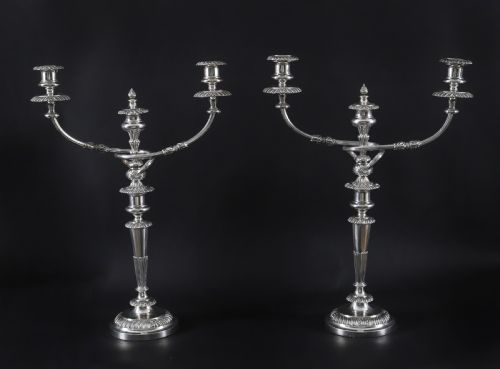
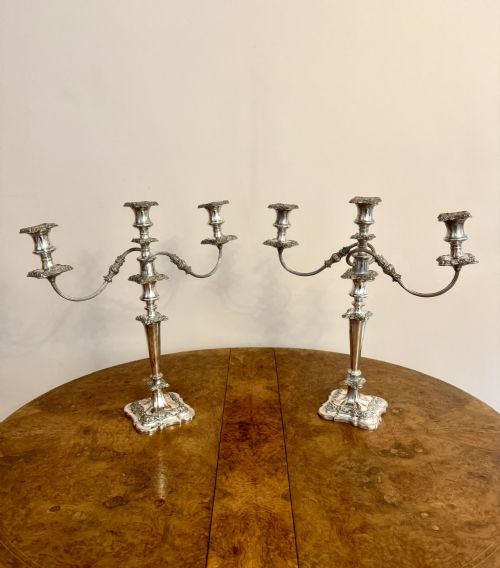
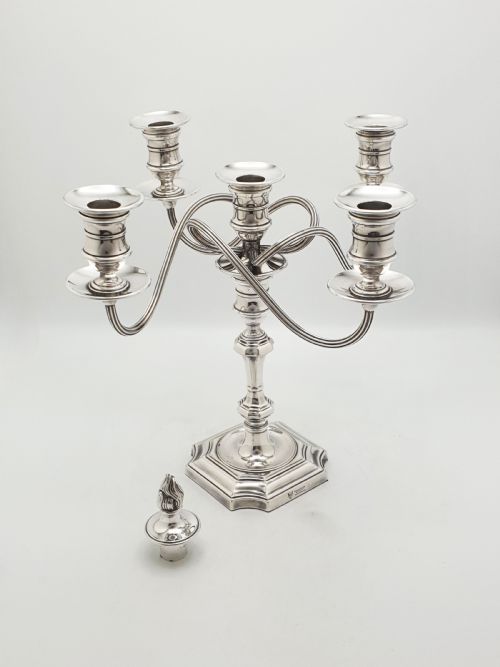
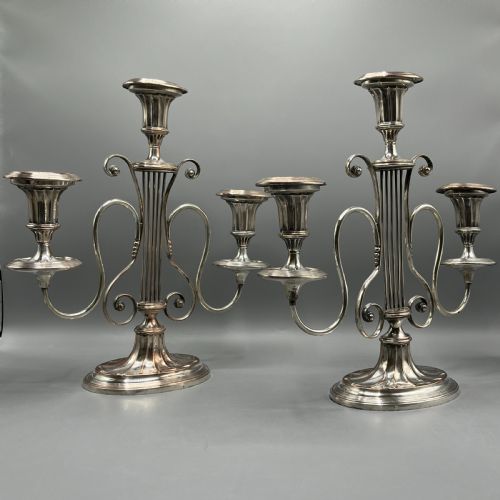
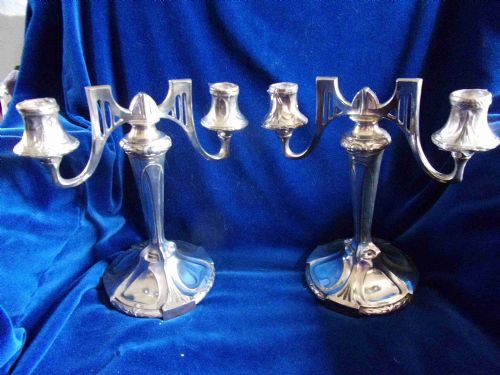
When searching for antique silver candlestick branches, buyers encounter multi-branch lighting fixtures designed to hold multiple candles simultaneously. These objects span from the eighteenth century through the twentieth century, appearing in forms from three-light table pieces to large four-light and five-light dining room centrepieces.
The versions most commonly met on this page are silver plated and Old Sheffield plate pieces originating from the Victorian and Georgian periods. Alongside these, buyers find sterling silver examples and various continental or metal pieces dating into the mid-twentieth century.
These items often arrive as matched pairs, sometimes accompanied by detachable sconces or designed with specific regional styles such as Regency, Rococo Revival, and Art Deco. Their structural layout typically involves a central stem branching out into two, three, four, or five arms for illumination.
How they were made
Makers utilised sterling silver, copper, and base metals, applying techniques like silver plating and Old Sheffield plate where a thin sheet of silver is fused to a copper base. Pieces from later decades incorporate electroplated nickel silver and standard silver plate.
Construction methods involved casting individual components such as branches, sconces, and bases, then assembling them through soldering or mechanical fitting. Hand wrought examples required skilled shaping of the metal by hand rather than standard factory casting.
Listings feature pieces spanning the Georgian, Victorian, and Edwardian eras, alongside mid-twentieth century works in sterling silver, Old Sheffield plate, and silver plate.
What varies in quality
The standard of antique silver candlestick branches shifts according to the crispness of the chased or embossed ornamentation, particularly on ornate Victorian and Georgian models. Pieces bearing clear maker marks and robust base construction demonstrate superior craftsmanship compared to simpler, unmarked items.
Proportion and weight also dictate the calibre of a piece, with substantial sterling and Old Sheffield plate pieces holding a firmer balance and presence on the table than lighter electroplated alternatives.
Hawksworth Eyre·Garrard and Co·Matthew Boulton·Blagden Hodgson and Co·Robert Edgar Stone
The Antique Silver Candlestick Branches Glossary
- Old Sheffield plate
- A material made by fusing a thin layer of silver onto a copper core, common in eighteenth and nineteenth century items. This technique leaves a characteristic copper seam visible on edges.
- Candelabra
- A branched candlestick designed to hold multiple candles at once. These range from low two-branch table pieces to large five-branch dining table centrepieces.
- Sconce
- The detachable cup or nozzle at the top of a branch that catches dripping wax and holds the candle in place. These elements are frequently removable for cleaning.
- EPNS
- Electroplated nickel silver, a common base metal coated with a thin layer of silver through an electrical process. This method became widespread in the nineteenth century.
- Centrepiece
- A large decorative item placed in the middle of a dining table, often incorporating branches for candles alongside dish or bowl components.
Antique Silver Candlestick Branches: Frequently Asked Questions
How do I clean antique silver candlestick branches?
Clean silver surfaces gently using a soft cloth and a specialised silver polish formulated to protect historic platings. Avoid abrasive materials that can wear away thin silver layers on plated items.
Take care around soldered joints and detachable sconces during the cleaning process to prevent accidental loosening or damage to the historical structure.
Were these branches meant for dining tables?
These branches served primarily as illumination and decorative focal points for dining tables and sideboards during formal meals. Large multi-light versions often acted as central table displays.
Smaller low-branch variations suited intimate settings or smaller side tables where height needed to remain below eye level.
How do I distinguish Old Sheffield Plate from later silver plate?
Old Sheffield plate exhibits a visible copper edge where the fused silver layer has worn thin over time, revealing the reddish metal underneath. This fusion technique differs fundamentally from later nineteenth century electroplating.
Electroplated items show a more uniform coating over a base metal like nickel silver, lacking the distinct sandwich-like cross-section seen in older fused pieces.
Can I use standard candles in these antique holders?
Candle diameters vary significantly across different periods and makers, meaning standard modern candles rarely fit without adjustment. Sconces were sized for historical taper dimensions.
Use beeswax tapers shaved down at the base or appropriate candle fittings to secure the candles safely upright without damaging the antique metal sockets.