



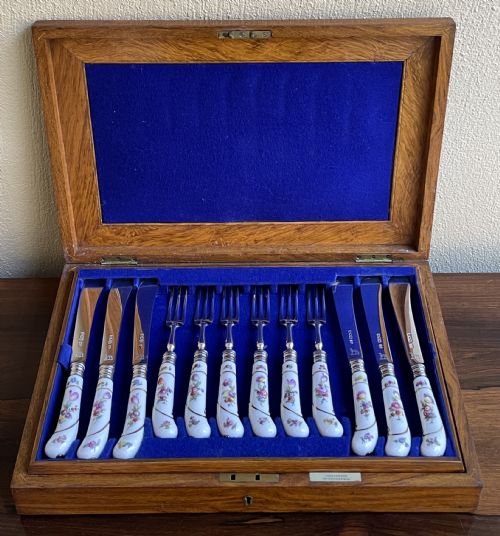

Antique Dessert Cutlery Set
An antique dessert cutlery set brings refined silver and mother-of-pearl to the table for fruit and sweets.
Antique Dessert Cutlery Set
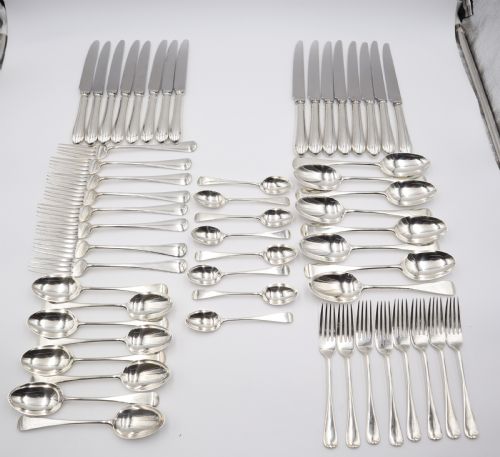
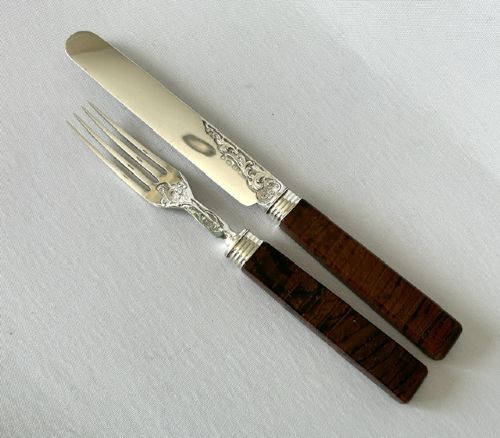
An antique dessert cutlery set typically comprises matching knives, forks, or spoons designed specifically for the final course of a meal. These services appear across various eras, with Victorian and Edwardian examples featuring prominently alongside earlier Georgian pieces.
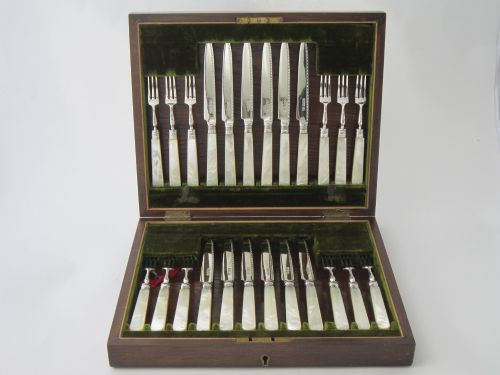
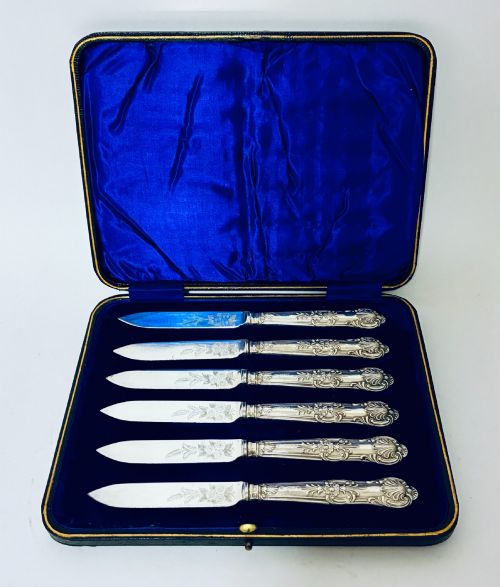
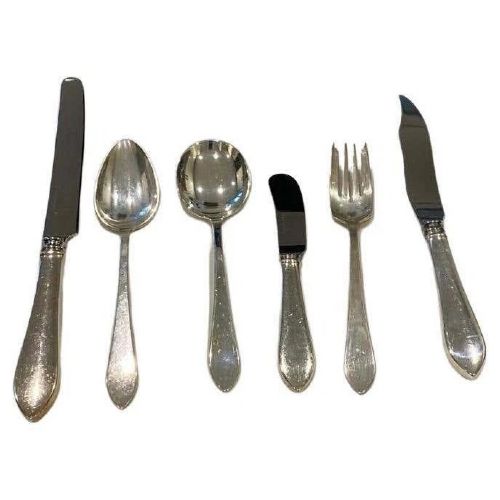
Sets range from modest cased groups of six fruit knives to larger canteens equipped with serving spoons, nutcrackers, and grape scissors. Many survive in fitted velvet or satin lined oak boxes that protect the delicate handles and polished metal.
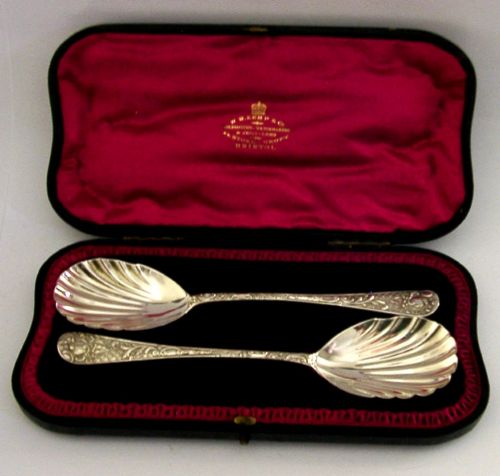
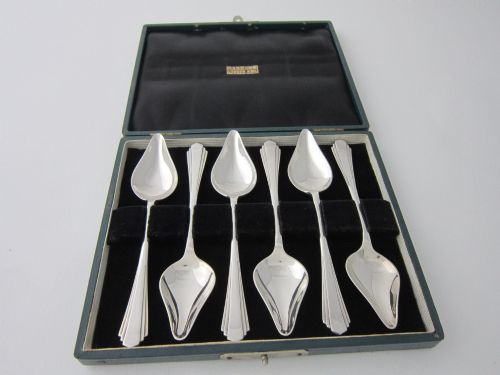
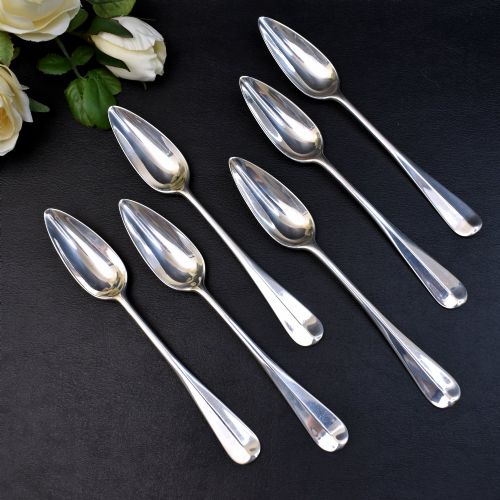
The phrase encompasses both solid sterling silver and silver plate constructions, frequently paired with organic handle materials such as mother-of-pearl or agate. Buyers encounter specialised implements including cake forks, grapefruit spoons, and berry spoons.
Materials and construction
Silversmiths utilised sterling silver and durable silver plate for blades, tines, and bowls, often applying rich gilding or intricate hand engraving to the metal surfaces. Steel featured regularly in knife blades during the Victorian and Edwardian periods to maintain a functional cutting edge.
Mother-of-pearl, agate, and porcelain formed tactile handles, shaped and polished by hand before being secured to metal tangs with pins. Fitted cases lined with silk, satin, or velvet housed these fragile implements for formal dining storage.
Quality variations
Excellence in an antique dessert cutlery set rests upon the crispness of the chased or engraved ornamentation and the integrity of the handle materials. Pieces featuring fully marked sterling silver alongside unblemished mother-of-pearl or carved agate stand higher in the tier.
The presence of the original fitted presentation case lined in silk or velvet elevates the standing of a service. Superior sets display meticulous matching across every utensil, down to the uniformity of the maker marks and the precision of the knife blades.
Hamilton and Inches·E Coker·Carrington·Hukin and Heath
The Antique Dessert Cutlery Set Glossary
- Sterling silver
- A silver alloy containing 92.5 percent pure silver by mass, standard for high quality British tableware.
- Mother-of-pearl
- An iridescent inner layer of mollusc shell used traditionally for knife and fork handles.
- Canteen
- A fitted box or cabinet designed to store a complete service of flatware and cutlery securely.
- Berry spoon
- A large spoon with an embossed or engraved bowl, typically utilised for serving soft fruits.
- Fruit knife
- A small utensil with a blade of silver or steel, created to prevent acidic fruit juices from tarnishing standard cutlery.
Antique Dessert Cutlery Set: Frequently Asked Questions
What is an antique dessert cutlery set used for?
These sets served formal dining courses that followed the main meal, specifically fresh fruit, nuts, pastries, and cheese. The smaller scale of the knives and forks suited delicate foods.
Today, collectors utilise them for modern dining or display them within their original fitted wooden presentation cases.
Are all dessert sets made of solid silver?
Many examples utilise silver plate over a base metal core, a manufacturing method that became widespread during the nineteenth century. Fully solid sterling silver pieces carry official hallmarks identifying the metal purity, maker, and assay office.
Steel blades frequently appear paired with silver ferrules and mother-of-pearl handles in Edwardian and Victorian fruit sets.
How do I identify a Victorian set?
Victorian sets often feature ornate hand engraving, chased floral motifs on the silver bowls, and natural materials like mother-of-pearl or agate for the handles. Hallmarks stamped onto the metal provide exact assay office symbols and date letters.
The presence of velvet or satin lined oak presentation boxes is also characteristic of this period.