


Vintage Silver Fruit Set
A vintage silver fruit set brings dining ritual to the table, pairing polished metal with natural handles for individual course service.
Vintage Silver Fruit Set
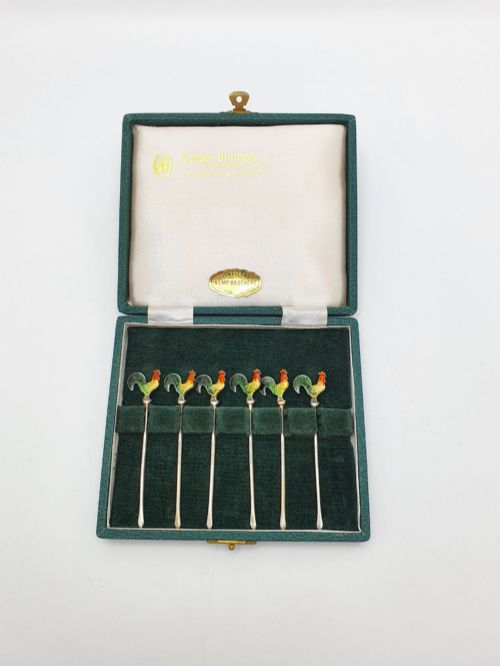
A vintage silver fruit set encompasses specialised cutlery and serving implements designed for handling fresh produce at the dining table. These gatherings of knives, forks, spoons, and ancillary tools emerge from periods ranging through the Victorian, Edwardian, and Art Deco eras.
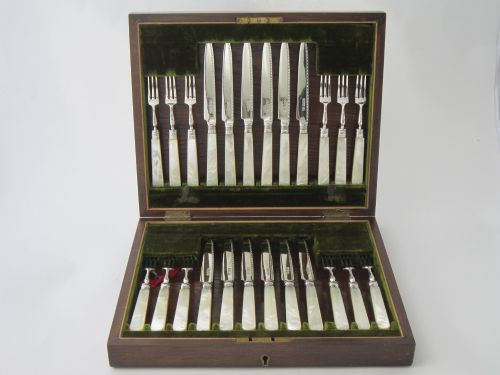
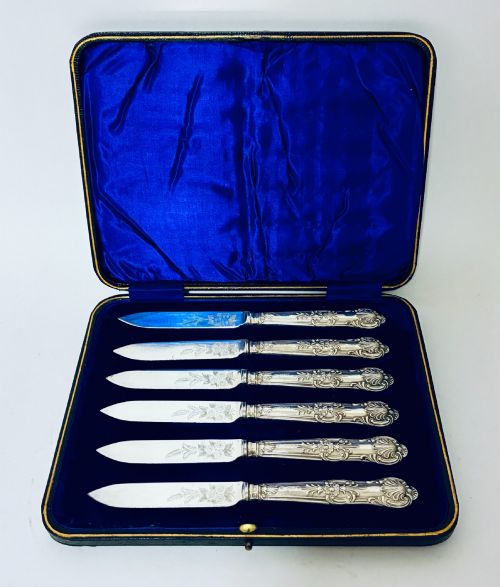
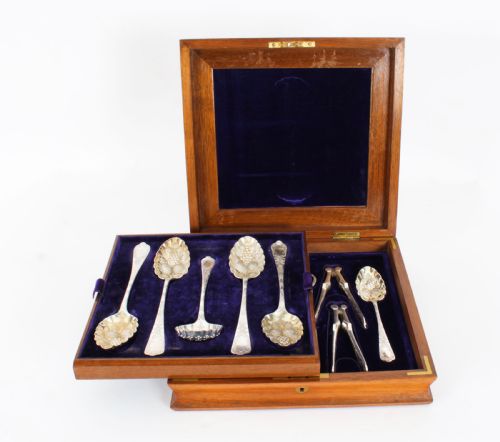
The configurations vary from modest cased sets of knives to comprehensive services complete with nutcrackers, grape scissors, and strawberry bowls. Most examples encountered here utilise sterling silver or silver plate paired with organic handle materials like mother of pearl.
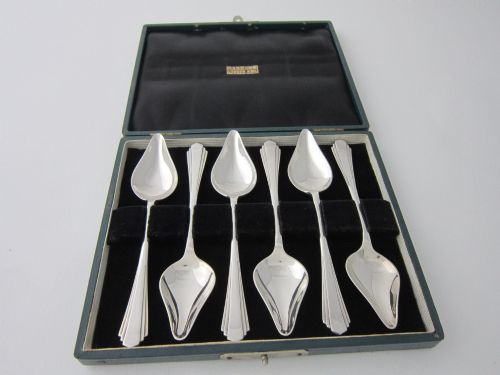
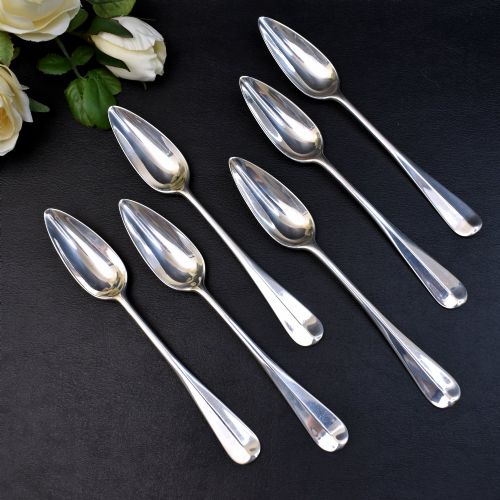
Originating across British and European workshops, these sets reflect the formal dining habits of the nineteenth and twentieth centuries. The assortment includes specialised pieces such as grapefruit spoons and cocktail lemon wedge squeezers alongside traditional dessert cutlery.
What varies in quality
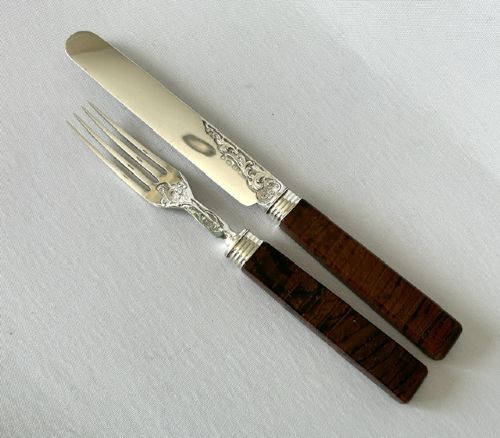
Quality rests upon the integrity of the materials and the precision of the ornamentation. Solid sterling silver components distinguish finer services from silver-plated alternatives, while natural mother of pearl or agate handles demand superior craftsmanship to shape and fit.
The presence of an original fitted presentation box lined in silk and velvet elevates a service, as does documented maker attribution. Engraved decoration shows varying degrees of hand skill, separating standard production from deeply detailed work.
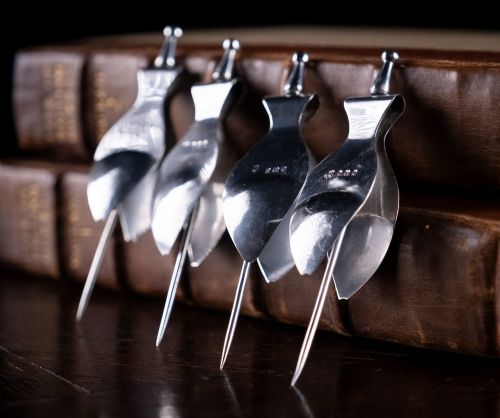
Even lemons require proper architecture, as proven by four silver wedge squeezers waiting to rescue tea time from rogue pips.
Richard Comyns·Hamilton and Inches·Hukin and Heath·Roberts and Belk
The Vintage Silver Fruit Set Glossary
- Sterling silver
- A silver alloy containing 92.5 percent pure silver by mass, standard for quality British tableware. It bears hallmarks indicating the assay office and year of manufacture.
- Silver plate
- A base metal coated with a thin layer of silver through electroplating or older techniques. This method offered a brighter finish at a lower cost than solid silver.
- Mother of pearl
- The iridescent inner layer of certain mollusc shells, carved into smooth scales for knife handles. Its natural grain creates varied light reflections on each piece.
- Grapefruit spoon
- A pointed or serrated spoon designed for segmenting citrus fruits cleanly. These feature in twentieth-century dining services.
- Gilt
- Silver or another metal surface coated with a thin layer of gold, often termed silver gilt or vermeil. This technique adds a warm tone to the interior of bowls or spoons.
Vintage Silver Fruit Set: Frequently Asked Questions
What is included in a fruit set?
A fruit set typically contains specialised knives and forks, and occasionally includes serving spoons, nutcrackers, or grape scissors. These pieces are often housed together in a fitted presentation box.
Additional items might feature citrus spoons or berry servers, depending on the specific period and intended use of the service.
How do I care for mother of pearl handles?
Mother of pearl requires gentle handling and should be washed by hand in warm soapy water rather than placed in a dishwasher. Dry them promptly with a soft cloth to preserve the natural lustre.
Avoid exposing these organic materials to sudden temperature changes or harsh chemical cleaners that can damage the surface.
How do I identify the period of a set?
Dating relies upon examining silver hallmarks, maker marks, and stylistic clues such as the geometric lines of Art Deco or the ornate engraving of the Victorian era. Case design and lining materials also offer guidance on manufacturing dates.
Reference marks stamped into the metal connect pieces to specific assay offices and active years for individual silversmiths.
Were these sets meant for everyday use?
These services were created for formal dining and dessert courses in middle and upper-class households. They remained safely stored in lined cased boxes between special meals.
Today, they transition easily to modern dining tables for serving fresh fruit, desserts, or specialised breakfast courses.