

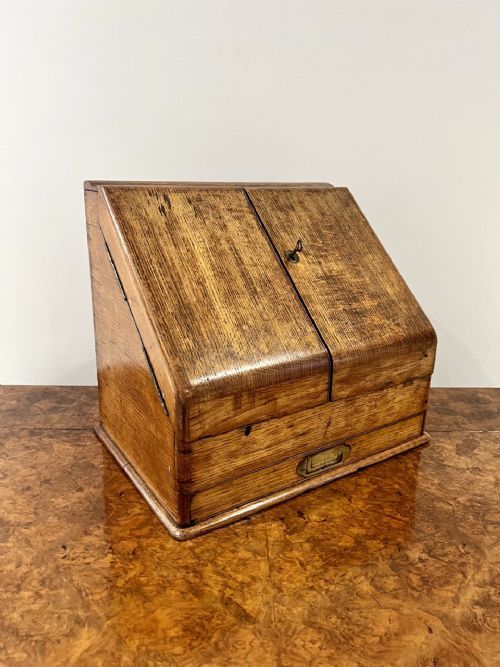


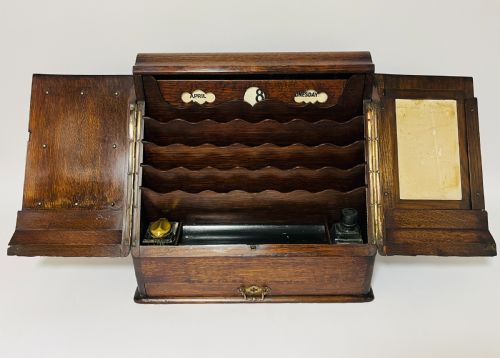


Antique Desktop Letter Slope
An antique desktop letter slope organises correspondence with fitted compartments and sloping lids, bridging utility and craftsmanship.
Antique Desktop Letter Slope
An antique desktop letter slope provides a dedicated tabletop place for sorting post, holding paper and keeping ink. These pieces appear across periods from the eighteenth century through to the Edwardian era.
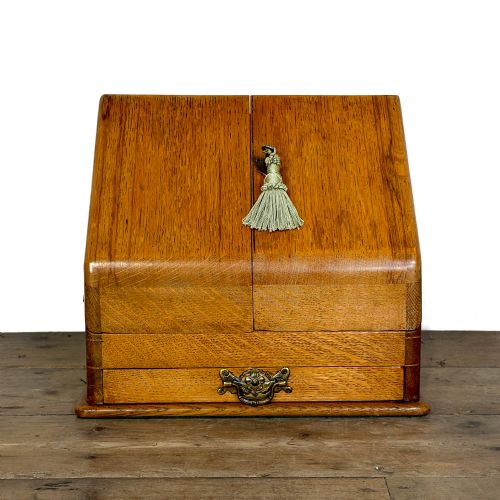
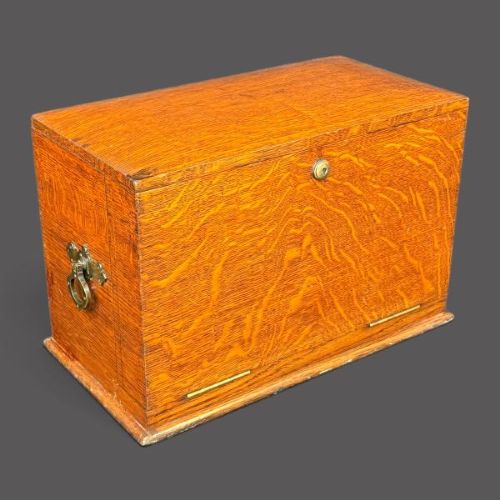
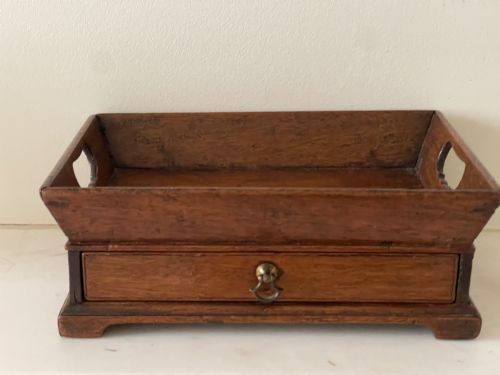
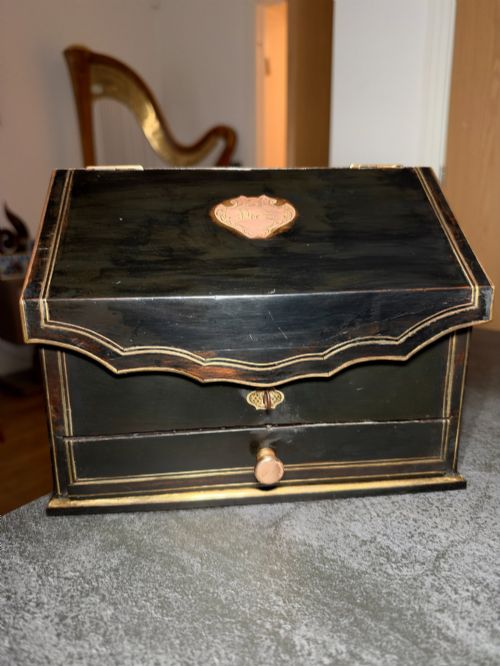
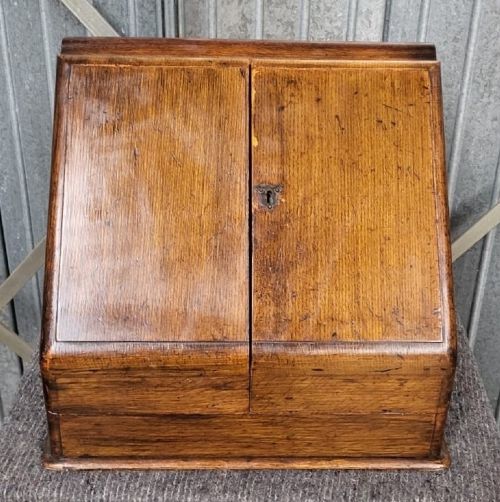
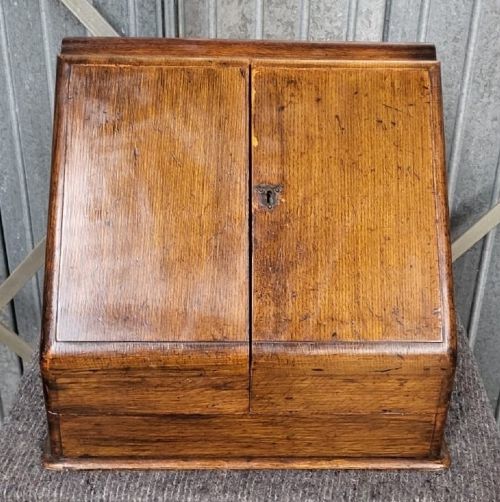
Makers produced these items in various formats including slope-front desk boxes, stationery cabinets, writing boxes and letter racks. Oak and mahogany serve as the primary woods for everyday examples, whilst walnut, satinwood and ebonised timber appear in more decorative pieces.
Victorian and Edwardian iterations dominate the selection, often incorporating brass mounts, glass ink bottles or inlaid marquetry. Buyers encounter both simple oak boxes and elaborate correspondence chests fitted with internal ledges and drop-front doors.
Materials and construction
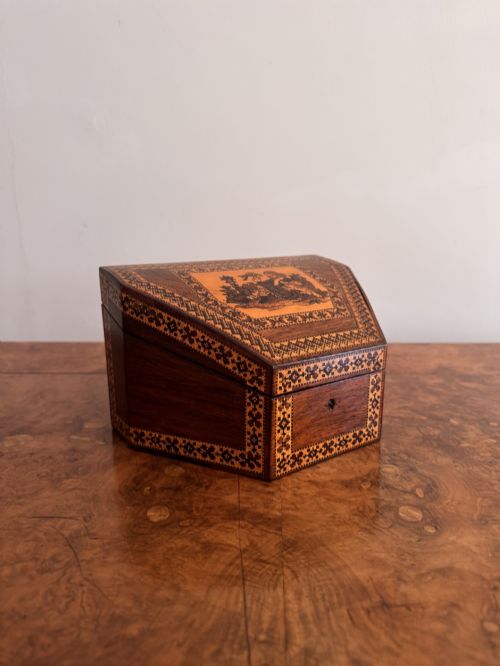
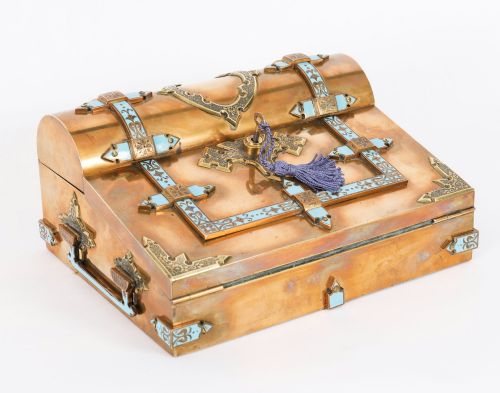
Cabinet makers constructed these boxes using timbers such as mahogany, oak, walnut and satinwood, frequently applying brass for hinges, escutcheons and carrying handles. More ornate items utilise decorative techniques including Tunbridge ware, bone inlay, ormolu mounts and painted surfaces.
Internal layouts require careful joinery to create stationery dividers, pen trays and slots for correspondence. Drop-front cabinets and slope-front boxes employ hinges and fitted ledges to support paper use during the nineteenth and eighteenth centuries.
Antique Desktop Letter Slope Retail Price Guide 2026
Typical asking prices for desktop letter slope among the pieces listed under this phrase on Sellingantiques today, from the lower quarter to the upper quarter. They describe what is for sale here now, not the wider market.
Listings feature oak, mahogany, walnut, satinwood and ebonised wood across Victorian, Edwardian and Georgian periods.
Evaluating quality and construction
The standard of timber selection and complexity of internal fittings determine the calibre of an antique desktop letter slope. Finely figured mahogany or walnut, alongside intricate Tunbridge ware or marquetry inlay, distinguish superior examples from plain utility boxes.
Original hardware, intact glass ink bottles and functional drop-front mechanisms elevate a piece. The precision of the joinery and the condition of decorative brass or ormolu elements reveal the maker's original investment of time and skill.
Houghton & Gunn
The Antique Desktop Letter Slope Glossary
- Writing slope
- A desktop box with an angled lid that opens to reveal a writing surface and compartments for stationery. These items keep paper and writing implements contained in a single portable unit.
- Stationery box
- A tabletop cabinet designed specifically to hold folded letters, envelopes and correspondence cards in vertical or horizontal tiers. They frequently feature slope fronts or drop-down doors.
- Tunbridge ware
- A form of decorative woodwork produced in Kent utilising tiny coloured woodblocks to create mosaic pictures of geometric patterns or buildings. It appears on Victorian desk boxes.
- Ormolu
- Gilded bronze mounts applied to furniture and desk accessories for decorative effect. This technique was favoured on French and English pieces during the nineteenth century.
- Marquetry
- The art of applying pieces of veneer to a structure to form decorative patterns and pictures. Sheraton period and Edwardian cabinets frequently utilise this technique.
Antique Desktop Letter Slope: Frequently Asked Questions
What is an antique desktop letter slope?
An antique desktop letter slope is a specialised box or small cabinet designed to organise writing paper, envelopes and incoming post upon a desk.
These pieces emerged in various forms including drop-front cabinets, slope-front boxes and stationery racks across the eighteenth, nineteenth and early twentieth centuries.
How were writing slopes used originally?
Users opened the angled or drop-front lids to access compartments holding stationery, ink bottles and pens for daily correspondence.
They served as portable or stationary desks that kept writing materials tidy in domestic studies and offices before the era of mass-produced stationery.
What woods were used for these boxes?
Cabinet makers utilised domestic and exotic timbers depending on the period and the intended formality of the piece. Oak and mahogany appear most frequently in utilitarian and Georgian designs.
Walnut, satinwood and ebonised wood were chosen for more decorative Victorian and Edwardian examples, often complemented by brass mounts or marquetry.
How do I date a stationery cabinet?
Dating relies upon observing the primary wood, construction methods, decorative style and hardware such as brass hinges or locks. Georgian pieces tend to show simpler mahogany or oak construction.
Victorian and Edwardian examples frequently introduce decorative techniques like Tunbridge ware, marquetry or drop-front mechanisms alongside fitted glass ink bottles.