


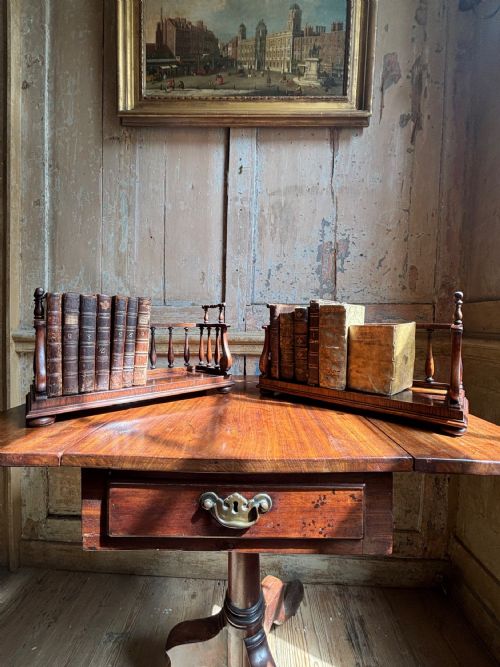
Antique Desk with Shelf
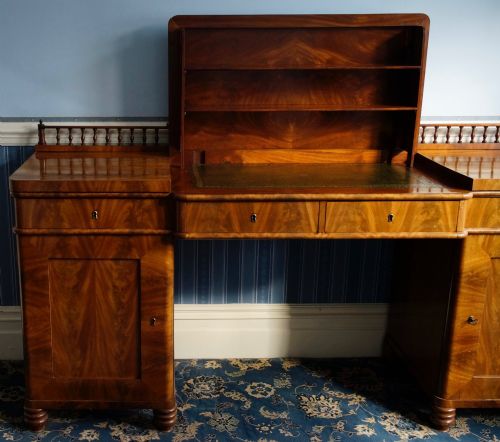
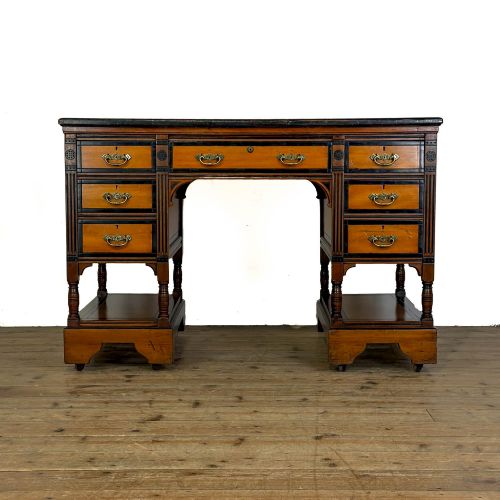
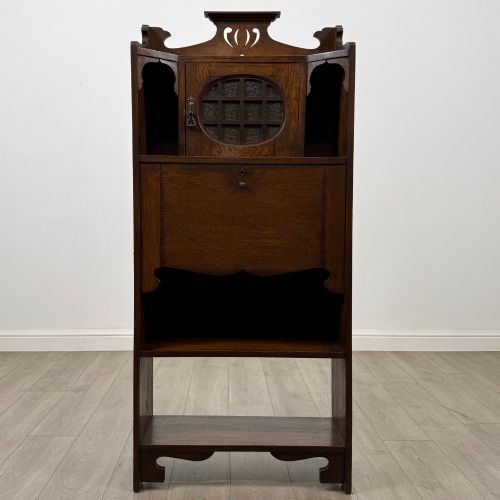
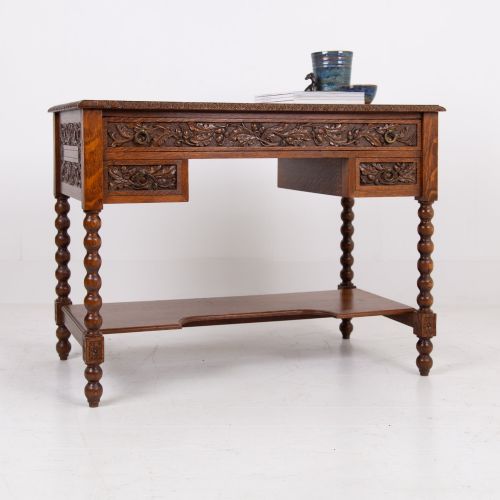
An antique desk with shelf provides surface space alongside integrated tiers or compartments, combining writing utility with convenient upright storage.
Antique Desk with Shelf
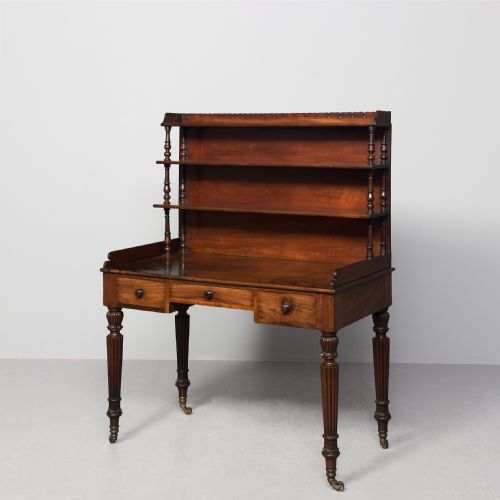
An antique desk with shelf covers various formats intended for compact writing and display, frequently appearing in forms like the bonheur du jour, bureau bookcase, and tiered tables. These pieces emerge from the nineteenth and early twentieth centuries, spanning Victorian, Edwardian, Regency, and Art Deco periods.
Makers and designers constructed these items in mahogany, oak, satinwood, and walnut, often integrating upper shelves or cabinets for correspondence and small volumes. The selections include simpler writing desks alongside more elaborate bureau cabinets and chiffoniers featuring integrated shelving.
Domestic spaces of the nineteenth and early twentieth centuries relied on these hybrid furniture pieces to manage letter writing and book storage in limited floor areas. The layouts reflect changing social habits where dedicated writing furniture required vertical shelving to keep documents organised.
Materials and Construction
Cabinet makers utilised dense hardwoods such as mahogany, oak, and walnut as the primary structural foundations for desks and writing cabinets. These timbers provided the necessary strength for hinged writing surfaces and integrated upper shelving tiers.
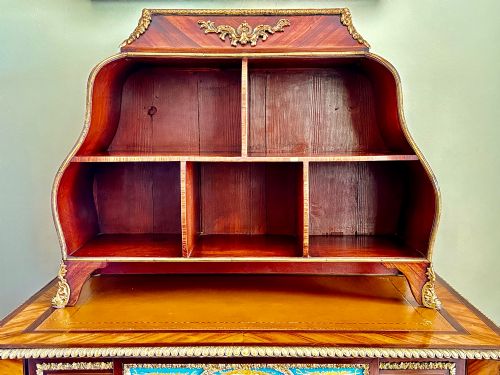
Workshops applied decorative techniques including satinwood inlays, boxwood stringing, and brass mounts to enhance the visual depth of the timber surfaces. Glass doors and enamel elements also appear on pieces combining storage shelving with writing compartments.
The listings show desks incorporating upper shelving built from mahogany, oak, satinwood, and walnut across the Victorian and Edwardian periods.
Evaluating Craftsmanship
Superior examples display precise joinery in the execution of drawers, shelving tiers, and internal pigeonholes, ensuring structural stability across multi-tiered forms. The selection of timber grain, particularly in figured mahogany and walnut veneers, dictates the visual impact of the piece.
The refinement of secondary decorative elements, such as brass hardware, fine stringing, and hand-carved details, separates standard utility furniture from exhibition-grade commissions. Higher quality pieces maintain harmonious proportions between the lower writing surface and the upper shelf structure.
James Mein of Kelso·Tudor & Burrey·John McLean
The Antique Desk with Shelf Glossary
- Bonheur du jour
- A light ladies writing desk featuring an upper section with shelves, drawers, or a small cabinet. This form became popular during the nineteenth century for correspondence and display.
- Bureau bookcase
- A combination piece featuring a sloping writing flap above or below a set of bookshelves enclosed by doors. It provides substantial storage for both writing materials and bound volumes.
- Chiffonier
- A low cabinet equipped with shelving tiers above the main surface, sometimes incorporating a writing drawer. Regency and Victorian examples frequently utilise this format for combined display and storage.
- Cartonnier
- A desktop cabinet fitted with multiple horizontal compartments or drawers for storing papers and documents. It rests upon a writing table or desk surface.
- Inlay
- A decorative technique where contrasting woods or metals are fitted into recessed portions of the primary timber surface. Boxwood and satinwood frequently serve this purpose on mahogany frames.
Antique Desk with Shelf: Frequently Asked Questions
What is an antique desk with shelf?
These items combine a flat writing surface with integrated upper tiers, shelves, or small cabinets. They were designed to hold stationery and books within domestic rooms.
Craftsmen built them across various periods including the Regency, Victorian, and Edwardian eras using hardwoods like mahogany, walnut, and oak.
How were these desks used historically?
Owners utilised them primarily for personal correspondence, managing household accounts, and reading. The upper shelves kept reference books and letters within easy reach of the writing area.
In period drawing rooms and studies, they functioned as both workspace and display surfaces for small decorative objects.
How do I identify the period of a desk?
Period identification relies on observing the combination of timber choices, construction methods, and stylistic ornament. Regency pieces often feature clean architectural lines, whereas Victorian and Edwardian examples lean toward rich veneers and inlaid stringing.
Hardware styles and secondary woods inside the drawers also provide clear indicators of the decade of manufacture.
Where should I place a desk with a shelf?
These pieces suit studies, living rooms, or bedrooms where their compact footprints and vertical shelving add both workspace and display capacity. Placing them against flat walls allows the upper shelves to be accessed easily.
Keeping them away from direct heat sources protects the timber veneers and historical finishes from drying out.