




Mahogany Writing Cabinet Gallery
These mahogany writing cabinet gallery pieces combine timber and workspace into compact forms that suit modern rooms as well as they did centuries ago.
Mahogany Writing Cabinet Gallery
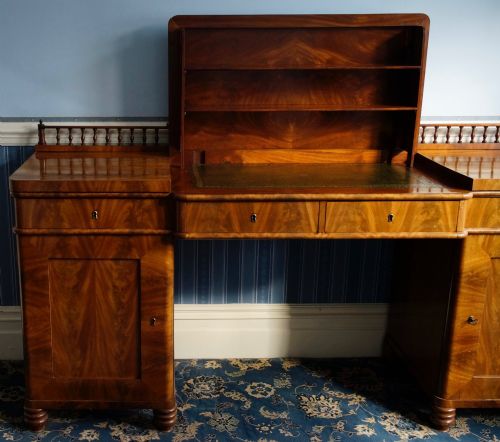
A mahogany writing cabinet gallery search brings up compact desks, Davenport desks, escritoires, and bonheur du jour cabinets from Georgian, Regency, Victorian, and Edwardian periods. Buyers encounter pieces that serve as functional workspaces whilst maintaining domestic elegance through fitted drawers and compartments.
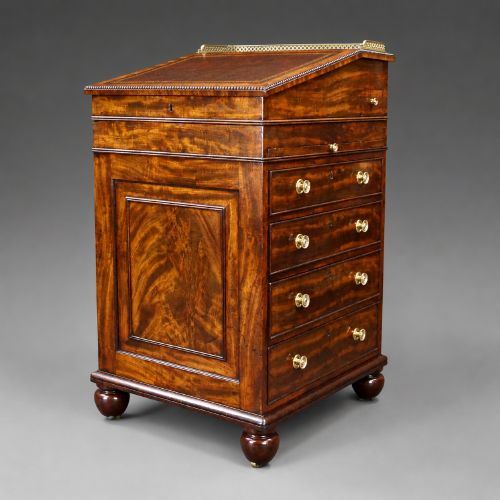
The most common form met on this page is the Davenport desk, often featuring a sloping writing surface lined with leather and supported by side drawers. These intelligent designs maximise storage in smaller footprints, making them practical for daily use in contemporary studies or living spaces.
Construction and materials
Cabinetmakers utilised dense mahogany and striking flame mahogany veneers over secondary timbers like oak, often selecting boards with rich natural grain patterns. Structural elements relied on precise dovetail joinery for drawers and traditional framing to ensure stability across shifting seasonal temperatures.
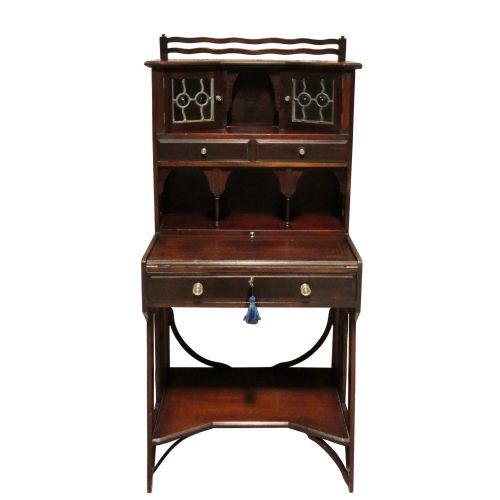
Surface detailing frequently incorporated contrasting satinwood inlay, bone accents, and cast brass hardware such as gallery rails and pulls. Writing surfaces were typically inset with tooled leather, whilst upper tiers utilised leaded glass or open shelving supported by turned or carved wooden uprights.
Some clever Davenport desks conceal hidden inkwells and secret compartments designed to keep private correspondence safe from wandering eyes.
Assessing quality and craftsmanship
Quality separates pieces through the selection of timber veneers and the precision of internal cabinetry rather than surface appearance alone. Finer examples display continuous grain matching across drawer fronts and superior figure in the flame mahogany, whereas simpler iterations rely on plain timber boards.
The sophistication of the mechanism and secondary woods also dictates standing within the period. Well-executed Davenport desks feature functioning side drawers that lock via the top lid, paired with meticulously fitted interior stationery compartments rather than basic partitions.
Gillows·Edwards & Roberts·Liberty
The Mahogany Writing Cabinet Gallery Glossary
- Davenport desk
- A compact small desk featuring a sloping, leather-lined writing lid above a pedestal of drawers. This form originated in the late Georgian era and remained popular through the Victorian period.
- Bonheur du jour
- A light ladies' writing desk equipped with a small cabinet, shelves, or drawers on the upper surface. These sophisticated pieces typically date from the mid-nineteenth century onwards.
- Escritoire
- A tall writing cabinet featuring a fall-front flap that conceals a nest of small interior drawers and pigeonholes. It provides a vertical storage solution for correspondence and documents.
- Flame mahogany
- A highly figured veneer cut from the branch forks of the mahogany tree, producing a distinctive flickering flame pattern. Cabinetmakers reserved this striking material for primary display surfaces.
- Gallery
- An ornamental pierced rail, often made of brass or wood, fitted to the top tier of a cabinet or desk to prevent items from sliding off. This feature is particularly characteristic of Regency and Victorian study furniture.
Mahogany Writing Cabinet Gallery: Frequently Asked Questions
What is a Davenport desk?
A Davenport desk is a small, compact writing desk with a sloping top and a pedestal of drawers on one side. They were designed to save space whilst offering ample storage for writing materials.
These pieces typically include a leather-lined writing surface and small interior compartments for stationery and letters.
How do I date a mahogany writing cabinet?
Dating relies on observing stylistic details, timber choices, and construction methods. Georgian and Regency pieces often feature simpler classical proportions, whilst Victorian versions incorporate richer marquetry and bolder brass galleries.
Examining secondary woods inside the drawers also helps establish the era of manufacture.
Where should I place a writing cabinet?
These compact pieces suit studies, living rooms, and bedrooms where floor space is limited. Their finished backs often allow them to sit away from the wall in the centre of a room.
Keep them away from direct sunlight and heat sources to protect the mahogany finish and leather writing surfaces.