

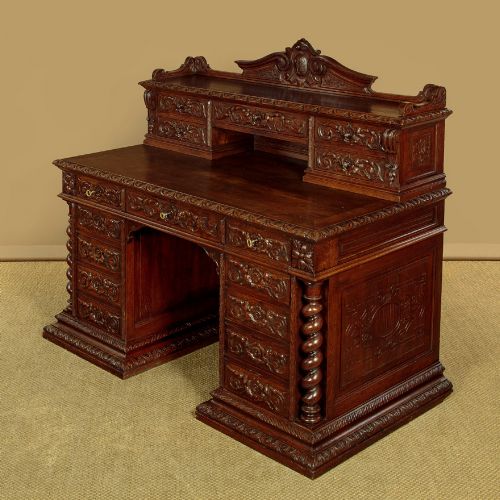


Antique Desk Superstructure
An antique desk superstructure sits atop a writing table to organise correspondence, bringing tiered compartments and small drawers right to the desktop.
Antique Desk Superstructure
An antique desk superstructure adds an upper tier of stationary compartments, pigeonholes and drawers to a standard writing surface. These additions transform simple writing tables into comprehensive workstations designed for sorting post and keeping papers orderly.
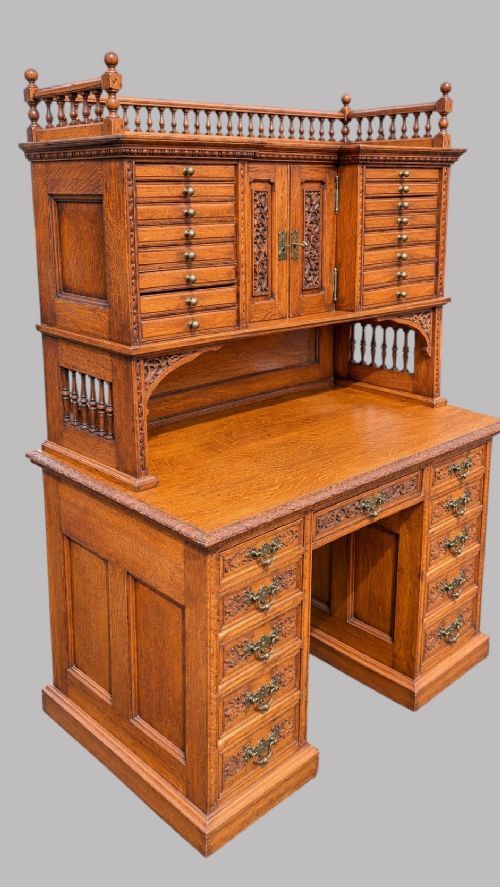
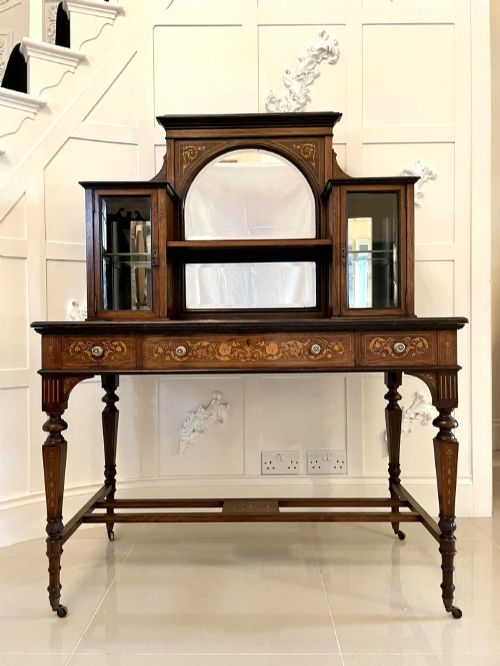
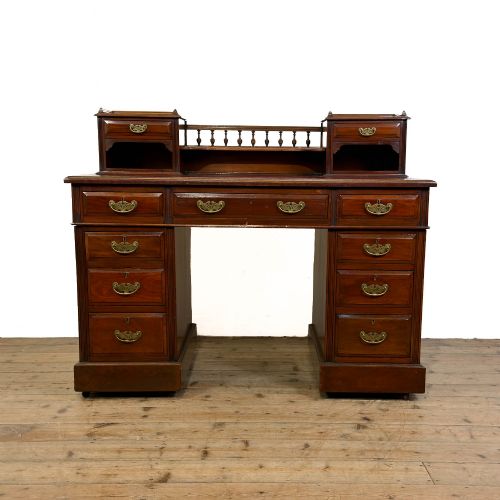
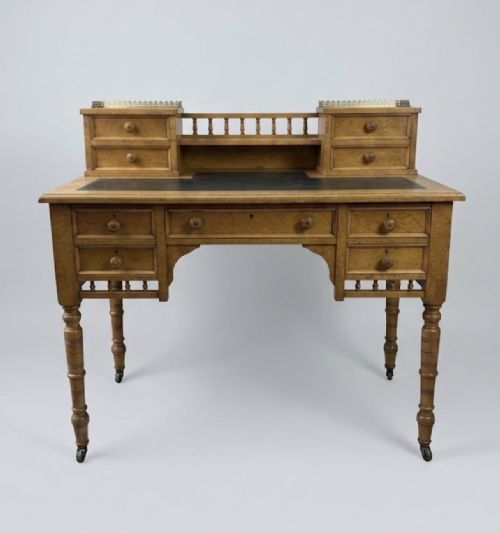
The versions met on this page range from Victorian oak kneehole desks and partners' Dickens models to Edwardian satinwood ladies' writing tables with mirrored backs. Makers integrated these upper cabinets directly into the writing surface or designed them as removable additions.
Most pieces date from the nineteenth and early twentieth centuries, spanning periods from the Victorian era to Edwardian times. These pieces reflect the expanding administrative needs of households and offices during those decades.
Materials and construction methods
Cabinetmakers utilised dense timbers such as mahogany, oak, walnut and satinwood to build these substantial pieces. Finer examples feature decorative veneers like burr walnut and birds-eye maple, complemented by marquetry inlay and hand-painted details.
Structural joinery relied on traditional dovetailed drawers and mortise and tenon frames to support the heavy upper tiers. Metalwork components, including brass handles, hinges and ormolu mounts, provide functional hardware and decorative contrast.
Charles Dickens reportedly inspired a whole category of double-sided pedestal desks with towering pigeonhole cabinets.
Distinctions in craftsmanship
The standard of timber selection and veneer matching defines the upper tier of these pieces. Workshops that employed figured burr walnut, pollard oak or satinwood created striking visual depth across the small drawer fronts and writing surfaces.
Internal joinery and secondary woods reveal the level of care invested in the construction. Superior examples feature solid drawer linings, finely cut dovetails and integrated locking mechanisms that secure both the desk and the superstructure.
Hobbs & Co.·George Faulkner Armitage·Thomas Turner·Howard & Son·James Lamb, Manchester
The Antique Desk Superstructure Glossary
- Superstructure
- An upper tier of drawers, pigeonholes and small cabinets fitted to the top of a desk. This addition provides storage for stationery and correspondence.
- Dickens desk
- A large pedestal desk featuring a double-sided superstructure with banks of drawers and pigeonholes above the writing slope. The configuration allows two people to face each other across the shared cabinet top.
- Carlton house desk
- A fitted writing table with a curved superstructure enclosing a horseshoe-shaped arrangement of small drawers and compartments. This form emerged in the late eighteenth century and continued into the Edwardian period.
- Marquetry
- The art of forming decorative patterns on woodwork by fitting together small pieces of coloured veneers. Cabinetmakers used various timber tones to create floral and geometric designs.
- Kneehole desk
- A desk featuring a central recess for the user's legs, flanked by pedestals containing vertical stacks of drawers. This form provides a stable base for heavy superstructures.
Antique Desk Superstructure: Frequently Asked Questions
What is a desk superstructure?
A desk superstructure is an upper cabinet structure fitted to the rear of a writing desk. It contains compartments, pigeonholes and small drawers for organising papers.
These additions elevate the writing surface into a complete bureau system without requiring a full roll-top cabinet.
How were these desks used?
Victorian and Edwardian writers utilised these tiered compartments to sort daily correspondence, store ledgers and keep inkwells close at hand. The numerous small drawers provided private spaces for personal letters and important documents.
In estate offices and studies, they served as the primary administrative hub for household management.
Are the superstructures removable?
Some superstructures were built as permanent fixtures integrated directly into the desktop, while others sat on the surface as separate modular units. Checking the joinery along the back edge reveals whether the upper cabinet detaches from the base table.
Original fitted units share the same timber and construction quality as the lower desk.
How do I style one at home?
These pieces function effectively as focal points in a home study or living room, offering practical desktop space alongside vertical storage. The upper pigeonholes hold modern stationery, notebooks or small decorative objects.
Pairing the desk with a traditional swivel chair or upholstered armchair completes the historic workspace layout.