
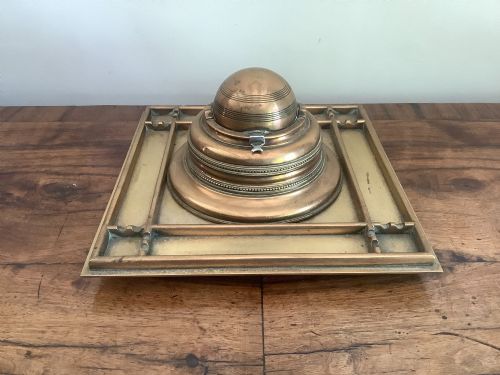


Antique Desk Pen Rest
An antique desk pen rest keeps your writing tools in order, bringing period charm and functional grace to a working surface.
Antique Desk Pen Rest
An antique desk pen rest forms part of a writing apparatus, frequently integrated into larger inkstands, inkwells, and desk tidies designed to hold quills and fountain pens. These accessories emerge across the Victorian, Edwardian, and Art Deco periods, spanning the nineteenth and twentieth centuries.
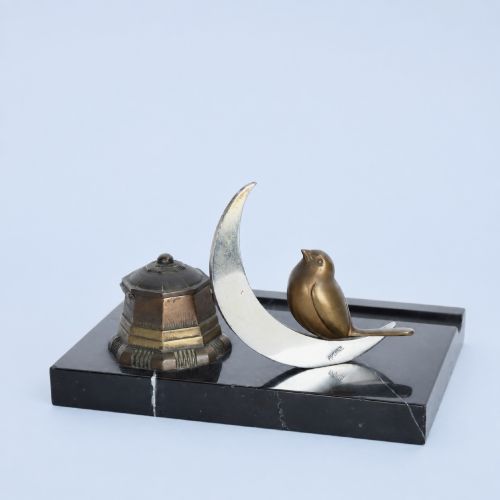
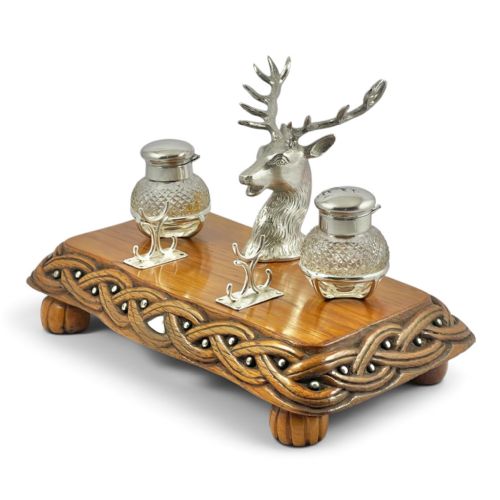
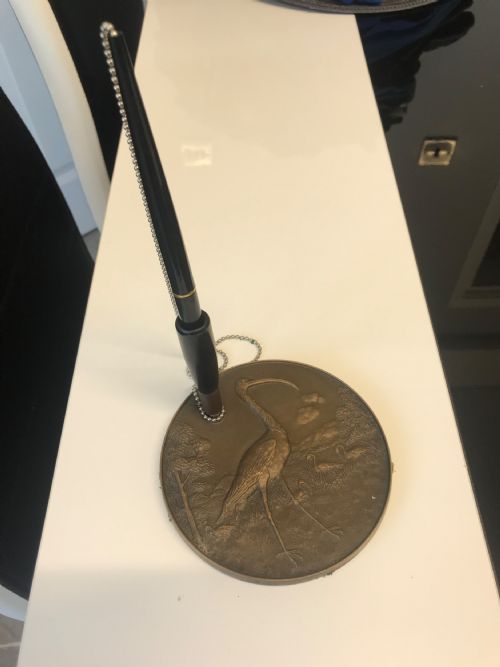
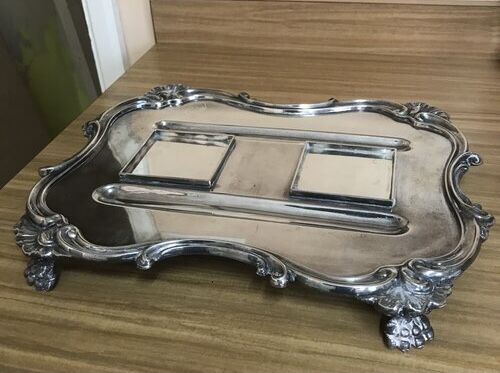
You will encounter standalone pen rests alongside more elaborate desk sets featuring carved wood, cast bronze, or polished marble. The objects often combine practical ink reservoirs with dedicated channels or ledges intended to keep wet nibs from soiling the blotter.
Origins vary from English workshops and Scottish makers utilising local oak and horn to continental foundries producing ornate gilt bronze. The selection on this page reflects these diverse domestic and continental forms.
How they were made
Foundries utilised traditional casting techniques for bronze, brass, and silver-plated metal, often finishing the surfaces with gilding, silvering, or hand-chased detail. Makers shaped natural media such as solid oak, carved Black Forest wood, horn, and various marbles by hand to form the body of the desk stand.
Glassmakers blew and cut heavy inserts for the accompanying ink pots, while silversmiths mounted collars and hinged lids using sterling silver and plated metals. Skilled artisans combined these disparate elements, securing mounts with pins and screws to create heavy, stable writing furniture.
Listings feature items spanning the Victorian, Edwardian, and Art Deco eras, constructed from bronze, brass, silver plate, oak, and marble.
What varies in quality
The degree of hand-finishing on cast metal elements separates standard production from superior examples, particularly where chiselling defines feather, fur, or floral motifs. Heavier gauge metals and denser stones like onyx and marble provide a more substantial weight and presence on the desk.
Artistic attribution and sculptural ambition distinguish finer pieces, such as signed bronzes by known founders or figural models with glass inset eyes. The preservation of original glass ink pots and matching pen components adds considerable integrity to the ensemble.
A.Cohen & Co Ltd London·Harrods·Asprey Of London·Albert Marionnet·Zimmermann·Maurice Dufrene·Bergmann·Ernest Louis ADNIN
The Antique Desk Pen Rest Glossary
- Inkstand
- A complete desk stand incorporating one or more inkwells alongside spaces for pens, wafers, and sand. It serves as the primary master station for correspondence.
- Desk tidy
- An open tray or compartmentalised stand designed to corral miscellaneous writing implements, stamps, and small stationery items. These objects keep the desktop organised.
- Capstan inkwell
- An inkwell shaped like a ship's capstan, featuring a wide base that tapers upward toward a smaller hinged lid. This profile provides stability against tipping.
- Ormolu
- Gilded bronze produced by applying a mercury-gilding paste to cast brass or bronze. The technique yields a rich golden surface finish popular in nineteenth-century decorative arts.
- Black Forest carving
- Elaborate woodwork originating from the mountainous regions of Central Europe, typically depicting woodland animals and foliage in high relief. Bears and dogs frequently feature in these designs.
Antique Desk Pen Rest: Frequently Asked Questions
What is a desk pen rest used for?
A desk pen rest holds dipping pens and quills above the writing surface between uses. This keeps wet nibs from staining paper and protects delicate tips from damage.
Such rests usually appear attached to inkstands or as small standalone bronze and silver trays. They formed an essential component of historical correspondence setups.
How do I date an antique inkstand?
Dating relies upon stylistic markers such as Art Nouveau curves, Victorian gothic revival, or clean Art Deco geometries. Hallmarks on silver mounts and stamped foundry marks offer precise manufacturing years.
Materials also indicate age, as heavy cast bronze and specific marble types correlate with distinct decades. Comparing the construction methods of the ink pots helps confirm the period.
Are original ink pots usually included?
Many surviving desk sets retain their original blown or cut glass ink inserts, though replacements occur frequently due to breakage. Originals often fit the collar precisely and match the wear of the surrounding stand.
Listings specify whether the glass pots accompanying the pen rest are original to the piece. Finding an intact set with matching lids remains desirable for collectors.
How should I clean antique metal desk accessories?
Dusting with a soft, dry brush removes surface particles without disturbing patinated finishes on bronze or brass. Aggressive polishing removes historical surface oxidation and reduces collector value.
Wood and marble components benefit from gentle wiping with a dry microfiber cloth. Moisture should be kept away from organic materials like horn and unsealed wood.