



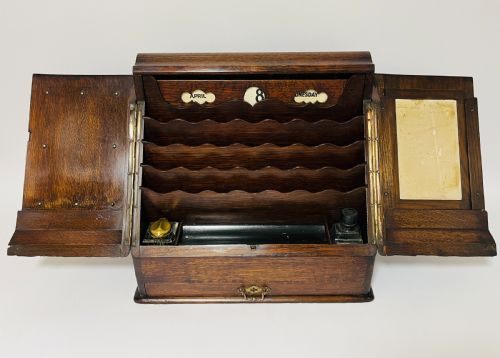


Antique Desk Box Inkwells
Antique desk box inkwells are portable writing companions and desktop containers that bring orderly refinement to correspondence.
Antique Desk Box Inkwells
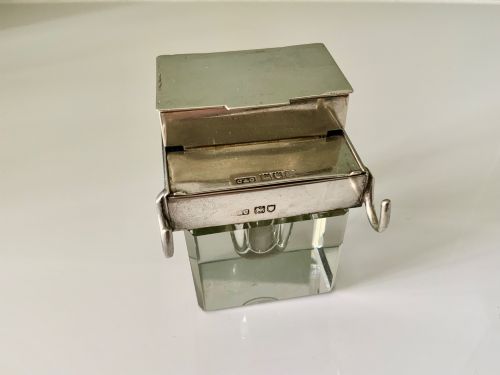
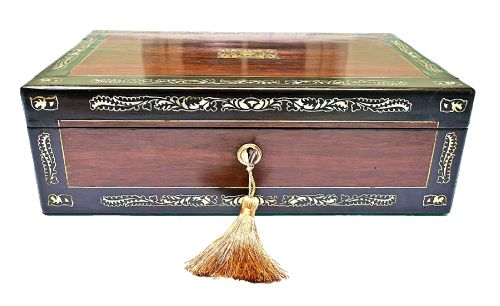
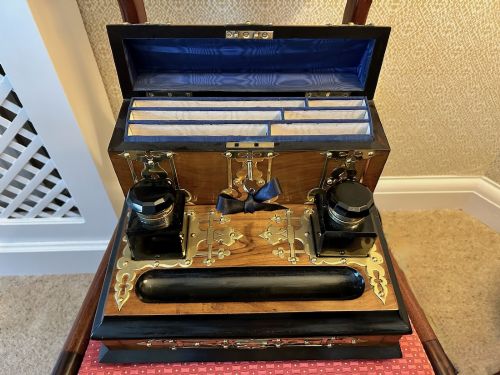
Antique desk box inkwells encompass portable writing slopes, stationery cabinets, and stationary boxes housing glass or metal ink receptacles alongside compartments for pens and paper. These pieces emerge in woods such as rosewood, walnut, and oak, often decorated with brass inlay, mother of pearl, or ormolu mounts.
The domestic and administrative writing habits of the nineteenth and early twentieth centuries generated these fitted containers. Regency and Victorian examples frequently incorporate secret drawers, locking mechanisms, and matching cut glass ink bottles designed for travel or stationary desk use.
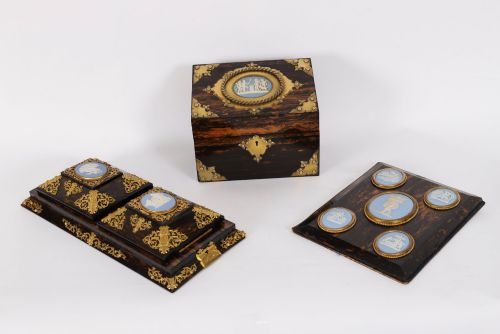
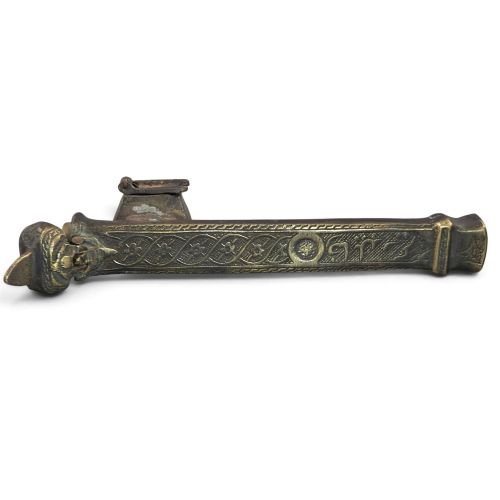
Buyers encountering this selection meet pieces ranging from compact travelling inkwells and brass divit qalamdans to grand French boullework and silver plated desk sets. Forms span simple oak letter racks to elaborate multi-piece sets featuring porcelain insets and marble bases.
Materials and construction methods
Cabinetmakers constructed these writing enclosures from dense hardwoods like mahogany, walnut, oak, and coromandel, often applying veneers and brass stringing to the exterior surfaces. Interior fittings utilised secondary woods alongside velvet or leather writing surfaces.
Metalwork played a structural and decorative role, with brass, ormolu, and silver plate forming carrying handles, hinges, inkwell collars, and applied ornamentation. Glassmakers produced heavy cut glass and crystal bottles designed to withstand daily dipping without tipping.
Antique Desk Box Inkwells Retail Price Guide 2026
Typical asking prices for desk box inkwells among the pieces listed under this phrase on Sellingantiques today, from the lower quarter to the upper quarter. They describe what is for sale here now, not the wider market.
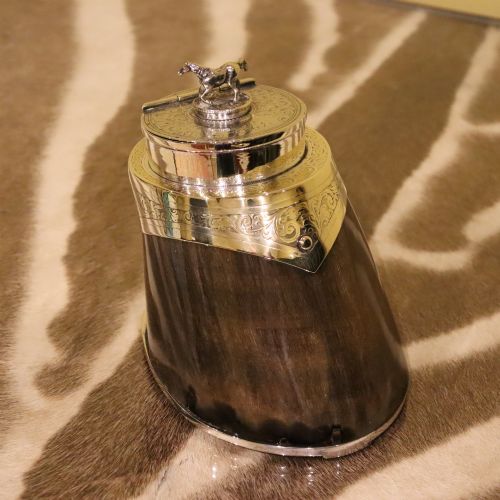
A Victorian taxidermy horse hoof desk tidy holds ink with equine solemnity.
Evaluating craftsmanship and design
The sophistication of the internal mechanism and the precision of the exterior parquetry or brass inlay distinguish standard items from exceptional ones. Elaborate additions such as mother of pearl decoration, hand-painted porcelain panels, and matched ormolu mounts elevate a piece's visual weight.
The integrity of fitted interiors, including original glass inkwells with matching lids and functioning key locks, governs the standing of these desk accessories. Superior examples display seamless joinery in luxury timbers like coromandel and tortoiseshell alongside refined metal casting.
Edwards and Jones·Marson and Jones·W M F
The Antique Desk Box Inkwells Glossary
- Writing slope
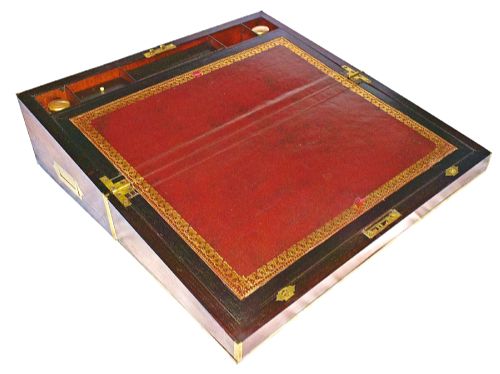
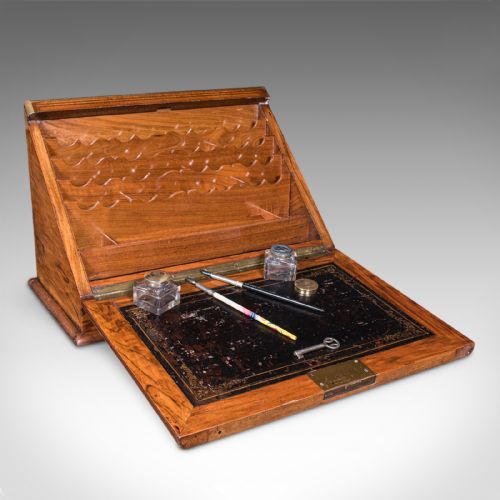
- A portable box with a hinged, slanted writing surface that folds down to reveal compartments for paper, pens, and inkwells. These pieces were essential for correspondence during travel.
- Inkstand
- A tray or stand holding one or more inkwells, pen rests, and sometimes sanders or wafer boxes. They sat permanently on a desk or library table.
- Ormolu
- Gilded bronze used for decorative mounts, feet, and handles on luxury nineteenth-century boxes and desk sets. The technique involves applying a mercury-gold amalgam to bronze.
- Boullework
- Marquetry technique utilising tortoiseshell and brass inlay, popular in French-influenced nineteenth-century decorative arts. It creates a striking contrast of dark tortoiseshell and gleaming metal.
- Divit qalamdan
- An Ottoman travelling pen case and ink container, typically forged in brass. These portable instruments combined the ink reservoir and pen holder in a single elongated unit.
Antique Desk Box Inkwells: Frequently Asked Questions
What is a writing slope?
A writing slope is a portable hinged box designed to provide an angled writing surface while securely storing paper, pens, and inkwells inside. When closed, it forms a compact rectangular chest.
Victorian and Regency travellers used these boxes to maintain correspondence away from home. The interior typically lifts out or folds open to reveal secret compartments and pen trays.
How do you use a travelling inkwell?
Travelling inkwells feature screw-down collars or tight glass stoppers designed to prevent liquid ink from spilling during transit. They fit snugly into designated slots within nineteenth-century portable writing boxes.
Users would unscrew the cap to dip their nibs while on the move, then seal the container tightly before closing the outer wooden case.
What are stationery cabinets used for?
Stationery cabinets are upright desk boxes designed to hold writing paper, envelopes, and correspondence organised upright in pigeonholes or tiered racks. They replaced flat writing slopes in many late-nineteenth-century offices and homes.
These pieces usually incorporate a hinged front door or fall-front lid enclosing fitted shelves, often accompanied by an integrated inkstand or letter rack on top.
How do you date an antique desk box?
Dating relies on stylistic clues, timber choices, and hardware types, such as the Regency preference for brass stringing or late-Victorian oak construction. The presence of specific maker marks, patent stamps, or design registrations also helps narrow the production period.
Materials like coromandel and ormolu point strongly toward mid-nineteenth-century luxury production, whereas Edwardian and George V pieces often feature simpler silver-plated mounts.