



Decorative Desk Slope
A decorative antique desk slope is a portable box designed for correspondence, and selecting one brings tactile historical writing furniture into your home.
Decorative Desk Slope
When you search for a decorative antique desk slope, you encounter portable writing boxes designed to fold open into a slanted writing surface. These pieces range from standard nineteenth century forms to specialised campaign boxes and stationary cabinets.
Beyond basic slopes, the category encompasses related writing furniture such as cylinder desks and stationary cabinets. These items share the primary function of holding writing materials and correspondence securely within a hinged wooden case.
How they were made
Cabinet makers utilised dense hardwoods including mahogany, rosewood, burr walnut, and satinwood to construct the primary bodies of these boxes. These timbers provided the structural durability required for portable writing furniture that underwent frequent travel.
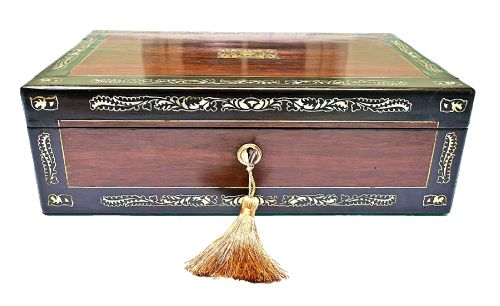
Decoration relied on contrasting natural materials such as mother of pearl, boxwood inlay, ebony, and intricate Tunbridge wear. Craftsmen also incorporated brass hinges, escutcheons, and gilt coverings to protect corners and secure lids.
Decorative Desk Slope Retail Price Guide 2026
Typical asking prices for decorative desk slope among the pieces listed under this phrase on Sellingantiques today, from the lower quarter to the upper quarter. They describe what is for sale here now, not the wider market.
Listings feature nineteenth century pieces spanning the Victorian era, including specific years like eighteen-sixty and eighteen-thirty.
What varies in quality
The sophistication of the timber figure and the precision of the joinery set finer pieces apart from standard items. Burr walnut and figured rosewood command attention through rich grain patterns, while boxwood inlay and mother of pearl decoration show deliberate hand placement.
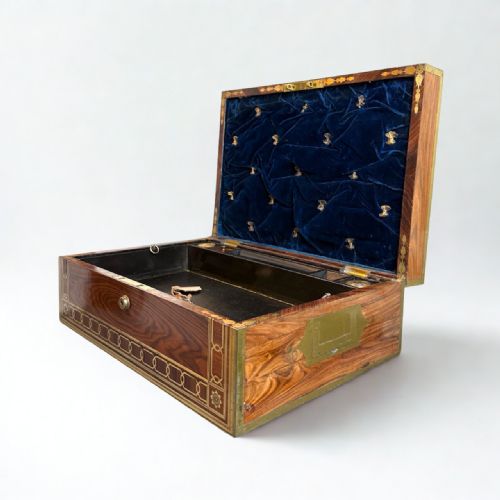
Interior fittings reveal the original tier of manufacture through the inclusion of matching inkwells, hidden compartments, and functional keys. The integration of painted details and specialist techniques like Tunbridge wear further distinguishes superior examples.
The Decorative Desk Slope Glossary
- Writing slope
- A portable box with a hinged, slanted lid designed to provide an angled surface for writing letters. These boxes typically fold flat when closed to secure paper and ink.
- Tunbridge ware
- A form of British woodwork characterised by mosaic tile patterns made from multiple tiny pieces of naturally coloured wood. This technique creates detailed pictorial designs on box lids.
- Stationary cabinet
- A wooden cabinet designed for organising paper, envelopes, and writing implements on a desk. These pieces often feature tiered interior compartments and doors.
- Escutcheon
- A flat plate of brass surrounding a keyhole to protect the surrounding wood from wear. On these boxes, it serves both a functional and decorative purpose.
Decorative Desk Slope: Frequently Asked Questions
What is a desk slope?
A desk slope is a portable wooden box featuring a hinged lid that angles upward to create a writing surface. Inside, compartments hold paper, pens, and inkwells for travel or home use.
Historically, these boxes allowed individuals to write letters comfortably before fitted desks became standard in every room. They fold shut and lock to keep private correspondence secure.
How do I date a slope?
Dating relies on timber choice, construction methods, and decorative styles typical of specific decades. Mahogany and rosewood dominate nineteenth century examples, while specific inlays indicate Victorian production.
Hardware such as brass hinges and escutcheons also offer clues to the period of manufacture. Makers often incorporated contemporary decorative trends like Tunbridge ware or mother of pearl.
Were these used for travel?
Many writing boxes functioned as portable desks for travellers, officers, and the gentry. Campaign boxes were built specifically to withstand the rigours of transit.
Their robust construction in dense hardwoods protected fragile writing instruments and ink. Built-in locks ensured personal papers remained confidential away from home.
How do I care for wood?
Maintain antique wooden surfaces by keeping them away from direct sunlight and sudden temperature changes. This prevents the timber from drying out or warping.
Apply a suitable wax polish occasionally to nourish the grain of rosewood or mahogany. Dust gently with a soft cloth to protect delicate mother of pearl and inlay.