


Antique Delft Pottery
Antique delft pottery brings tin-glazed earthenware into the home through charger plates, apothecary jars and blue and white vases dating back centuries.
Antique Delft Pottery
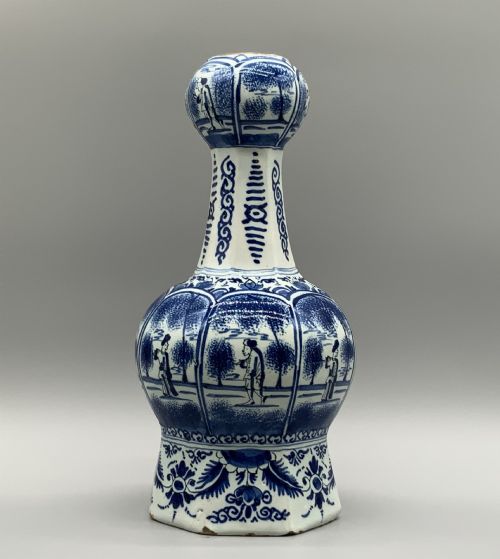
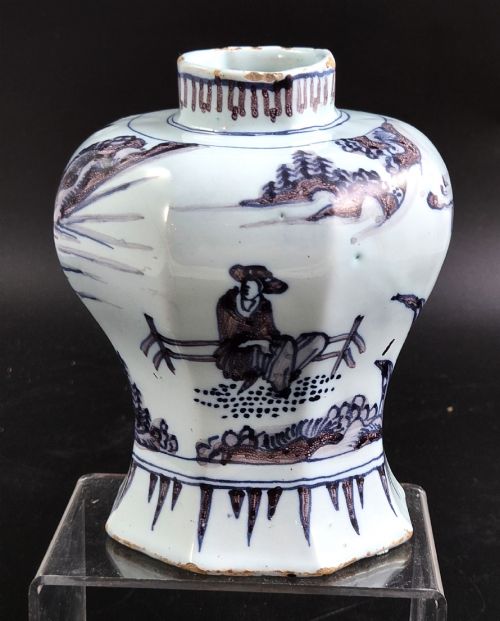
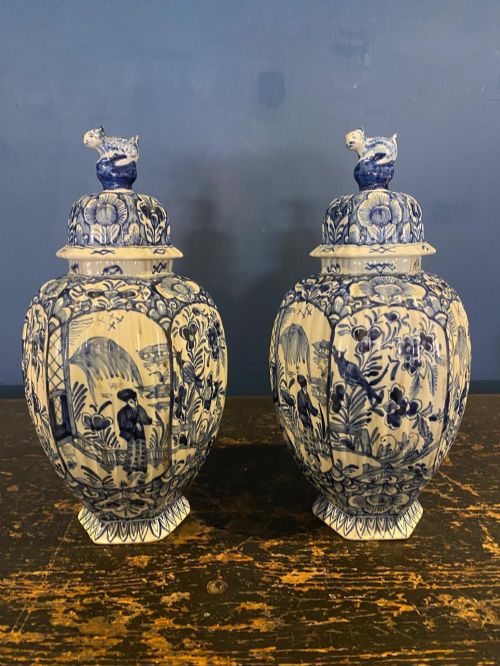
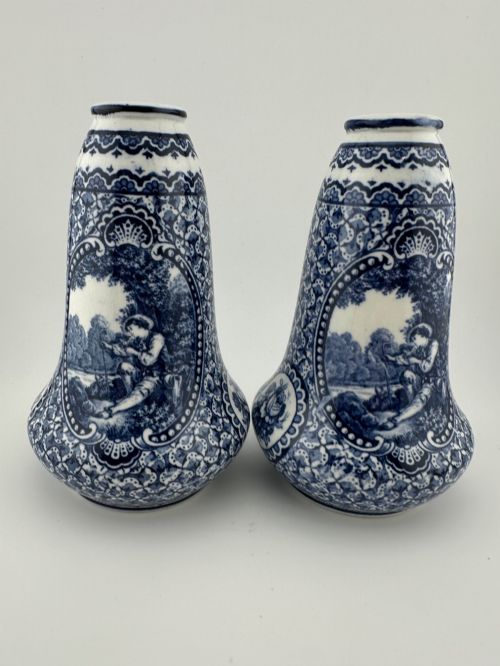
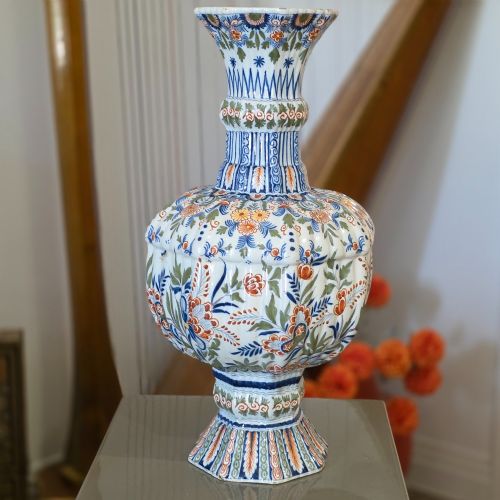
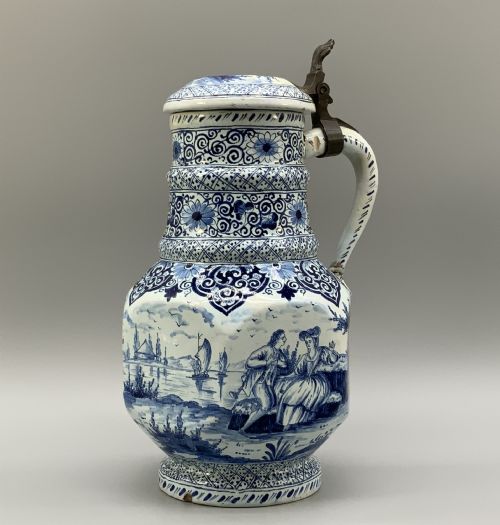
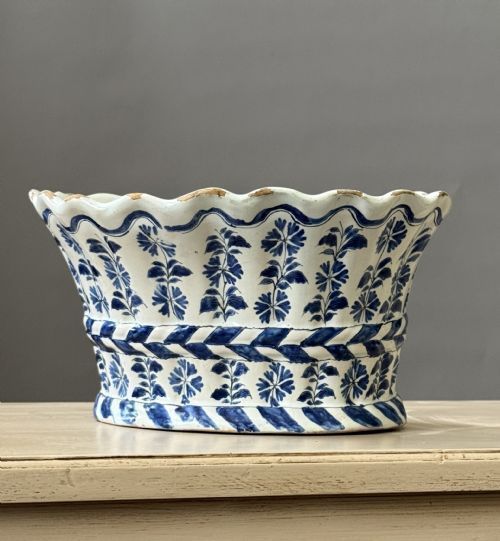
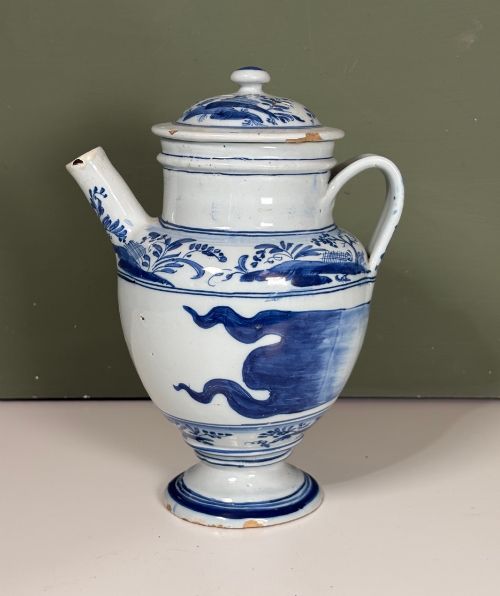
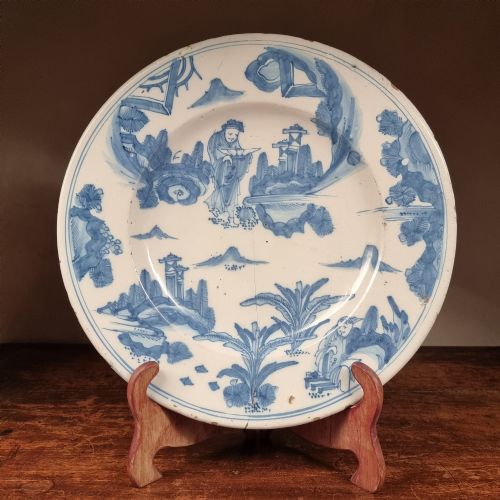
Collectors seeking antique delft pottery encounter a diverse range of domestic and decorative objects spanning multiple centuries. The selection includes chargers, wall dishes, posset pots, apothecary jars, bough pots and vases originating from Dutch, English and continental workshops.
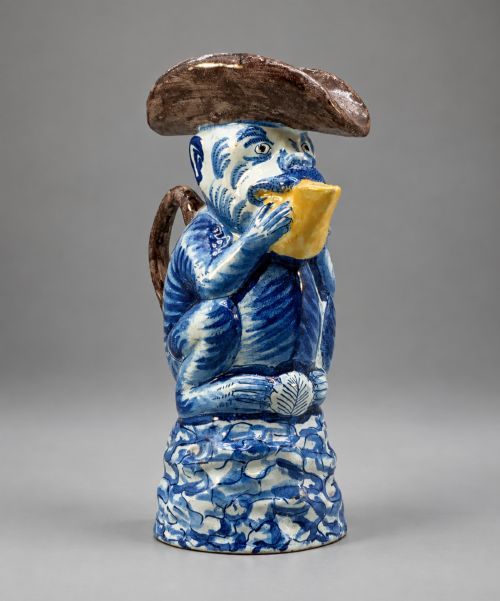
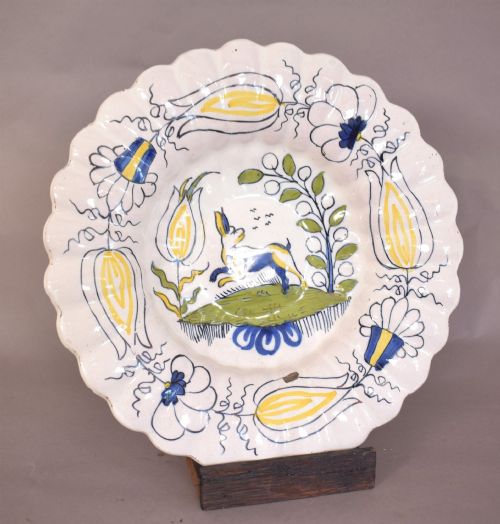
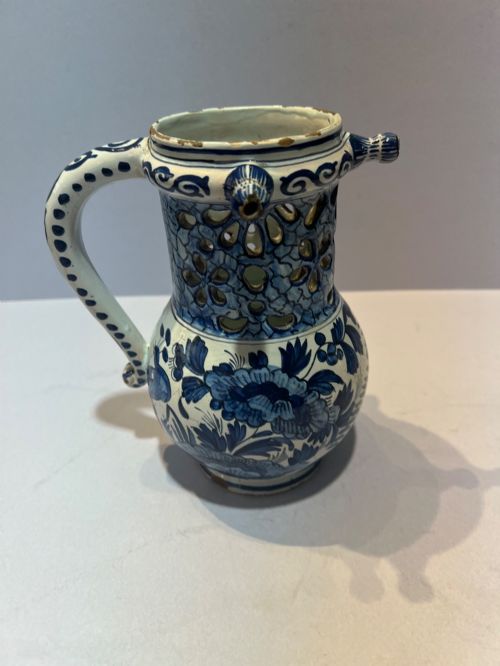
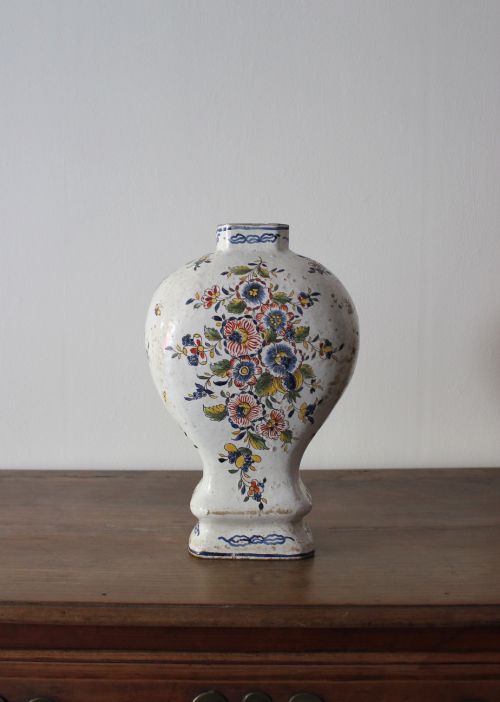
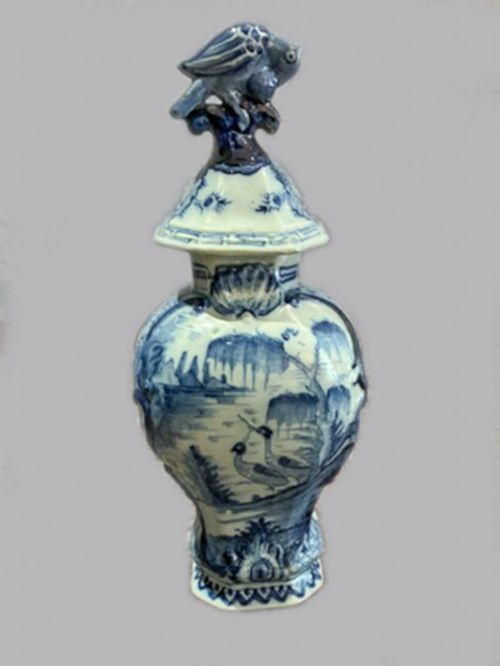
Vessels on this page frequently display traditional blue and white painting alongside vibrant polychrome palettes featuring floral, animal or figural motifs. Common forms range from large display chargers to functional inkstands, puzzle jugs, barber bowls and tiles.
Pieces survive from the seventeenth, eighteenth and nineteenth centuries, reflecting shifts in ceramic design from early Dutch baroque styles to later revival patterns and art nouveau ceramics.
How they were made
Makers formed objects from earthenware clay before coating the body in an opaque tin-glaze that provided a smooth white ground for painting. Artisans applied cobalt pigment or mixed mineral oxides directly onto the porous unfired or biscuit-fired glaze before the final kiln firing.
Brushwork required steady hands because the absorbent tin-glaze immediately locked pigment into place without allowing for correction. Polychrome decoration incorporated manganese, yellow and other metallic oxides alongside cobalt blue to create complex multi-coloured designs.
Listings feature tin-glazed earthenware forms ranging from seventeenth-century chargers to twentieth-century art nouveau ceramics.
What varies in quality
The refinement of the painted decoration distinguishes simpler domestic wares from masterworks of the kiln. Crisp, fluid brushwork and detailed pictorial subjects indicate superior skill by the decorator.
The smoothness and opacity of the tin-glaze layer influence visual appeal, as do the complexity of the ceramic moulding and the preservation of the original glossy surface over centuries of handling.
The Antique Delft Pottery Glossary
- Tin-Glaze
- A ceramic glaze made opaque by the addition of tin oxide, creating a white surface suitable for painted decoration.
- Charger
- A large circular decorative plate or shallow bowl designed primarily for display on walls or sideboards rather than dining.
- Polychrome
- Decoration employing multiple distinct colours, typically applied using metallic oxides on tin-glazed earthenware.
- Bough Pot
- A specialised ceramic vessel featuring perforated lids or openings designed to hold cut branches or flower arrangements.
- Faience
- A European term for tin-glazed earthenware, frequently associated with continental European production traditions.
Antique Delft Pottery: Frequently Asked Questions
What is antique delft pottery?
Antique delft pottery is tin-glazed earthenware produced primarily in the Netherlands and England from the seventeenth century onwards. It encompasses decorative plates, chargers, apothecary jars and vases.
Potters shaped local clays into functional and ornamental vessels before coating them with an opaque white glaze. Artisans then hand-painted designs using cobalt blue or multi-coloured mineral pigments.
How were delft chargers used?
Large chargers served mainly as decorative wall plates or display items on sideboards and dressers in prosperous homes. Their broad surfaces allowed painters to execute detailed pictorial scenes and floral compositions.
While some larger dishes saw occasional use during feasts or punch service, their tin-glazed surfaces remained vulnerable to chipping and scratching during everyday dining.
How do I identify eighteenth century delft?
Eighteenth-century pieces typically exhibit lighter earthenware bodies and thinner tin-glaze layers than seventeenth-century precursors. Decoration shifted between traditional blue and white chinoiserie motifs and vibrant polychrome floral sprays.
Examination of the foot rim often reveals unglazed red or buff earthenware underneath, alongside kiln support marks left during firing.
Are all delft pieces Dutch?
While the Netherlands produced the most famous delftware, particularly around Delft and Rotterdam, English kilns in London, Bristol and Lambeth manufactured substantial quantities. Continental potteries in France and Spain also created tin-glazed faience in similar styles.
Distinguishing between English and Dutch output depends on subtle differences in clay bodies, glaze thickness, and regional painting conventions.