








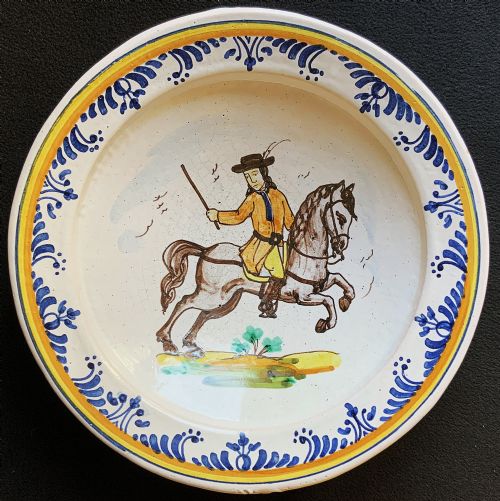
Antique Delft Dishes
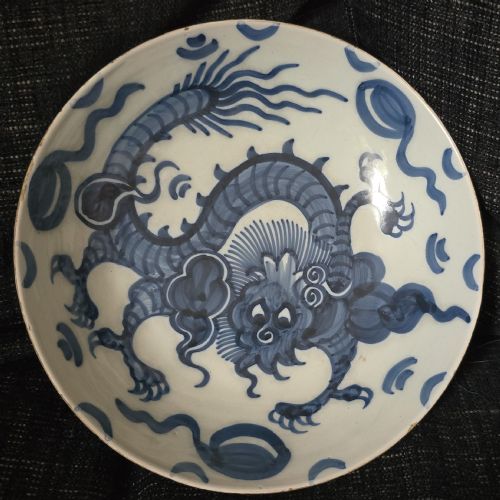
These antique delft dishes are tin-glazed earthenware plates and chargers offering hand-painted blue and white or polychrome decoration from European centres.
Antique Delft Dishes
When you search for antique delft dishes, you encounter tin-glazed earthenware pieces primarily spanning the seventeenth and eighteenth centuries. These items take the form of chargers, shallow bowls, saucer dishes, and barber's bowls originating from English, Dutch, French, and Spanish potteries.
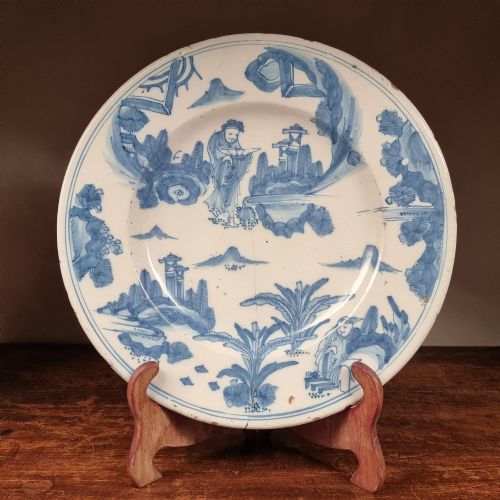
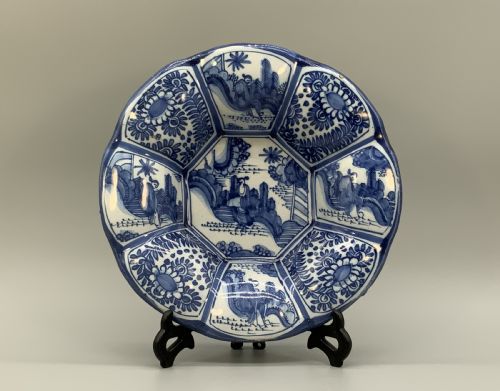
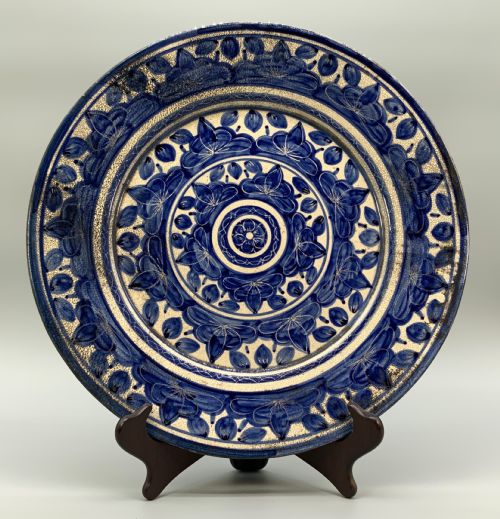
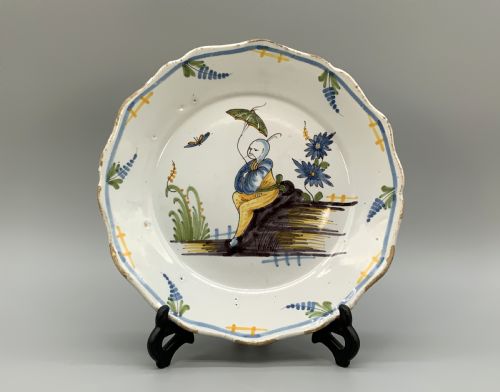
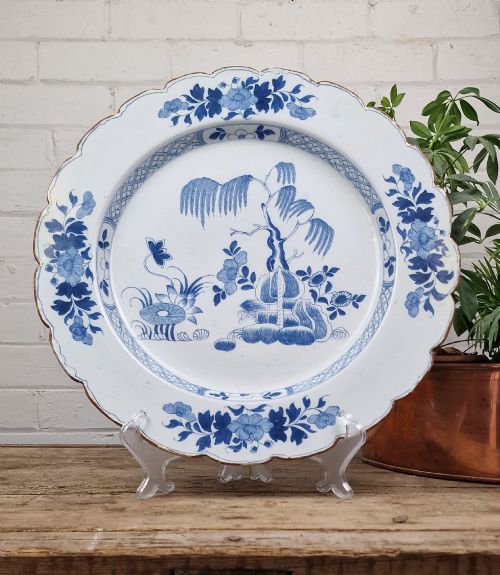
The most common examples on this page are eighteenth-century chargers and plates decorated with cobalt blue pigment or polychrome floral and geometric motifs. Many pieces show the influence of Chinese porcelain through Chinoiserie and Kraak styles adapted by European makers.
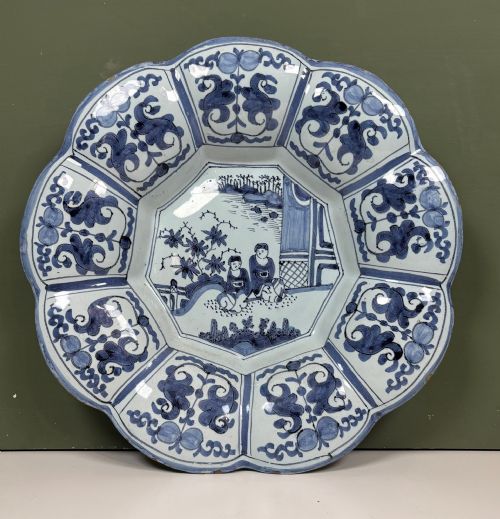
Forms range from small plates intended for table use to large decorative chargers designed for display on dresser racks or walls. Rarer variants include sweetmeat presentiers, lobed dishes, and specialised bleeding bowls from Dutch and English workshops.
How they were made
Potters shaped these vessels from earthenware clay and coated them in an opaque tin-glaze that provided a smooth white background for painting. This tin glaze absorbs moisture readily and tends to chip at the edges over centuries of handling.
Painters applied cobalt oxide and other pigments directly onto the unfired or slightly fired glaze, where the colours sank into the surface during the kiln firing. Polychrome examples incorporate manganese, yellow, and other mineral colours alongside standard blue and white designs.
Antique Delft Dishes Retail Price Guide 2026
Typical asking prices for delft dishes among the pieces listed under this phrase on Sellingantiques today, from the lower quarter to the upper quarter. They describe what is for sale here now, not the wider market.
Keep an eye out for the specialist barber's bowl, complete with a neck cutout for catching splashes during medieval shaves.
What varies in quality
Quality rests in the crispness of the hand-painted brushwork and the complexity of the design, whether geometric, floral, or pictorial. Superior pieces display confident, fluid strokes that capture movement within Chinoiserie or Kraak layouts.
The smoothness of the tin glaze and the stability of the earthenware body also determine overall standard. Pieces with minimal warping from the kiln and an even, bright glaze finish sit at the top of the range.
The Antique Delft Dishes Glossary
- Tin glaze
- An opaque white glaze made by adding tin oxide to a lead glaze. It creates a pale canvas for painted pigments.
- Charger
- A large decorative or serving plate, often exceeding thirty centimetres in diameter, designed for display on walls or dresser racks.
- Polychrome
- Decoration employing multiple colours rather than a single hue. These palettes frequently include manganese purple, yellow, and green.
- Chinoiserie
- European artistic style reflecting Chinese motifs and landscapes. Painters adapted these oriental scenes onto local earthenware bodies.
- Kraak style
- A design format featuring segmented panels around a central motif, inspired by late Ming dynasty Chinese porcelain exported to Europe.
Antique Delft Dishes: Frequently Asked Questions
How do I hang a delft charger safely?
Heavy wire spring hangers exert pressure on the fragile tin-glazed edges and can cause chipping over time. Use a padded bespoke display stand or a professional wall mount that supports the base securely.
Ensure the wall fixing is secure and keep the charger away from areas of high vibration or direct sunlight.
Can I use antique delft plates for food?
Tin-glazed earthenware is porous and the historic glaze may contain lead compounds that leach when exposed to acidic foods. Historic pieces are best reserved for display and decorative purposes rather than daily dining.
Wash them only by hand with lukewarm water when necessary, avoiding soaking or harsh modern detergents.
What is the difference between a plate and a charger?
Plates are smaller and were historically produced for individual dining use at the table. Chargers are substantially larger vessels created primarily for presentation and display on furniture or walls.
Both share the same tin-glazed earthenware construction and painted decorative techniques from the period.