




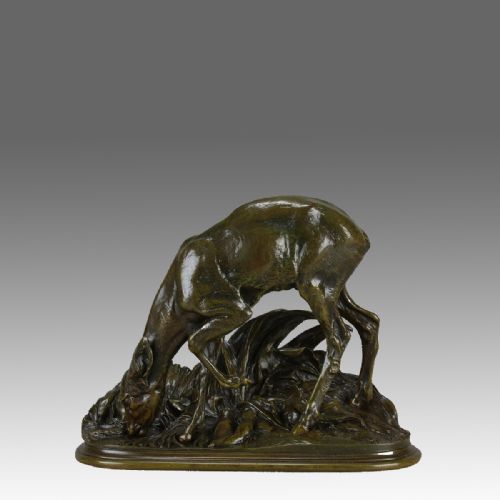
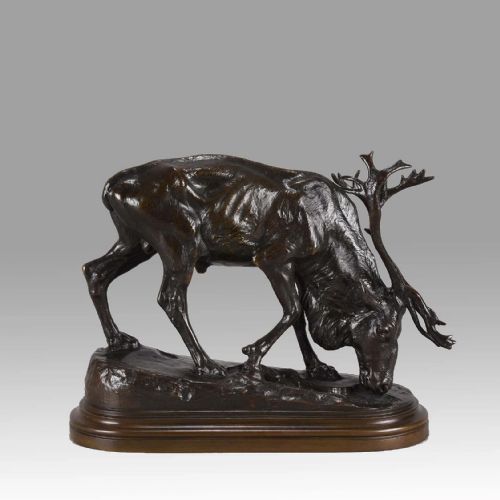
Antique Deer Ornaments
These antique deer ornaments range from Georgian porcelain spill vases to nineteenth-century Animalier bronzes, offering a steadfast charm for the mantelpiece.
Antique Deer Ornaments
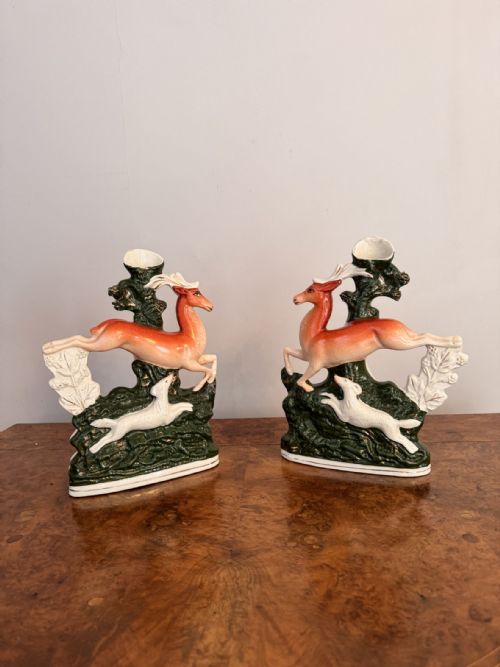
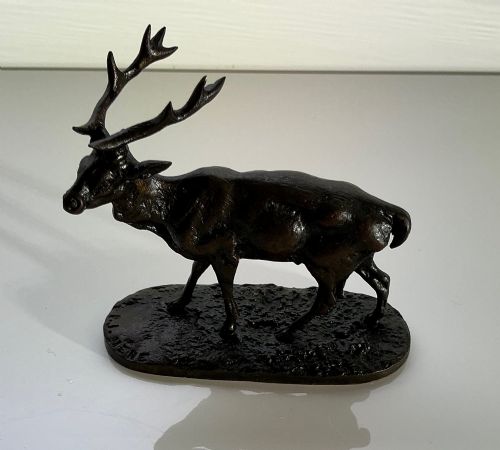
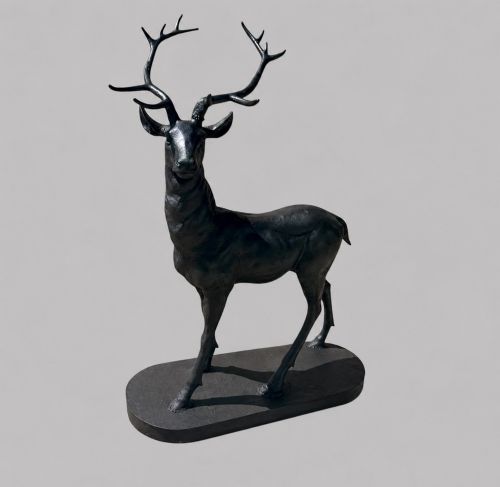
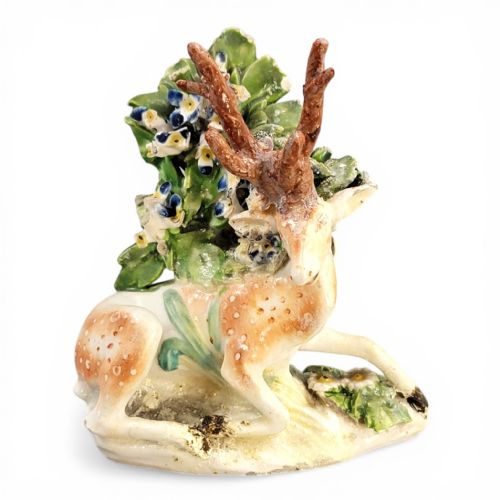
When you search for antique deer ornaments, you encounter a varied collection spanning eighteenth-century porcelain figures, nineteenth-century earthenware spill vases, and heavy bronze sculptures. The most common forms on this page are earthenware Staffordshire spill vases and cast bronze figures capturing stags and does.
The materials shift considerably across the centuries, moving from soft-paste porcelain and earthenware in the Georgian and Victorian periods to cast bronze, marble, and spelter by the twentieth century. Styles range from rococo porcelain with bocage backgrounds to French Animalier realism and Art Deco simplification.
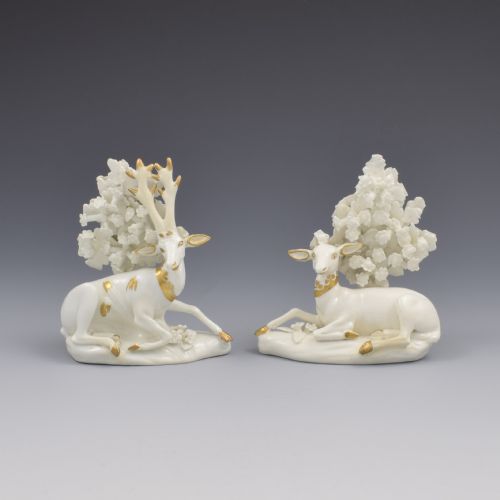
Origins span English potteries like Derby and Staffordshire alongside French bronze foundries. Buyers find both single figures and symmetrical pairs designed for chimneypieces and desks.
Materials and production methods
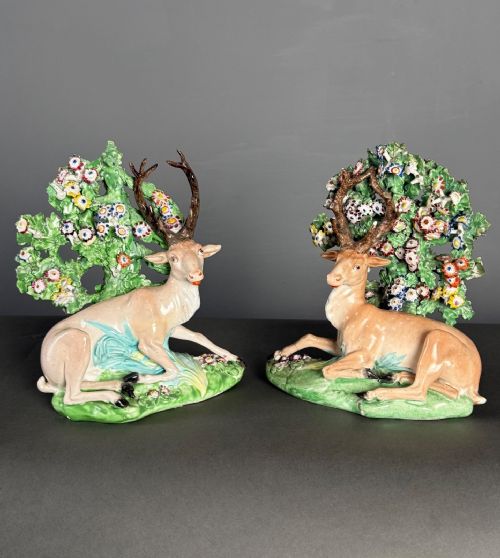
Ceramic pieces rely on earthenware or soft-paste porcelain, shaped in moulds and finished with hand-painted enamels and glazes. Early figures often incorporate delicate bocage foliage applied by hand around the porcelain bodies.
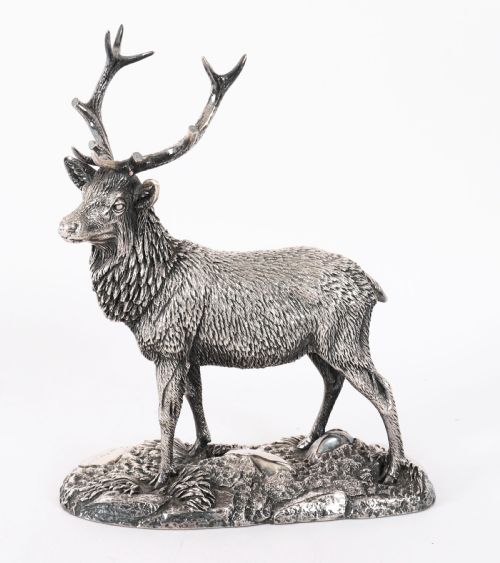
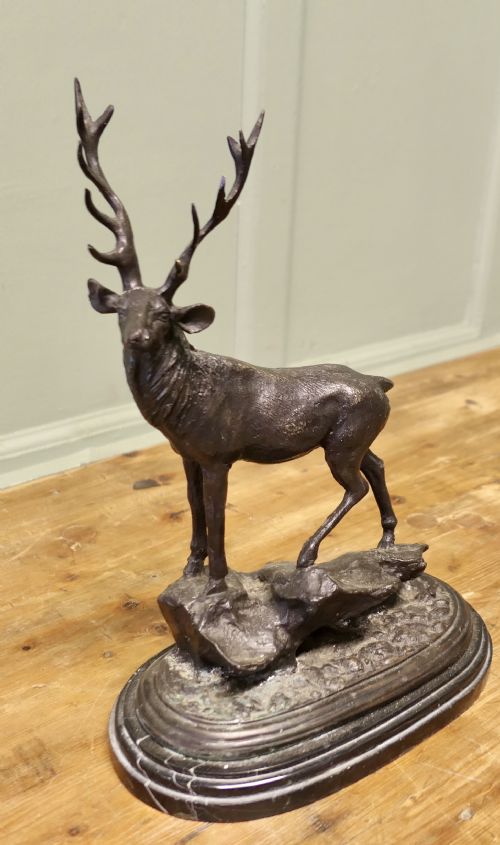
Metal sculptures utilise the lost-wax casting technique in bronze or the pressing of spelter, mounted upon weighted bases of marble or onyx. Fine details such as antlers and fur receive cold-chased finishing after casting.
One bronze inkwell retains its original glass eyes, staring back across the desk.
Judging quality in metal and ceramic
Quality rests upon the crispness of the modelling and the precision of the cast or glaze. Finer bronzes exhibit sharp definition in the musculature and antlers, whilst better ceramic figures retain clean enamel colours without excessive rubbing.
The integration of the base matters greatly, from the smoothness of the marble plinth supporting a bronze stag to the stability and glaze consistency of a Staffordshire spill vase.
Tom Mackie·PJ Mene·A L Barye·Pierre Jules Mêne·Isidore Bonheur·I. Rochard·Jules Moigniez
The Antique Deer Ornaments Glossary
- Animalier
- A nineteenth-century sculptural style dedicated to the realistic depiction of animals. Artists working in this manner focused on accurate anatomy and natural behaviour.
- Bocage
- Background foliage made of applied porcelain leaves and flowers. This decorative screen is commonly found behind eighteenth-century figures.
- Spill vase
- A hollow ceramic vessel designed to hold taper spills for lighting candles. These function both as ornaments and practical fireplace accessories.
- Spelter
- A zinc alloy used as a cheaper alternative to bronze in decorative metalwork. It frequently receives a bronze-coloured coating to mimic heavier metal.
- Recumbent
- Lying down or resting. Figures described this way depict stags or does in a prone position.
Antique Deer Ornaments: Frequently Asked Questions
What are porcelain deer figures used for?
These porcelain figures served as decorative mantel ornaments in Georgian and Victorian parlours. They brought pastoral imagery indoors.
Pairs of stags and does were often placed symmetrically on either side of a clock or urn.
How do I identify a bronze stag sculpture?
Bronze sculptures of stags typically feature substantial weight and a dark patination. They often rest upon fitted marble or onyx bases.
Signatures from sculptors occasionally appear directly on the bronze casting near the feet.
Are Staffordshire deer spill vases fragile?
Staffordshire earthenware spill vases are relatively sturdy but possess delicate protruding antlers and ears. These glazed ceramic parts are vulnerable to chipping.
Handle these pieces with care when dusting or rearranging mantel displays.
What is the difference between bronze and spelter?
Bronze is a heavy copper alloy that takes a deep patina and holds sharp sculptural detail. It represents the higher end of metal ornaments.
Spelter is a lighter zinc-based metal that feels softer and appears more frequently in Art Deco pieces mounted on marble.