



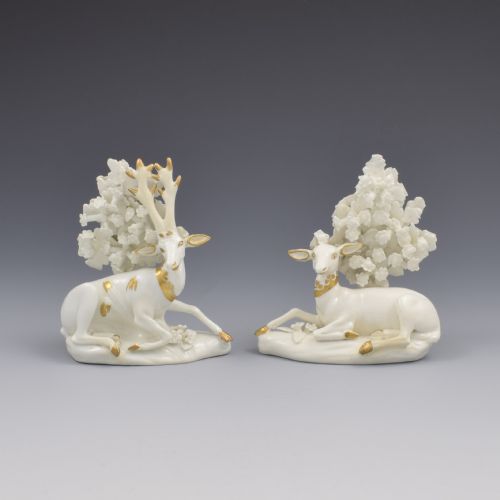


Antique Ceramic Deer
Antique ceramic deer bring woodland character indoors, capturing the natural grace of stags and does through glazed clay and porcelain.
Antique Ceramic Deer
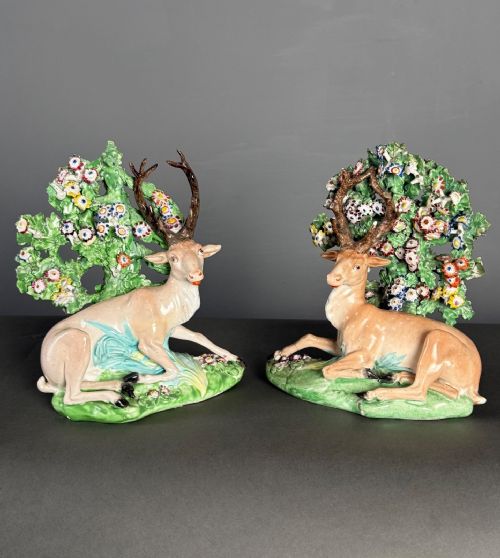
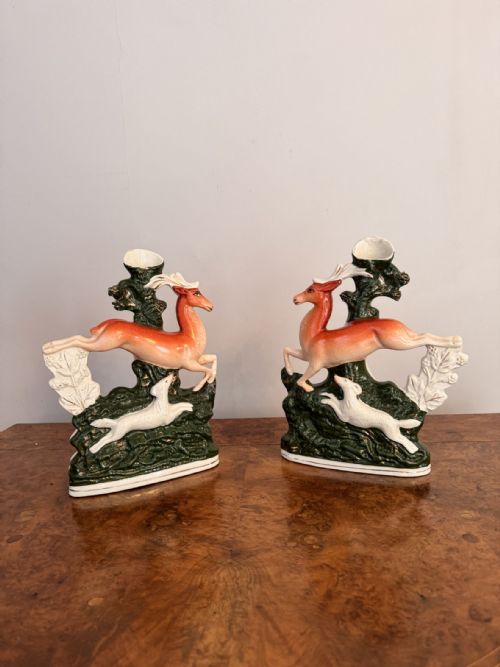
When you search for antique ceramic deer, you encounter a varied selection of sculptural figures, spill vases, tiles, and lustre vases spanning the eighteenth, nineteenth, and early twentieth centuries. The pieces on this page originate from English factories and French workshops, utilising earthenware, porcelain, and soft-paste porcelain to shape recumbent stags and standing does. You are most likely to meet Victorian Staffordshire spill vases alongside Georgian Derby porcelain figures when browsing these listings.
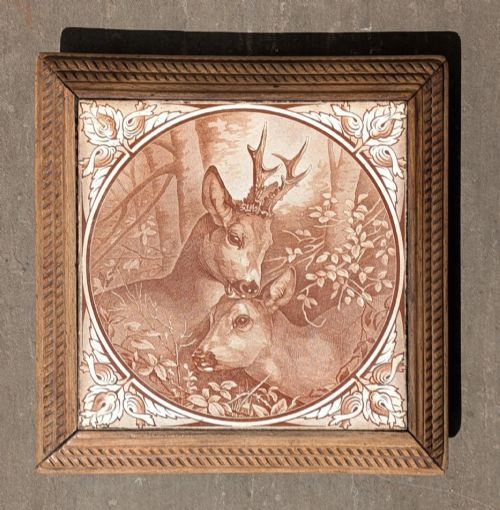
The forms range from functional desk or mantel spill vases designed to hold wooden matches to purely decorative porcelain figures framed by bocage foliage. Makers employed styles such as Georgian Rococo, Regency, and Victorian Staffordshire to render the animals in both naturalistic and heavily stylized poses. Certain pieces incorporate wooden stands or function as ceramic tiles mounted for display, demonstrating the broad domestic utility of animal subjects across different design periods.
Materials and manufacture
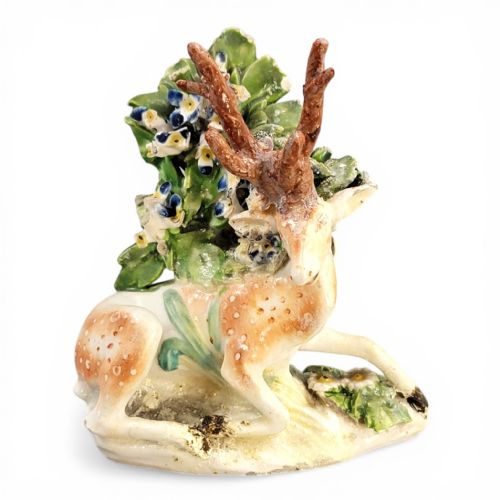
Makers shaped these animal figures using earthenwares and soft-paste porcelain, applying lead glazes and vibrant enamels to capture the natural coloration of stags and does. Potters frequently utilised slip-casting or hand-modelling techniques before firing the clay in kilns, sometimes adding intricate background elements like applied porcelain leaves and branches known as bocage.
Later twentieth-century examples incorporate specialised lustre glazes fired onto the ceramic body to produce shimmering metallic surface effects. Artisans also combined ceramic components with other materials, mounting tiles into carved wooden stands to create functional domestic objects for the home.
Materials utilised across these objects include porcelain, soft-paste porcelain, earthenware, enamel, and lead glaze.
Assessing quality in ceramic figures
Quality in these sculptural forms reveals itself through the crispness of the modelling and the delicacy applied to fine anatomical details like antlers and facial expressions. Superior pieces display carefully controlled glaze application and hand-painting that preserve the definition of the underlying clay without pooling or obscuring texture.
The complexity of the surrounding composition often dictates the standard of the work, particularly in porcelain figures featuring intricate botanical bocage or multi-figure groupings. Early eighteenth and nineteenth-century examples achieve distinction through the survival of their original hand-applied enamel colours and the absence of clumsy restoration work.
Derby·Bloor Derby·Walton·Royal Lancastrian·Richard Joyce
The Antique Ceramic Deer Glossary
- Spill vase
- A hollow ceramic vessel designed to hold slender wooden tapers used for lighting candles or fires. These cylindrical containers are often incorporated into the backs of animal figures.
- Bocage
- Applied decorative foliage made from porcelain or clay, typically forming a leafy arbour or background behind a figural group. This delicate technique is common in eighteenth-century porcelain production.
- Recumbent
- An artistic posture depicting an animal lying down with its legs folded beneath its body. This position provided stability for eighteenth-century porcelain figures fired in early kilns.
- Pearlware
- A refined type of earthenware developed in the late eighteenth century featuring a thin glaze with a faint bluish tint. It was widely used by Staffordshire potters for domestic figures.
- Lustre
- A metallic ceramic glaze that produces an iridescent sheen when fired in a reducing kiln atmosphere. This technique creates reflective, shimmering surface effects on twentieth-century wares.
Antique Ceramic Deer: Frequently Asked Questions
How were ceramic spill vases used?
Ceramic spill vases served a practical purpose in homes before the invention of safety matches. They held wooden splints called spills, which were used to transfer fire from a hearth to lamps, candles, or pipes.
Makers cleverly integrated these tubular holders into the backs of animal figures to combine utility with ornament. Placing them on mantelpieces kept the tapers within easy reach of the fireplace.
How do I identify Derby porcelain figures?
Derby porcelain figures typically date from the eighteenth and early nineteenth centuries, featuring fine soft-paste ceramic bodies and detailed enamel painting. Early examples often depict recumbent stags with naturalistic anatomical modelling.
Scholars and collectors look for specific characteristics like patch marks from kiln furniture and delicate bocage foliage. These markers help distinguish Derby production from later Staffordshire earthenware copies.
What is Staffordshire pottery?
Staffordshire pottery refers to the prolific ceramic output of factories situated in the Midlands region of England. Makers there produced a vast range of earthenware figures, animals, and spill vases for the domestic market.
Victorian Staffordshire deer figures are particularly well known for their robust earthenware bodies and hand-painted surface decoration. They were designed as affordable ornaments for middle-class Victorian mantelpieces.