


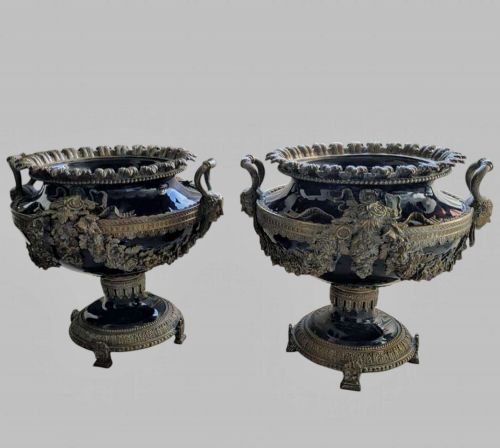
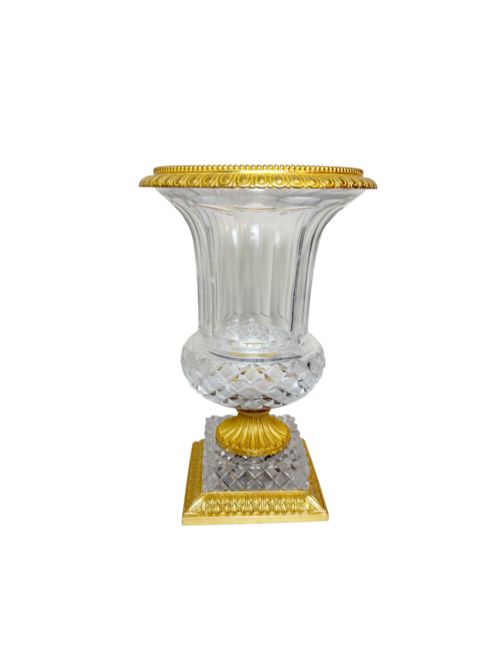
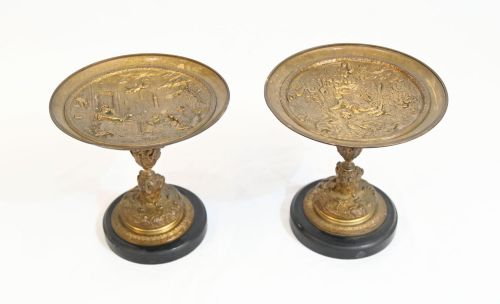
Antique Decorative Centrepiece
An antique decorative centrepiece anchors a room, drawing the eye with porcelain, bronze, or silver shaped into bowls, urns, and tazzas.
Antique Decorative Centrepiece
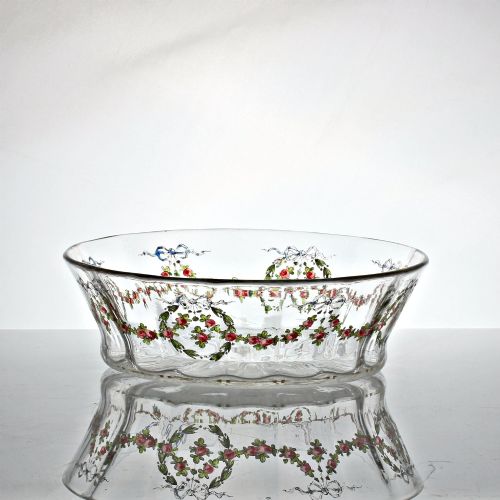
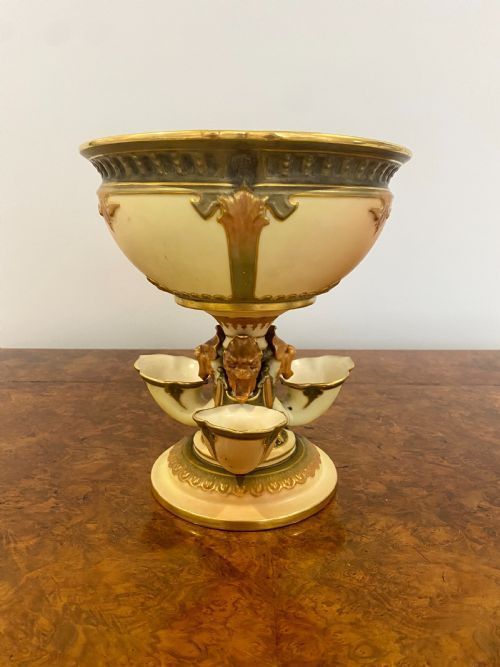
When searching for an antique decorative centrepiece, buyers encounter a diverse array of table vessels designed to command attention in domestic interiors. The selections span open bowls, tazzas, covered urns, epergnes, and footed baskets originating primarily across the nineteenth and early twentieth centuries.
French influence dominates the groupings, frequently manifesting as gilt bronze and champleve enamel, or crystal mounted in ormolu in the Empire and Victorian tastes. Alongside these European pieces sit Chinese Export porcelain and Japanese Imari wares, reflecting global trade and aesthetic exchanges.
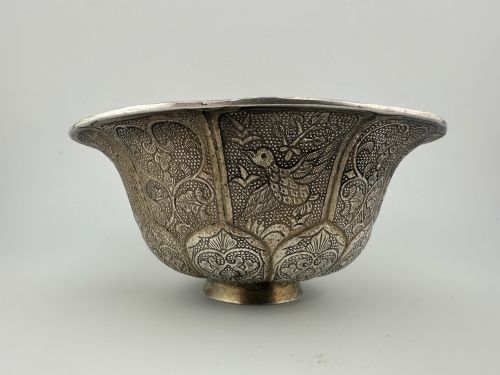
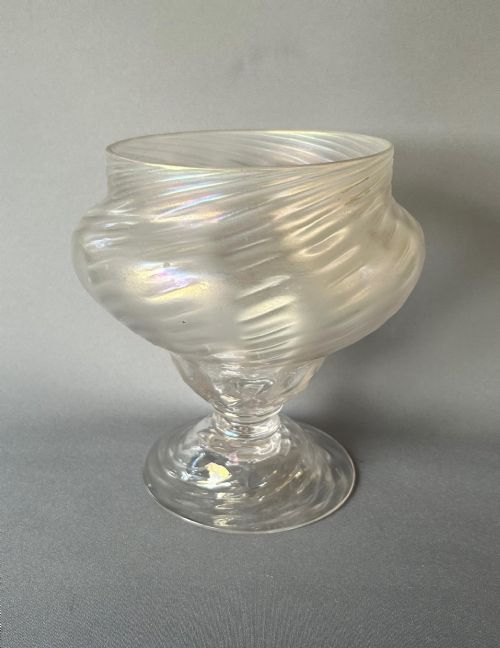
The materials vary widely from solid sterling silver and Anglo-Indian silver to majolica pottery, vaseline glass, and carved oak. Pieces range from formal Neoclassical pedestals to Arts and Crafts pewter and Art Deco glass bowls.
Materials and methods of construction
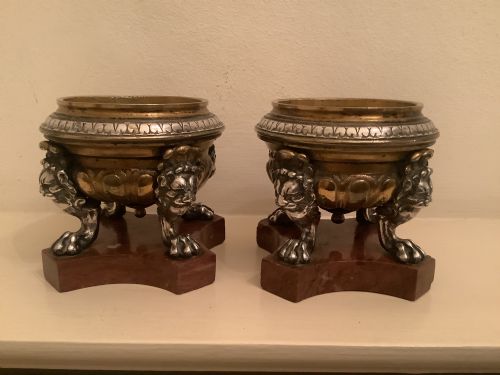
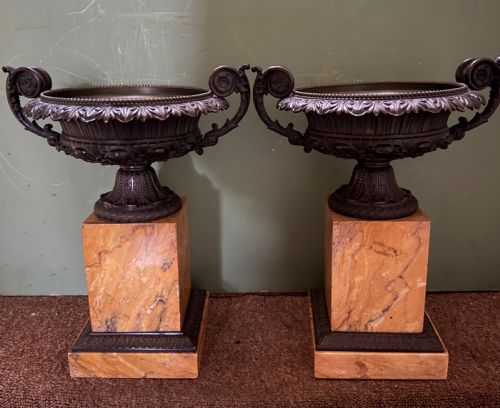
Metalwork forms a core pillar of the evidence, utilising cast bronze, brass, ormolu, and sterling silver. Many metal vessels incorporate champleve enamel work or marble bases for added stability and weight.
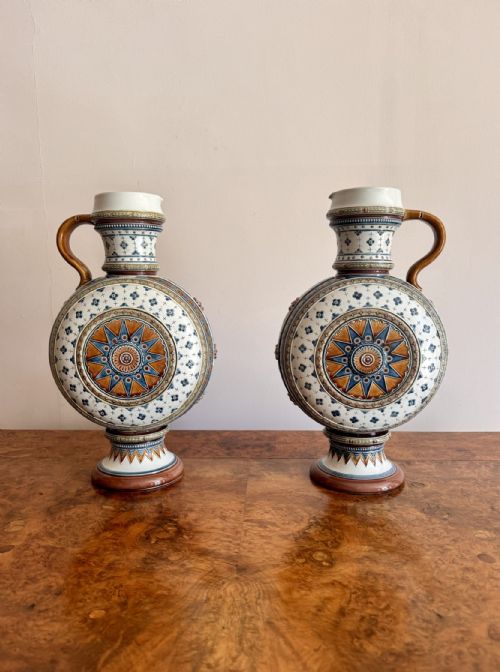
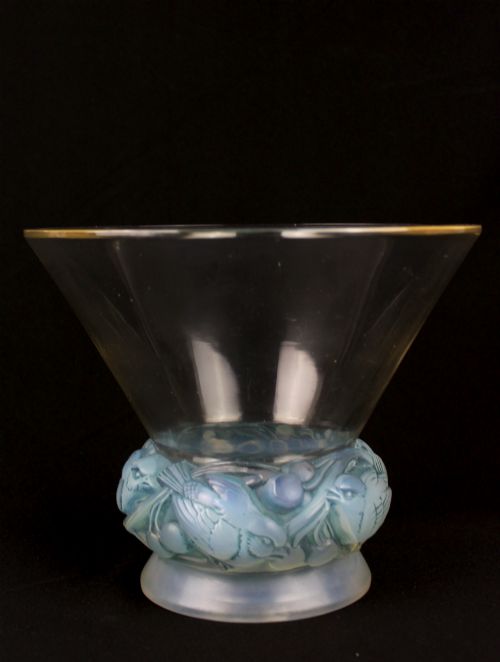
Ceramics and glass feature extensively, encompassing hand-painted Chinese Canton porcelain, Japanese Imari, Minton majolica, and Wedgwood Fairyland Lustre. Glass inserts and cut crystal bowls are frequently secured within metal mounts of gilt bronze or brass.
Antique Decorative Centrepiece Retail Price Guide 2026
Typical asking prices for decorative centrepiece among the pieces listed under this phrase on Sellingantiques today, from the lower quarter to the upper quarter. They describe what is for sale here now, not the wider market.
Minton majolica frogs stare perpetually upward from a green nineteenth-century bowl, ready to leap.
Distinctions in craftsmanship
Quality rests in the crispness of the casting, particularly in ormolu and gilt bronze mounts, where sharp relief and careful chasing separate superior items from softer productions. The integration between contrasting elements, such as glass inserts fitted precisely into bronze or marble bases, dictates structural harmony.
Surface decoration tells its own story through hand-painted detail on porcelain or enamel work that retains depth and vibrant colour. Heavier gauges of silver and solid construction methods denote deliberate studio intent over mass manufacture.
Jules Moigniez·Rene Lalique·Pierre Philippe Thomire·Liberty & Co·Oliver Baker·Charles Boyton
The Antique Decorative Centrepiece Glossary
- Tazza
- A shallow bowl or cup mounted on a stem and foot, frequently utilised for display or serving fruit. These elevated dishes draw the eye upward on a dining table.
- Ormolu
- Finely ground high-carat gold applied to a bronze base using a mercury amalgamation process. This technique imparts a rich, enduring golden lustre to metal mounts.
- Champleve
- An enamelling technique where troughs or cells are hollowed out in the metal surface and filled with vitreous enamel before firing. The metal partitions remain visible between the coloured areas.
- Epergne
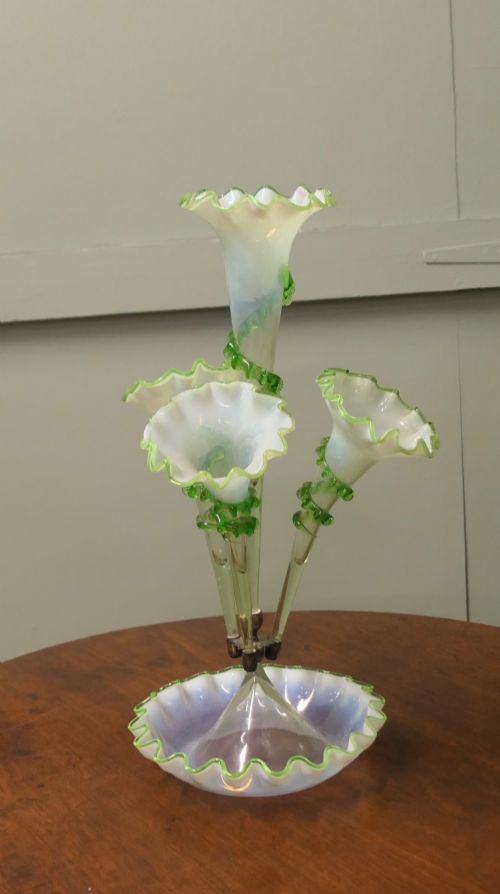
- A large table centrepiece featuring a central bowl or basket surrounded by smaller attached dishes or arms for holding fruit, sweets, or flowers. They often combine coloured glass with silver or metalwork.
- Majolica
- A type of earthenware glazed with tin-opacified lead glaze, brightly coloured with metallic oxides. It became popular in the Victorian era for sculptural vessels and animal figures.
Antique Decorative Centrepiece: Frequently Asked Questions
What was a centrepiece used for?
These vessels served as the focal point of formal dining tables, traditionally holding fruit, flowers, or sweetmeats during large meals. Their grand scale allowed hosts to display wealth and artistic taste to dinner guests.
Over time, many transitioned into permanent decorative objects placed on sideboards, mantelpieces, or entrance halls as sculptural art rather than serving ware.
How do I style one at home?
Place a substantial tazza or bowl in the centre of a large dining or coffee table to create an immediate architectural focal point. Large open bowls work well filled with seasonal fruit, glass spheres, or left empty to showcase interior painted scenes.
Ensure the scale of the vessel matches the furniture surface, allowing enough surrounding space for the piece to command the room without crowding.
How do I tell French Empire from Victorian pieces?
French Empire centrepieces lean heavily on Neoclassical motifs such as gilt bronze, classical figures, marble bases, and symmetry inspired by antiquity. They project a monumental and restrained architectural dignity.
Victorian items often embrace greater ornamentation and eclecticism, mixing coloured art glass, majolica ceramics, and elaborate floral casting with heavier, more decorative forms.
Are silver and bronze centrepieces heavy?
Solid silver, gilt bronze, and marble-mounted pieces possess considerable weight due to dense metal casting and stone foundations. This heft provides essential stability when the vessels hold heavy arrangements of fruit or flowers.
Lighter alternatives include glass or porcelain bowls, though many still feature substantial metal mounts that add to their overall weight.