




Antique Decanter Holder
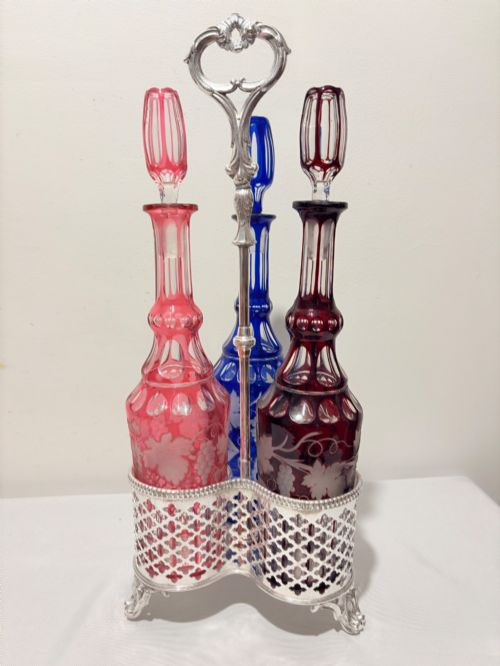
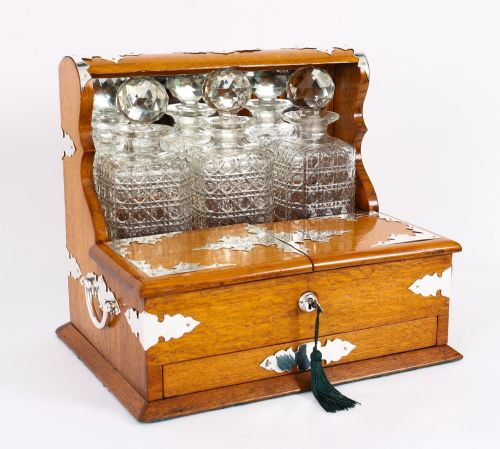
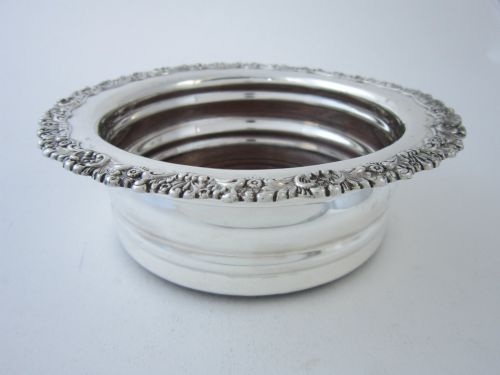
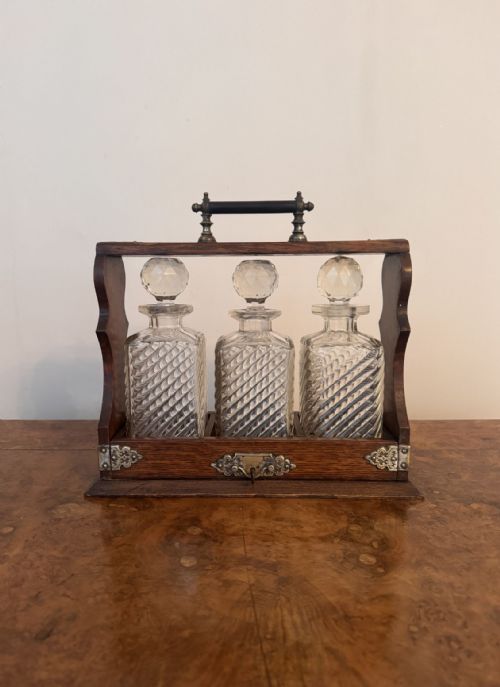
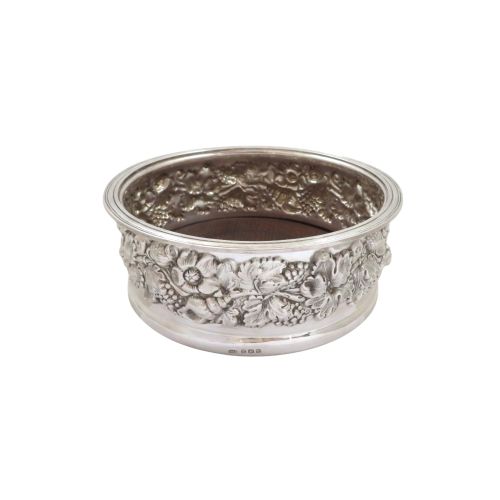
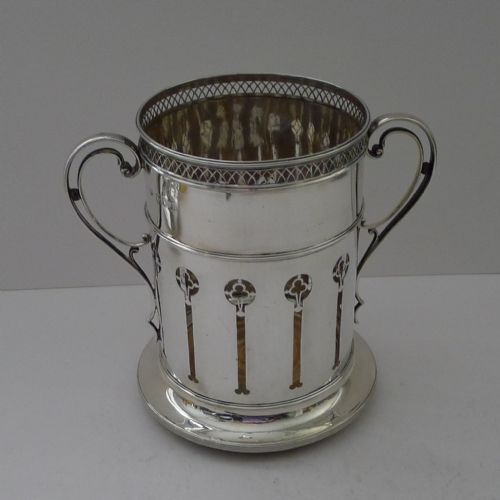
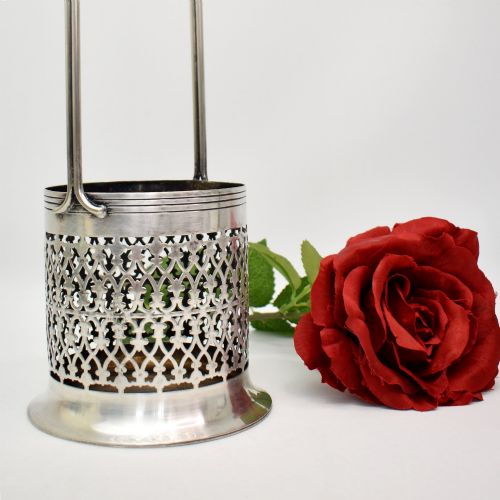
These antique decanter holder pieces protect the dining table and secure spirits, ranging from silver-plated wine coasters to robust oak tantaluses.
Antique Decanter Holder
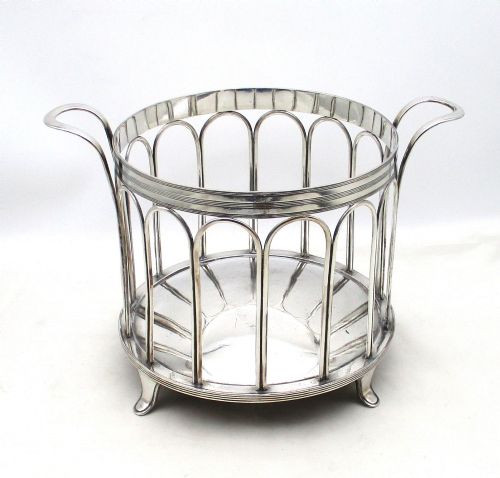
An antique decanter holder serves to keep bottles and decanters stable on the dining table or sideboard during and after meals. The items gathered under this phrase include individual wine coasters, multi-bottle stands, and lockable tantaluses.
Buyers meet several distinct forms across these periods, from Georgian mahogany bottle carriers and Old Sheffield plated coasters to Victorian oak tantaluses and Edwardian silver-plated frames. Each type reflects the changing dining and entertaining habits of its era.
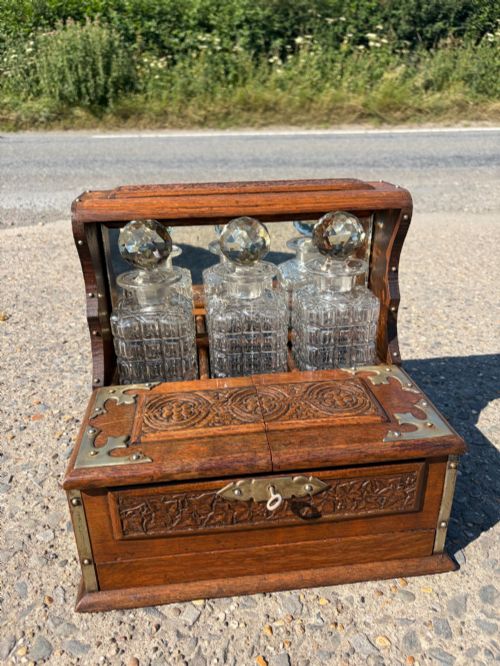
The selection ranges from simple wooden and papier-mâché single coasters to elaborate three-bottle tantaluses fitted with cut crystal decanters and games compendiums. Oak and silver plate dominate the later Victorian examples, while earlier Georgian pieces favour mahogany and brass.
Materials and construction
Cabinet makers and silversmiths utilised timber, base metals, and silver plate to construct these pieces, often combining solid mahogany or oak with spun brass galleries and Old Sheffield plating. Wood sections were turned, carved, or inlaid with satinwood, while metal mounts were soldered and engraved.
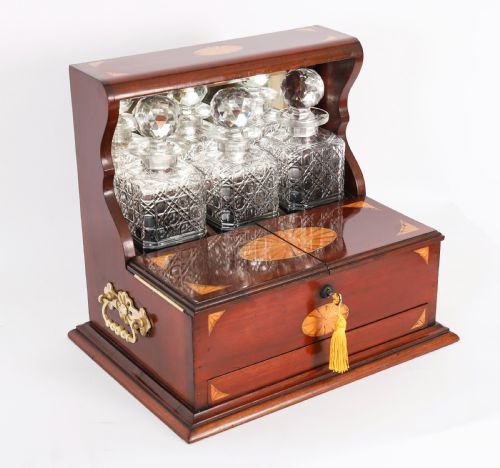
Lockable frames, known as tantaluses, required intricate mechanism design to secure the decanter stoppers beneath a metal bar when locked with a key. Glass components, including cut crystal decanters and carafes, were heavy-pressed or hand-cut to fit precisely within the wooden or metal divisions.
Listings span periods from the eighteenth century to the mid-twentieth century, featuring materials such as sterling silver, silver plate, brass, mahogany, and cut glass.
Distinctions in grade and finish
The calibre of a piece rests upon the weight of the metal, the crispness of the chased or engraved ornament, and the precision of the cabinet work. Heavier gauge silver plate and thick, unwarped timbers indicate superior workshop standards.
Makers who incorporated fully operational locking mechanisms, matching cut crystal sets, and durable brass fittings produced items intended for high-status dining rooms. Simpler utility frames and unbranded silver-plated holders represent more straightforward domestic production.
Walker And Hall·Brook And Son·Elkington·Hester Bateman·Matthew Boulton
The Antique Decanter Holder Glossary
- Tantalus
- A locking frame designed to hold decanters securely so that spirits cannot be removed without a key. The device torments guests by displaying the contents while denying access.
- Wine Coaster
- A small circular tray or stand, often featuring a wooden base and a metal gallery, used to hold a wine bottle on the table. They protect polished dining surfaces from condensation and drips.
- Old Sheffield Plate
- A composite material formed by fusing a thin sheet of silver to a thicker copper base. It predates electroplating and exhibits a warm tone where the copper shows slightly at the edges.
- Games Compendium
- A fitted box containing equipment for multiple board or card games, frequently integrated into the base of late nineteenth-century tantaluses. They combine drinking storage with parlour entertainment.
- Cruet Set
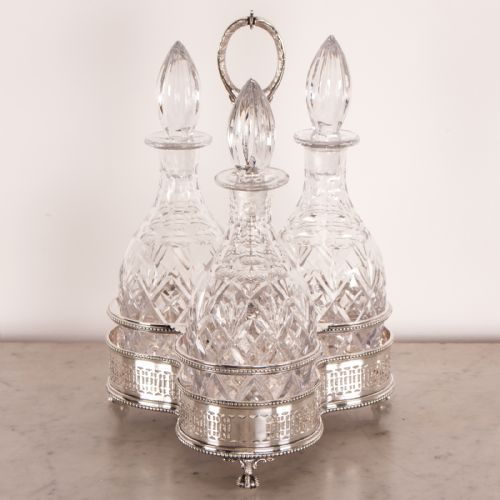
- A frame holding small bottles or castors for condiments, vinegar, or oil. They share similar silver-plated or metal frames with standalone bottle holders.
Antique Decanter Holder: Frequently Asked Questions
What is a tantalus?
A tantalus is a lockable stand that holds glass decanters securely under a metal bar. It prevents guests or servants from helping themselves to the spirits.
The locking mechanism traps the decanter stoppers so the bottles cannot be lifted out until the key is turned in the lock.
How do I date an oak tantalus?
Oak tantaluses appear most frequently from the late nineteenth century through the Edwardian period. Examining the style of the mounts and the construction of the wooden base helps narrow the decade.
Heavier brass hardware and games compendium combinations typically point toward the 1880 to 1900 window.
What is Old Sheffield plate?
Old Sheffield plate is an early method of fusing a thin layer of sterling silver onto a copper core. Items made this way show fine craftsmanship typical of the eighteenth and early nineteenth centuries.
Examining the edges often reveals a faint line where the underlying copper shows through the worn silver.
How were wine coasters used?
Wine coasters sat on the dining table to hold individual bottles of wine or decanters. They protected polished mahogany surfaces from rings and spills during dinner.
Diners could slide the coasters smoothly along the polished wood between guests once the meal concluded.