
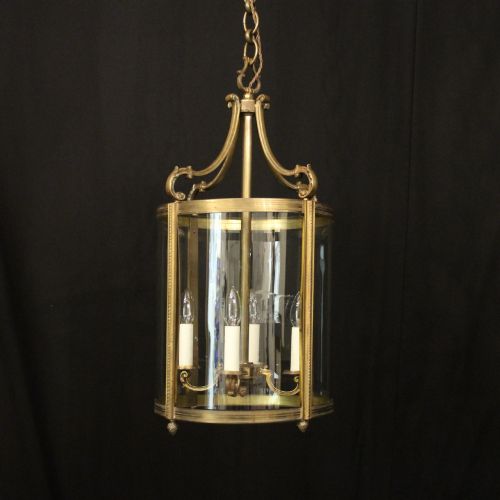
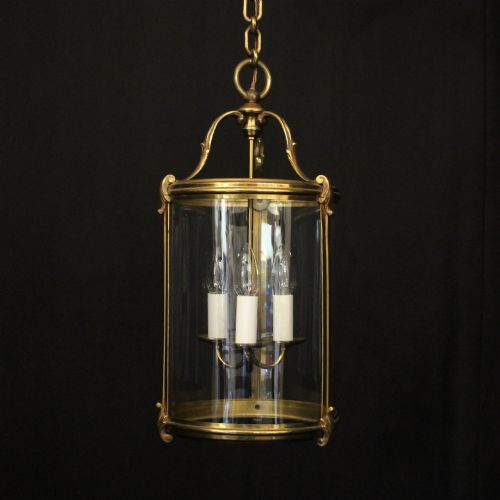
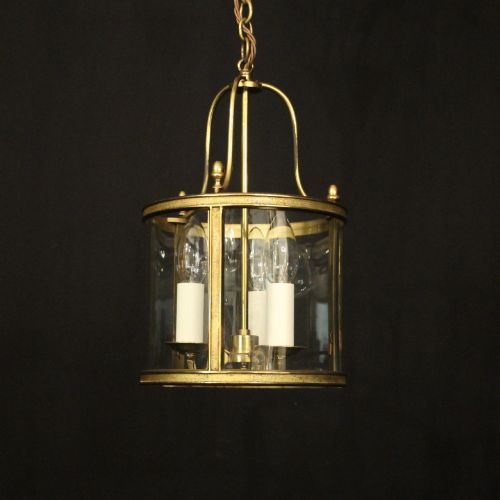
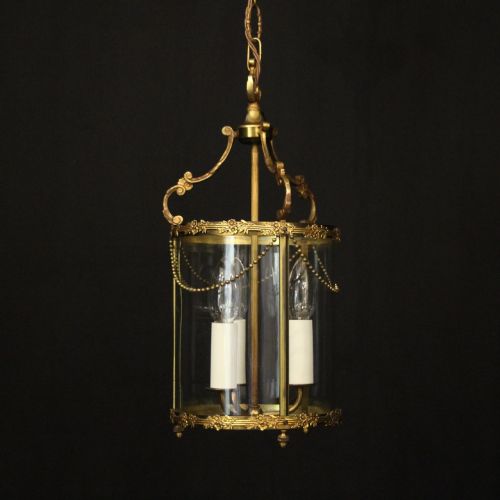
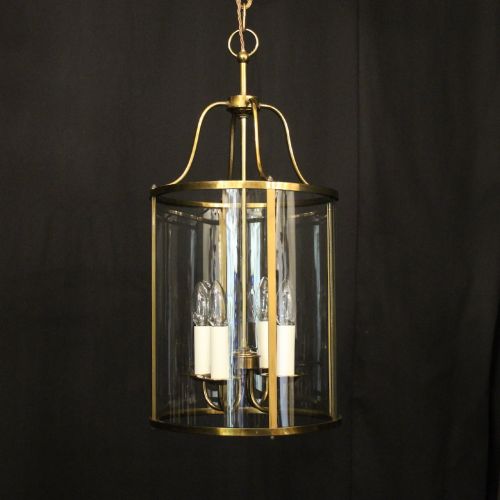
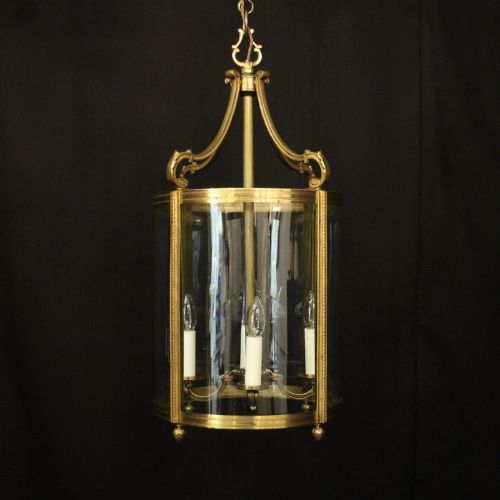


Antique Cylindrical Lantern
An antique cylindrical lantern casts a clear, directional glow down a hallway, combining functional illumination with classical proportion.
Antique Cylindrical Lantern
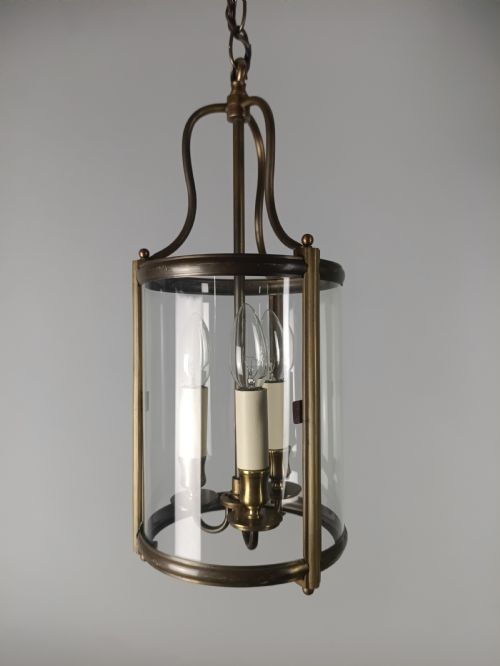
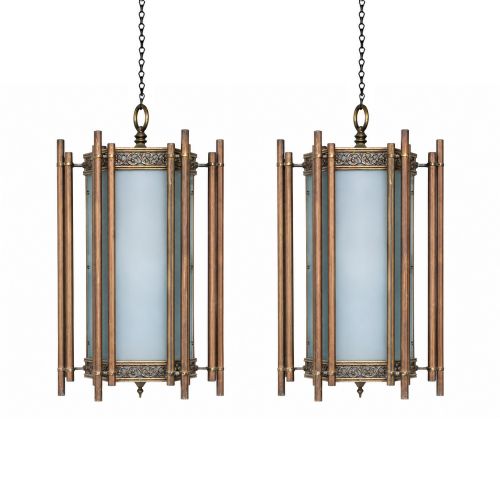
When you search for an antique cylindrical lantern, you encounter ceiling-hung hall lights and pendant fixtures designed to illuminate entryways and stairwells. The selection here spans the nineteenth century through the nineteen-thirties, taking in Edwardian examples and later periods.
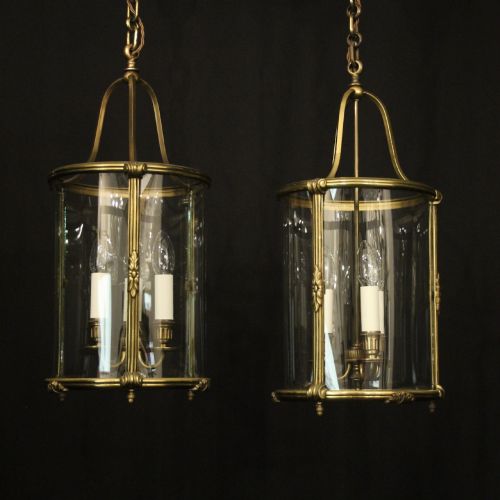
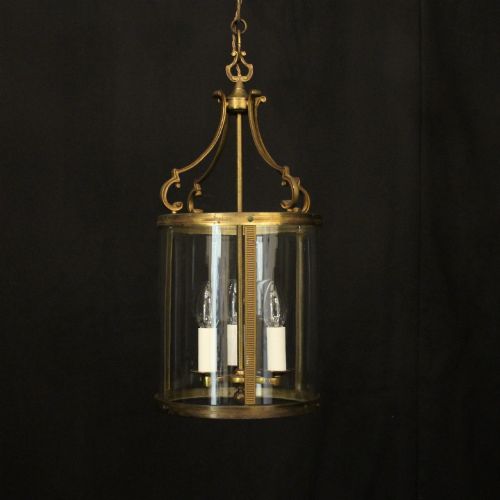
Most pieces on this page originate from France, frequently reflecting French Neoclassical, Louis XV, or Empire styles alongside English and American interpretations. These fixtures take the form of hall lanterns, ceiling lights, and hanging pendants.
Common variations include single-light fixtures and multi-light configurations holding triple or quadruple bulbs. Convex glass panels frequently shape the cylindrical profile, projecting light outward into the space.
Materials and construction
Makers constructed these lanterns using brass, bronze, and gilt bronze, often applying a gilded finish to the metal frames. Glass forms the cylindrical body, utilising clear or frosted panels shaped straight or curved.
Metalwork involved casting bronze and brass components, which were then chased, polished, or gilded to catch the light. Glaziers fitted glass panels securely into metal frameworks designed for ceiling suspension.
Convex glass panels act as miniature lenses, quietly bending hallway light into gentle, wide-angled curves.
Assessing quality
Quality rests in the weight of the cast bronze or brass and the crispness of the chased detail on the metal mounts. Superior pieces display harmonious proportions and substantial metal gauge rather than thin, pressed components.
The choice of glass further separates standard examples from finer ones, particularly where heavy convex panels are fitted with precision. Original gilding and integrated multi-light clusters also elevate the construction standard.
The Antique Cylindrical Lantern Glossary
- Convex glass
- Curved glass panels that project outward from the frame. This shaping widens the spread of illumination.
- Gilt bronze
- Bronze coated with a thin layer of gold or gold-coloured alloy. It provides a durable metallic lustre.
- Hall lantern
- A ceiling-hung light fixture designed primarily for corridors and entrance halls. These fixtures direct light downward and outward.
- Empire style
- A neoclassical design movement drawing on ancient Roman and Greek motifs. It favours symmetry and classical restraint.
- Triple light
- A fitting configured to hold three internal lamp holders or candles. This arrangement increases total light output.
Antique Cylindrical Lantern: Frequently Asked Questions
Where should I hang a cylindrical lantern?
These fixtures suit entrance halls, high-ceilinged corridors, and stairwells where directional, vertical lighting is required.
Ensure adequate ceiling height for suspended pendants so clearance remains comfortable underneath.
How do I date an antique lantern?
Dating relies on stylistic clues like French Empire or Art Deco motifs, alongside construction methods and metal types.
Nineteenth-century examples often display heavier bronze casting, while nineteen-thirties pieces lean towards cleaner geometric lines.
Can these lanterns be rewired safely?
Most antique fixtures accept modern wiring standards when handled by a qualified professional electrician.
Internal lamp holders can be adapted for contemporary bulbs while preserving the original metal frame.
What is the difference between brass and bronze?
Bronze is an alloy of copper and tin, offering greater weight and depth when chased and gilded.
Brass is primarily copper and zinc, yielding a brighter golden tone when polished.