

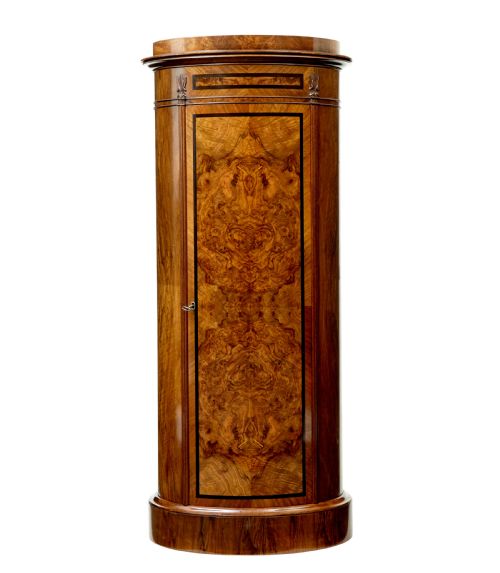


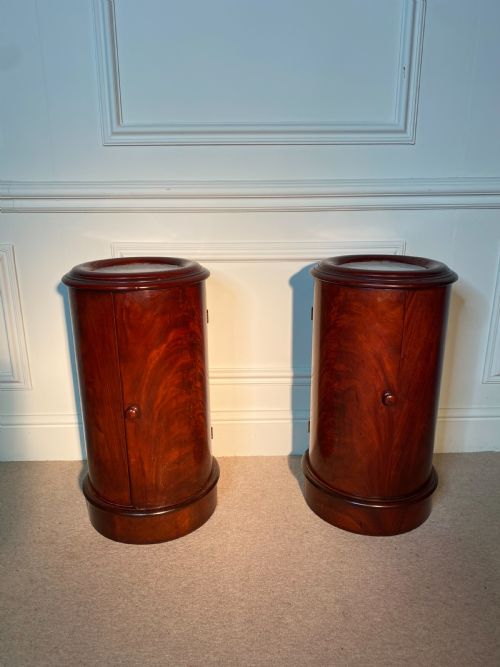


Antique Cylindrical Cupboard
These cylindrical cupboards are clever circular pieces of furniture designed for the bedroom or bedside, offering neat concealed storage.
Antique Cylindrical Cupboard
An antique cylindrical cupboard provides compact bedside storage behind a curved door that follows the circular profile of the cabinet. This selection ranges from Regency flame mahogany examples to Victorian marble top pieces and Danish Biedermeier designs.
The form appears as a pedestal cabinet, pot cupboard or bedside table, often topped with inset marble or polished timber. Makers utilised these vertical shapes to save space while keeping chamber pots or night essentials hidden away.
How they were made
Cabinet makers built the curved carcase using fine timbers such as mahogany, flame mahogany, burr walnut, fiddle back mahogany, and ash. Working with solid wood and veneers required expert bending techniques to achieve a seamless circular door and frame.
Many nineteenth-century examples feature fitted marble tops designed to withstand the daily use of a bedroom. Brass handles, columns, and ceramic elements complete the construction of these cylindrical forms.
Antique Cylindrical Cupboard Retail Price Guide 2026
Typical asking prices for cylindrical cupboard among the pieces listed under this phrase on Sellingantiques today, from the lower quarter to the upper quarter. They describe what is for sale here now, not the wider market.
These round bedside cupboards were cleverly engineered so their curved doors could swallow a chamber pot without breaking the smooth circle.
What varies in quality
The refinement of the timber figure dictates the visual appeal, with richly patterned flame mahogany or burr walnut marking out superior examples. Plain mahogany or simpler finishes sit at a different level of craftsmanship.
The smooth operation of the curved door within its frame shows the skill of the original maker. Well-fitted marble slabs and subtle details like ebony stringing or brass mounts separate standard bedroom utility pieces from finer salon stands.
The Antique Cylindrical Cupboard Glossary
- Flame mahogany
- A wood veneer cut from timber where the grain resembles flickering flames. It creates a highly decorative pattern across curved cabinet doors.
- Burr walnut
- A prized timber cut from walnut tree growths that produces a swirling, mottled grain. This material elevates the appearance of nineteenth-century pedestals.
- Pot cupboard
- A small bedside cabinet originally built to enclose a chamber pot. They typically feature a single internal shelf and a round door.
- Biedermeier
- A Central European style popular during the nineteenth century focusing on clean lines and domestic comfort. Danish examples in this group display unpretentious circular forms.
- Fiddle back
- A figured wood grain showing transverse ripples similar to the back of a violin. Cabinet makers selected this timber for its shimmering optical depth.
Antique Cylindrical Cupboard: Frequently Asked Questions
Where did people put cylindrical cupboards?
These circular cabinets served primarily as bedside tables or nightstands in nineteenth-century bedrooms. Their enclosed shape kept washbasins, candles, or chamber pots neatly out of sight.
Today they function equally well as small lamp stands or side tables in sitting rooms. The curved footprint allows them to fit into tight corners where square furniture might obstruct space.
How do I spot a marble top?
Victorian examples frequently pair a mahogany or walnut body with an inset white marble slab. This stone surface provided a durable, wipe-clean area for water jugs and nighttime glasses.
Some pieces also utilise faux marble finishes painted onto wood. Real stone feels cool to the touch and adds significant weight to the top of the cabinet.
Are doors difficult to open?
The curved door runs on hidden tracks or precise pivot hinges within the circular carcase. Timber movement over the decades can sometimes cause minor binding in humid rooms.
A well-maintained nineteenth-century cupboard glides smoothly along its arc. Proper adjustment by a restorer usually corrects any alignment issues caused by seasonal changes.
What is the difference between Biedermeier and Victorian?
Danish Biedermeier pieces emphasise minimalist wood grains and smooth surfaces without heavy ornamentation. They rely on the natural warmth of mahogany or walnut.
Victorian cabinets often include decorative flourishes such as marble slabs, turned columns, or contrasting ebony details. Both styles share the same practical cylindrical storage form.