


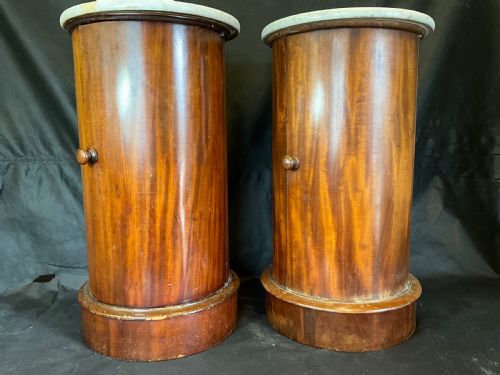
Circular Pot Cupboard
A circular pot cupboard is a compact, cylindrical cylinder cabinet designed to stand beside the bed, prized for its enclosed storage and smooth timber grain.
Circular Pot Cupboard
A circular pot cupboard is a cylindrical bedside cabinet or pedestal designed to conceal chamber pots or personal items behind a curved door. These pieces span the Regency, French Empire, and Victorian periods, with the nineteenth century dominating the surviving examples.
Most pieces seen here are fashioned from mahogany or flame mahogany veneer, often topped with marble or wood surfaces. Forms range from simple column nightstands to lamp or figure stands and paired bedside cabinets.
The buyer meeting these pieces on this page will most frequently encounter nineteenth-century mahogany specimens, whether plain or finished with flame veneer and marble tops. They serve primarily as bedside tables or compact lamp stands in traditional interiors.
How they were made
These cylindrical carcasses are built using timber construction methods suited to curved forms, frequently employing flame mahogany veneers laid over a solid wood core. The curvature requires precise joinery to ensure the single curved door hangs truly within its frame.
Surface details include polished mahogany, painted faux marble finishes, and inset marble slabs on the upper surface. Brass elements sometimes appear as handles or mounts, particularly on French Empire examples.
Circular Pot Cupboard Retail Price Guide 2026
Typical asking prices for circular pot cupboard among the pieces listed under this phrase on Sellingantiques today, from the lower quarter to the upper quarter. They describe what is for sale here now, not the wider market.
These clever cylinders keep secrets well, hiding chamber pots in the nineteenth century and modern clutter today.
What varies in quality
Quality in a circular pot cupboard lies in the selection of the timber grain, particularly the dramatic figuring found in flame mahogany veneer. Superior examples display seamless alignment of the wood grain across the curved door and the surrounding body.
The integration of heavy materials such as fitted marble tops elevates a piece, as does the crispness of turned columns and brass hardware. Lesser pieces rely on plain timber without the striking veneer patterns seen at the top of the range.
The Circular Pot Cupboard Glossary
- Flame mahogany
- A decorative veneer cut from wood where the branch meets the trunk, producing a distinctive flame-like pattern. This figuring is highly prized on nineteenth-century cylindrical cabinets.
- Cylindrical
- Having the shape of a cylinder or tube with straight parallel sides and circular ends. This is the defining structural form of a circular pot cupboard.
- Regency
- An English stylistic period dating from the early nineteenth century characterised by classical restraint and elegance. Pieces from this era often feature clean lines and rich mahogany surfaces.
- French Empire
- A neoclassical design style spanning the early nineteenth century marked by monumental form and restrained ornamentation. Cabinets from this origin bring a distinct continental proportion to the bedroom.
Circular Pot Cupboard: Frequently Asked Questions
What is a circular pot cupboard?
A circular pot cupboard is a cylindrical bedside cabinet originally designed to house a chamber pot behind a curved door. Today, collectors use them as compact bedside tables or lamp stands.
They are encountered most frequently in nineteenth-century mahogany, sometimes finished with a marble top.
How were they used historically?
These cabinets sat beside the bed to provide discreet enclosed storage for night-time necessities. The cylindrical shape saved space in smaller bedrooms.
Over time, their practical function faded, and they transitioned into decorative lamp stands and nightstands.
How do I date a circular pot cupboard?
Dating relies on identifying period characteristics in the timber, construction methods, and stylistic details. Regency pieces often show clean classical lines, while Victorian examples span various nineteenth-century revivals.
Evidence on this page shows pieces dating from the Regency era through to the late nineteenth century.
Are marble tops original?
Marble tops on these cabinets were utilised to provide a durable, wipe-clean surface suitable for jugs and washbasins. They appear frequently on nineteenth-century and Victorian specimens.
Checking how the marble sits within the wooden gallery helps determine its period integration.