



Antique Cylinder Fall Desk
An antique cylinder fall desk offers a clever rolling shutter to hide your papers, combining Georgian craftsmanship with Victorian elegance.
Antique Cylinder Fall Desk
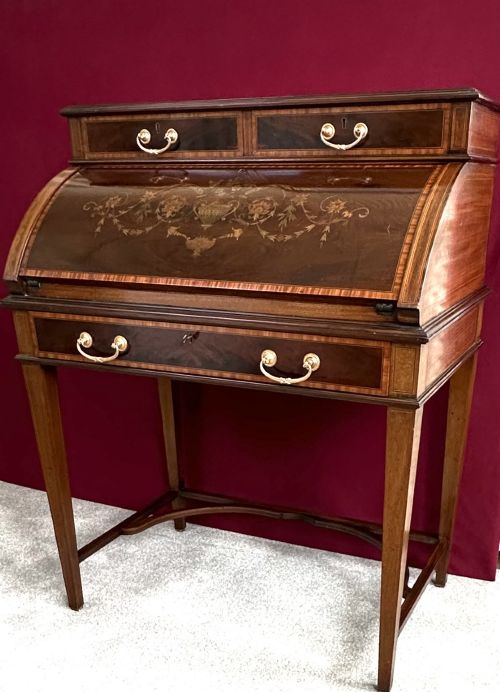
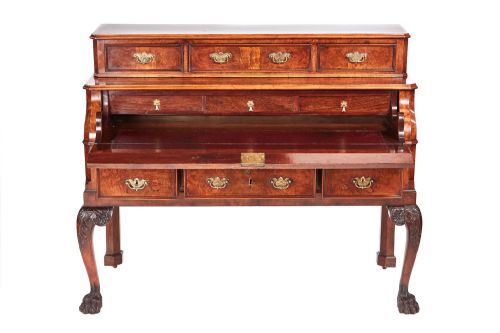
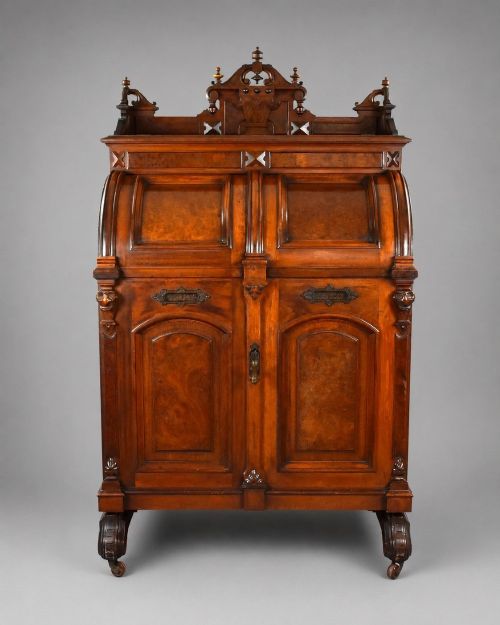
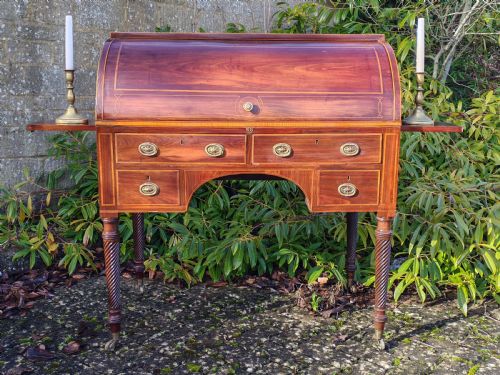
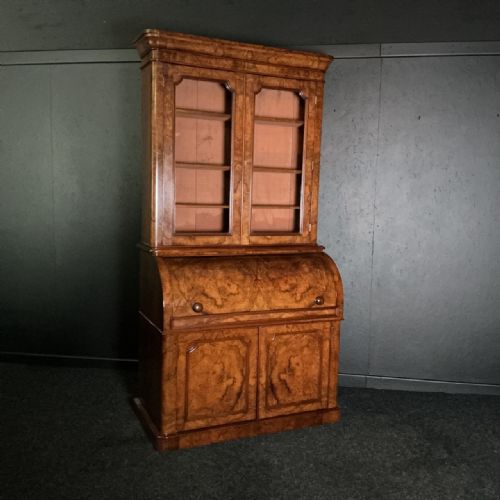
An antique cylinder fall desk provides a curved wooden shutter that rolls back to reveal fitted drawers and pigeonholes for correspondence. You will most frequently meet mahogany and walnut examples from the Georgian and Victorian periods, often styled after Sheraton Revival or Louis XVI designs.
These pieces function as dedicated writing furniture, incorporating pull-out leather writing surfaces alongside compartments for stationery. The form bridges the gap between traditional slope-front bureaux and modern writing tables by concealing the workspace entirely when closed.
How they were made
Cabinetmakers constructed the rolling cylinder from narrow slats of timber glued to a flexible canvas backing, allowing the shutter to glide smoothly along concealed tracks. Mahogany, satinwood, and burr walnut provided the primary structural timber and decorative veneer surfaces.
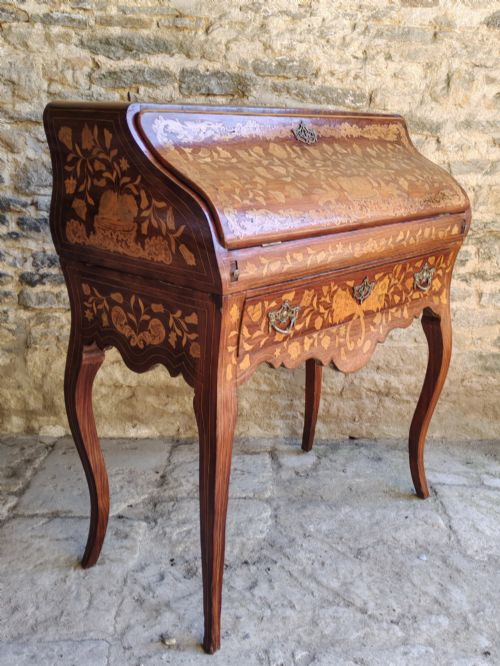
Marquetry inlay in floral patterns adorns Dutch and Edwardian pieces, whilst brass handles and ormolu mounts punctuate the exterior drawers. Interior compartments often feature small glass doors, leather inserts, and hidden spring-loaded release mechanisms.
Secret compartments hidden behind dummy book spines guarded family gossip from wandering eyes.
What varies in quality
The smoothness of the cylinder mechanism dictates the mechanical success of the piece, separating fluid, well-balanced shutters from stiff or binding ones. Superior examples rely on precise joinery within the slatted tambour rather than modern synthetic adhesives.
The choice of timber veneer defines visual distinction, ranging from plain mahogany boards to highly figured burr walnut and intricate floral marquetry. Interior complexity, including secret compartments and finely turned pigeonholes, separates standard utility desks from high-status cabinetwork.
The Antique Cylinder Fall Desk Glossary
- Cylinder top
- A curved, quarter-circle wooden shutter that rolls backward into the body of the desk to reveal the interior workspace. This mechanism conceals papers and stationery without requiring the user to clear the writing surface.
- Tambour
- A series of narrow wooden strips glued to canvas or leather backing to form a flexible surface. It enables the curved motion of the cylinder fall.
- Marquetry
- Decorative veneer work forming pictures or patterns using various coloured woods. It appears frequently on Dutch and Edwardian specimens.
- Secretaire
- A piece of furniture containing a drawer or compartment configured for writing. These often feature drop-fronts or rolling cylinders.
- Ormolu
- Gilded bronze used for decorative mounts and furniture trim. It is characteristic of Louis XVI style items.
Antique Cylinder Fall Desk: Frequently Asked Questions
How does a cylinder desk work?
The curved wooden shutter slides along a track into the body of the desk. Pulling the writing slide forward often retracts the cylinder automatically.
This mechanism keeps correspondence private and tidy without disturbing the items arranged inside the writing compartment.
Where were these desks used?
These pieces sat in private libraries, drawing rooms, and studies of wealthy homes. They served as personal workstations for managing household accounts and writing letters.
Today, they function effectively as home office desks or statement furniture in traditional and modern interiors alike.
How do I date a cylinder desk?
Georgian and Regency examples tend to feature solid mahogany or satinwood with restrained classical lines. Victorian and Edwardian pieces frequently showcase burr walnut, marquetry, or revival styling such as Sheraton Revival.
Secondary woods inside the drawers and the construction of the interior pigeonholes provide further clues to the period of manufacture.
What is the difference between a bureau and a cylinder desk?
A traditional bureau utilises a hinged sloping flap that folds down flat to form the writing surface. A cylinder desk employs a rolling curved shutter that slides vertically or horizontally into the desk body.
Both styles conceal fitted interior drawers and pigeonholes, but the cylinder mechanism allows the writing surface to remain set up while the desk is closed.