

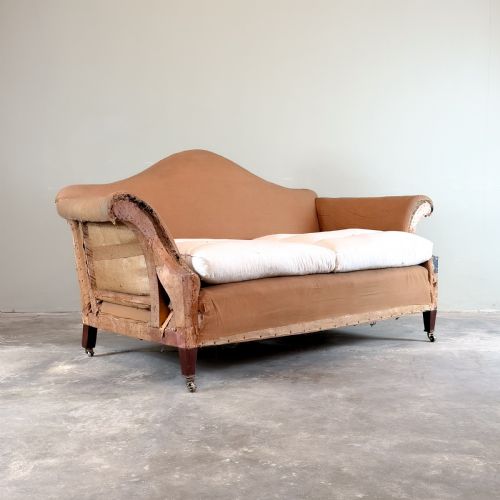
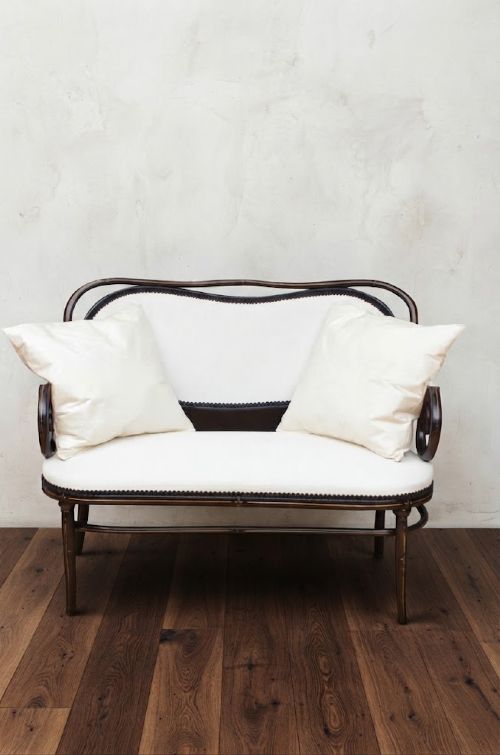
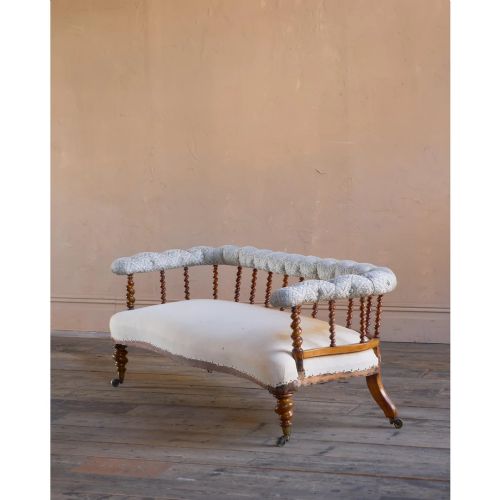

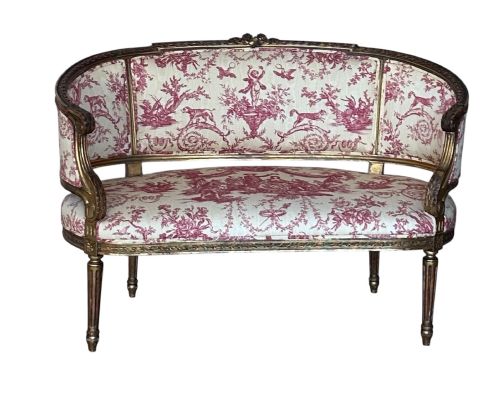


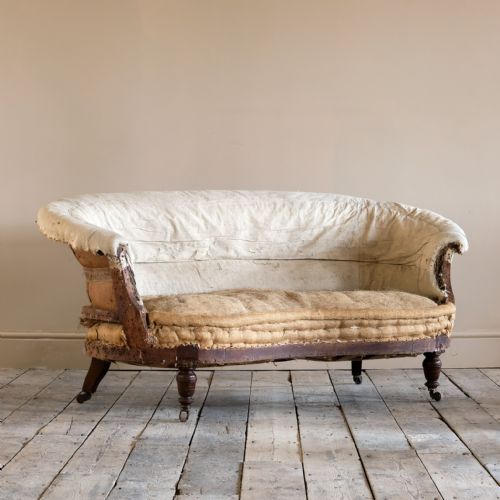
Antique Curved Settee
An antique curved settee brings a sweeping architectural line to a room, offering an organic alternative to rigid rectangular seating.
Antique Curved Settee
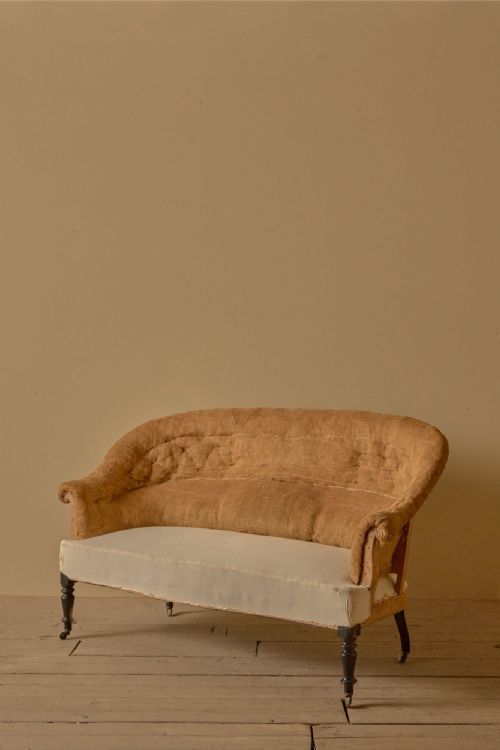
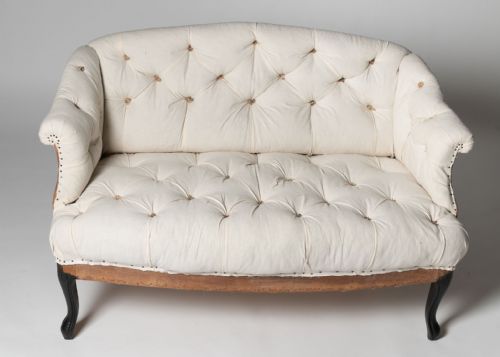
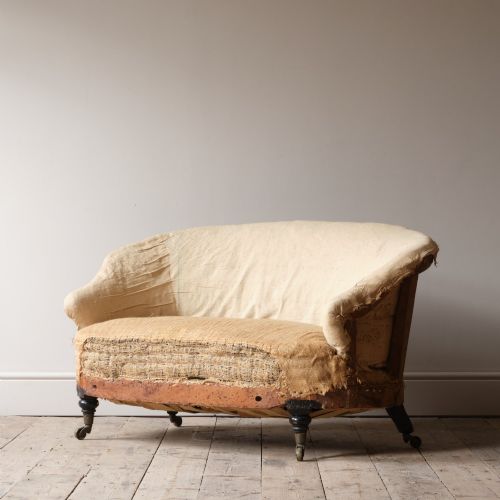
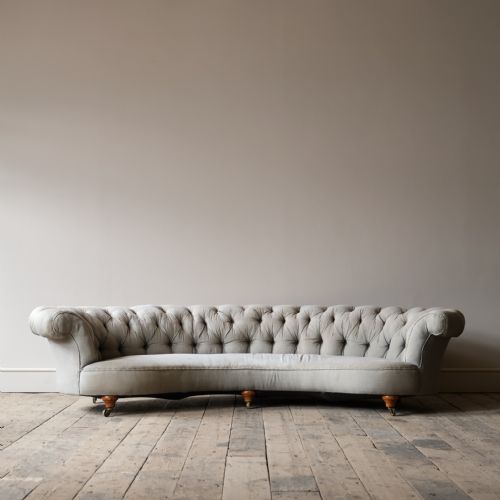
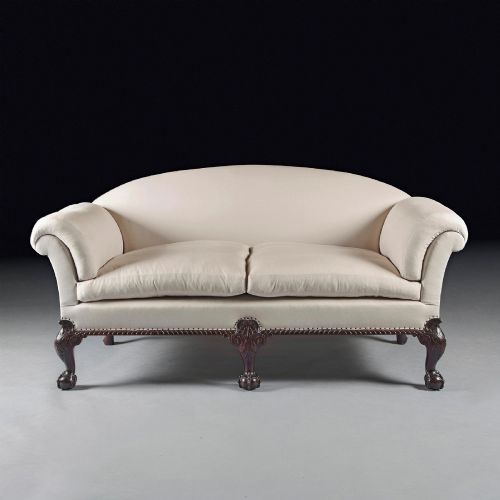
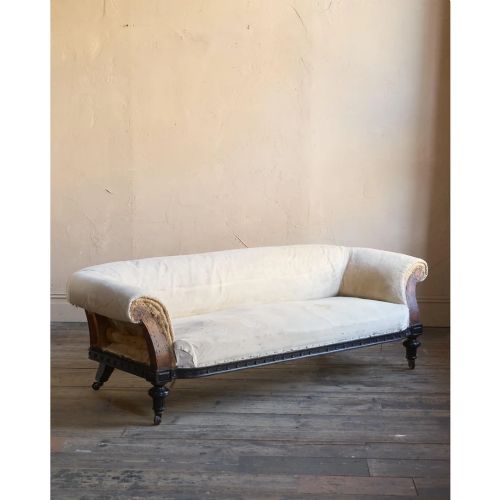
When you search for an antique curved settee, you enter a domain of 19th-century and early 20th-century seating that prioritises rounded contours and generous seating depth. The forms range from French Napoleon III and Louis XVI style canapés to English Victorian and Edwardian scroll-shape and camel-back designs.
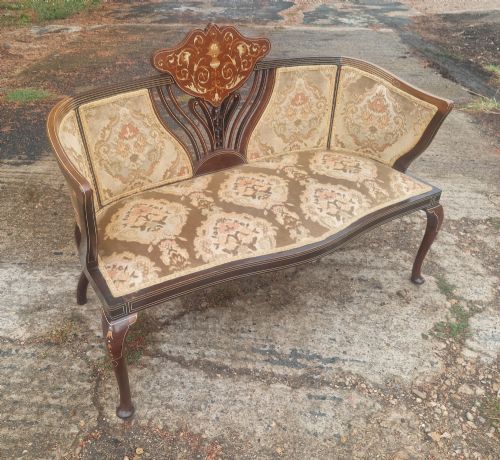
Makers such as Howard & Sons and Thonet appear alongside French salon pieces and Biedermeier models, spanning walnut, mahogany, rosewood, and beech frames. You will encounter everything from ebonised bentwood settees to button-backed leather chesterfields and inlaid mahogany creations.
The typology embraces daybeds, corner sofas, love seats, and bench loveseats, each constructed with an inherent curve designed to soften room corners or anchor open spaces. These pieces emerge from periods including the Aesthetic Movement, Art Nouveau, and Art Deco.
Materials and construction methods
Makers utilised dense hardwoods like mahogany, walnut, rosewood, and beech for the structural frames, often employing steam-bending techniques as seen in bentwood pieces. Frames were shaped to create continuous curves, sometimes enhanced with marquetry inlay, painted finishes, or gilded gesso.
Upholstery techniques relied on traditional stuffing materials held in place with webbing and springs, finished in leather, velvet, calico, hessian, or patterned fabrics like Aubusson tapestries. Caning also appears on French day beds and decorative panels.
Antique Curved Settee Retail Price Guide 2026
Typical asking prices for curved settee among the pieces listed under this phrase on Sellingantiques today, from the lower quarter to the upper quarter. They describe what is for sale here now, not the wider market.
Listings feature 19th-century, Victorian, Edwardian, and Art Deco periods, utilising mahogany, beech, brass, leather, and velvet.
Evaluating craftsmanship and integrity
Quality rests in the rigidity of the curved frame and the integrity of the joinery beneath the upholstery. Superior examples exhibit smooth, continuous lines without structural distortion in the bentwood or carved timber components.
The grade of the secondary woods, the precision of decorative inlay, and the retention of original upholstery materials or sympathetic period-correct recovering separate standard production from exceptional workshop output.
Howard and Sons·Thonet·C. Hindley and Sons·Hampton and Sons·Baumann
The Antique Curved Settee Glossary
- Canapé
- A traditional French settee or sofa, typically featuring an exposed wooden frame with carved or painted details. These pieces often reflect specific Louis periods or Napoleon III styling.
- Bentwood
- Wood that has been heated with steam to make it pliable, allowing craftsmen to bend it into curved structural shapes. This technique defines the output of makers like Thonet.
- Camel back
- A sofa or settee backrest featuring a distinctive convex curve that resembles a camel's hump, often rising smoothly toward the centre. This profile is frequently associated with Edwardian and Hepplewhite styles.
- Chesterfield
- A large upholstered sofa characterised by deep button tufting and rolled arms that sit at the same height as the back. These are frequently finished in leather or heavy velvet.
- Caning
- A woven lattice material made from rattan or bamboo strips, utilised for decorative backrests and seat panels on light framework pieces. It appears notably on French-style day beds.
Antique Curved Settee: Frequently Asked Questions
How do I style a curved settee?
Place a curved settee away from straight walls to let its rounded silhouette dictate the flow of the room. It works effectively floating in the centre of a large salon or angled into an awkward corner.
Pair it with low occasional tables that mirror its curves rather than rigid rectangular furniture. This preserves the soft architectural lines of the piece.
Were these settees used in bedrooms?
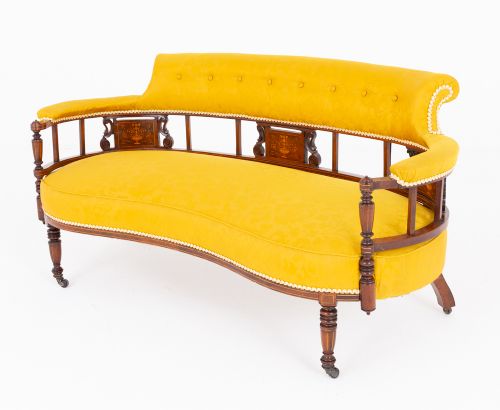
Certain lighter models, such as inlaid mahogany end-of-bed sofas and tub-shaped settees, were intended for boudoirs and private dressing rooms. They provided comfortable seating for putting on shoes or resting.
Larger chesterfields and salon suites remained strictly within public reception rooms and drawing rooms. The scale and upholstery fabric usually indicate the intended domestic context.
How do I distinguish French from English pieces?
French settees from the 19th century often display exposed painted or gilded wood frames, cabriole legs, and stylistic nods to Louis XVI or Napoleon III designs. Their upholstery tends toward decorative silks, velvets, and tapestries.
English equivalents, such as those by Howard & Sons, typically conceal the frame beneath deep upholstery, prioritising structural comfort and heavy buttoning over visible carved woodwork.
What is bentwood construction?
Bentwood involves steaming solid timber until it becomes flexible enough to bend into tight, flowing curves. Makers then lock the wood into shape as it cools and dries.
This technique produced lightweight yet durable frames without relying on heavy joinery. It became a signature method for 19th-century innovators.