




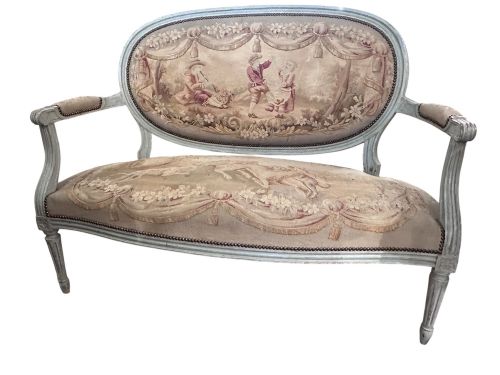


French Curved Back Settee
A French curved back settee brings elegance to a room with its sweeping lines and upholstered comfort.
French Curved Back Settee
A french curved back settee is a seating piece designed with a rounded backrest, taking forms such as sofas, canapés, and day beds. These seats emerge predominantly from the nineteenth century, including Victorian and Napoleon III periods, alongside revival styles.
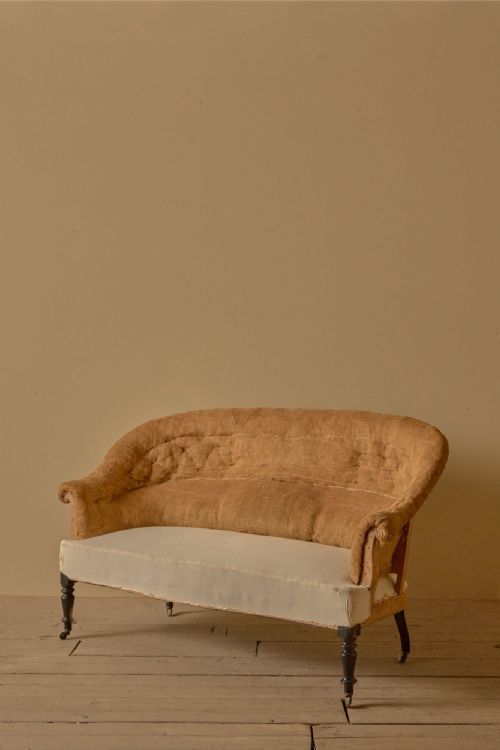
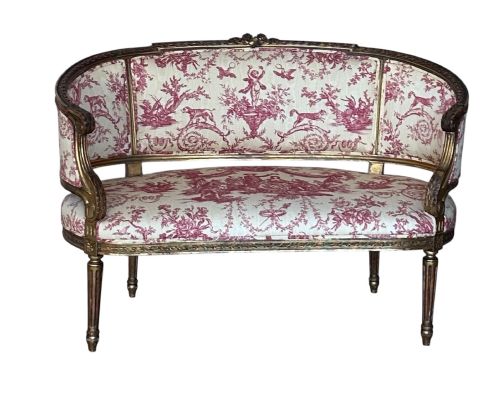
The selections here span French Louis XV and Louis XVI styles, alongside French Chateau and Regency influences. Buyers frequently encounter frames shaped from beech, timber, walnut, and giltwood, often presented in unfinishing calico or Hessian ready for bespoke covering, or finished in velvet.
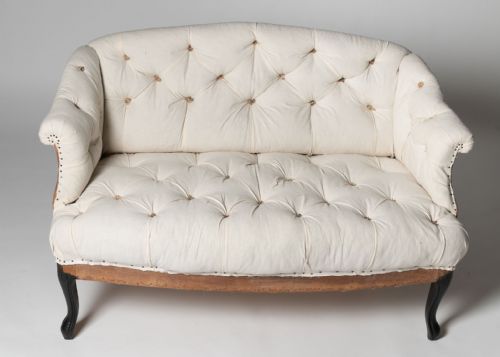
Forms range from two-seat couches and cane day beds to large three-seater settees and button-back canapés. Each piece reflects the historic design vocabulary of French and Victorian seating traditions.
How they were made
Carpenters shaped structural frames using traditional timbers such as beech, walnut, and mahogany, frequently applying giltwood or paint to the exposed wooden surfaces. Caning was woven into wooden frameworks for open day beds, while other structures received traditional stuffing and foundational webbing.
Upholstery techniques combined robust internal foundations with outer coverings of calico, Hessian, linen, or velvet. Details such as brass tacks and button-back padding secured the textiles to the curved wooden chassis.
French Curved Back Settee Retail Price Guide 2026
Typical asking prices for french curved back settee among the pieces listed under this phrase on Sellingantiques today, from the lower quarter to the upper quarter. They describe what is for sale here now, not the wider market.
Some of these frames spent generations under plain calico, quietly waiting for someone to finally introduce them to velvet.
What varies in quality
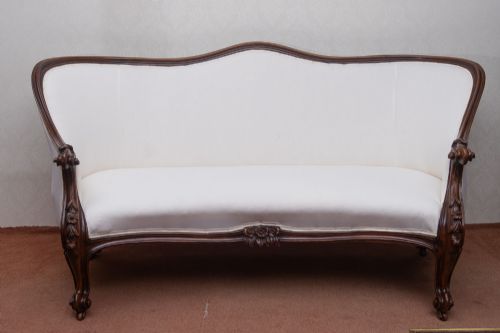
The refinement of the carved wooden frame dictates the distinction of a piece, separating simple turned supports from deeply sculpted giltwood or walnut ornamentation. Artisanal execution in the flow of the curved backrest and the integrity of the joinery set finer examples apart.
Upholstery execution and material choice drive the character of the seating, moving from functional base layers of calico and Hessian to decorative finishes in velvet and antique cane work. The harmony between the exposed timber structure and the upholstered form defines the overall presence.
The French Curved Back Settee Glossary
- Canapé
- An antique French sofa or settee featuring an upholstered seat and backrest within a decorative wooden frame. These pieces often reflect Louis XV or Louis XVI design idioms.
- Giltwood
- Timber treated with a thin layer of gold leaf applied to the carved surfaces. This finish is typical of formal nineteenth-century French seating.
- Caning
- Woven rattan material used to form supportive panels for the backrests and seats of day beds and settees. It provides a lightweight and decorative alternative to solid upholstery.
- Napoleon III
- A nineteenth-century design period encompassing eclectic French styles that revived earlier monarchical aesthetics. Furniture from this era often utilises rich upholstery and curved wooden forms.
- Hessian
- A coarse woven fabric traditionally utilised as a foundational upholstery layer beneath top textiles. It supports the internal stuffing of antique settees.
French Curved Back Settee: Frequently Asked Questions
How do I place a curved settee in a modern room?
These settees work well as focal points in living spaces or bedrooms where their sweeping lines can be appreciated from multiple angles. Pairing them with neutral walls lets the carved wood and upholstery take precedence.
Because many examples feature polished timber or gilt frames, they contrast effectively against plain plaster or contemporary textures without overwhelming the floor plan.
What is the difference between a canapé and a settee?
A canapé is specifically a French upholstered sofa style characterised by an exposed wooden frame and decorative carving. The term settee is a broader descriptor for any medium-length seating built for two or more people.
In practice, eighteenth and nineteenth-century French canapés often display more formal stylistic traits than standard Victorian settees.
How do I care for antique upholstery and wood?
Protect delicate textiles such as velvet or exposed materials like calico and Hessian from direct sunlight to prevent fading. Regular dusting with a soft cloth preserves polished timber and giltwood surfaces.
Avoid using harsh liquid cleaners on antique wooden frames to maintain the integrity of the original finish and any applied gilding.
Can I reupholster these antique frames?
Many pieces are suited to new textile coverings, particularly those currently finished in basic calico or Hessian. Professional upholsterers can strip back worn layers while respecting the original webbing and frame structure.
Selecting fabrics appropriate to the period, such as velvet or traditional prints, ensures the seating retains its historical character.