


Antique Curule Footstool
An antique curule footstool brings classical X-frame elegance to a room, offering both a functional seat and a striking historical focal point.
Antique Curule Footstool
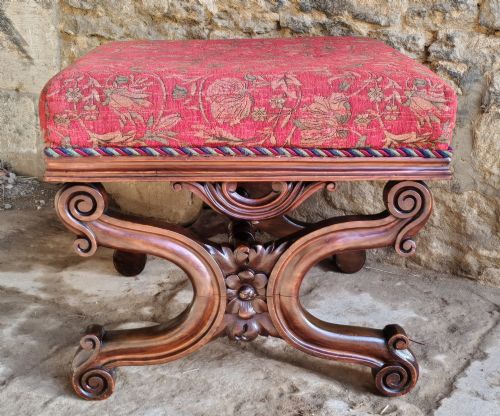
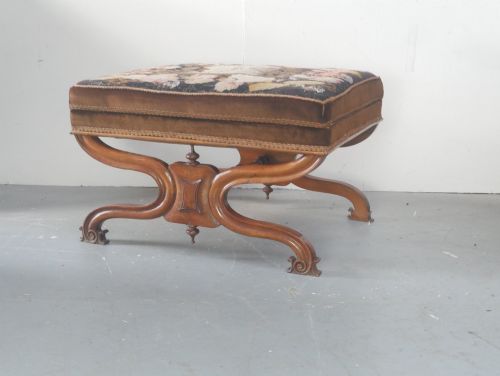
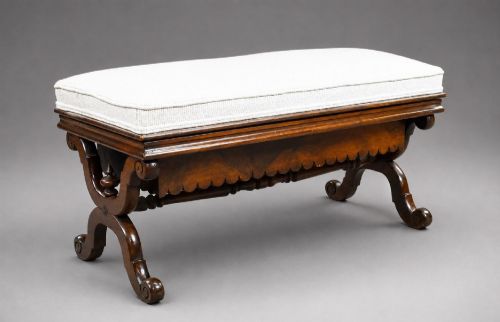
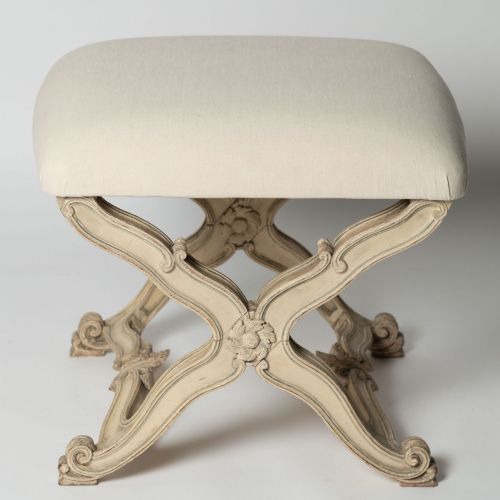
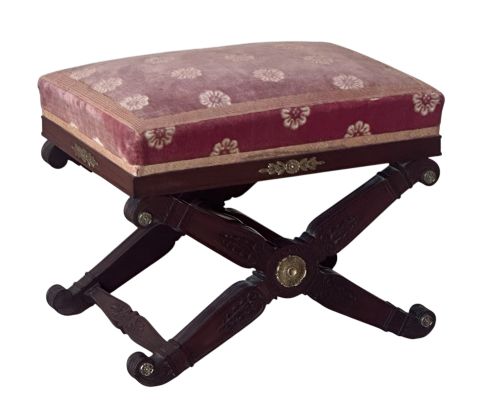
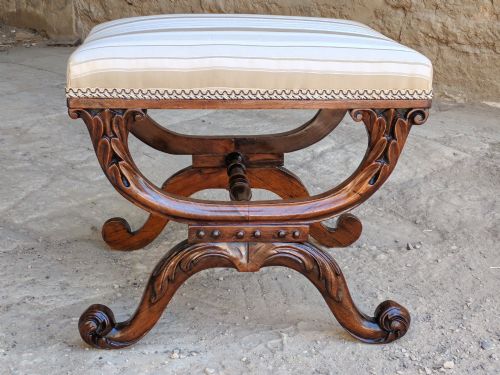
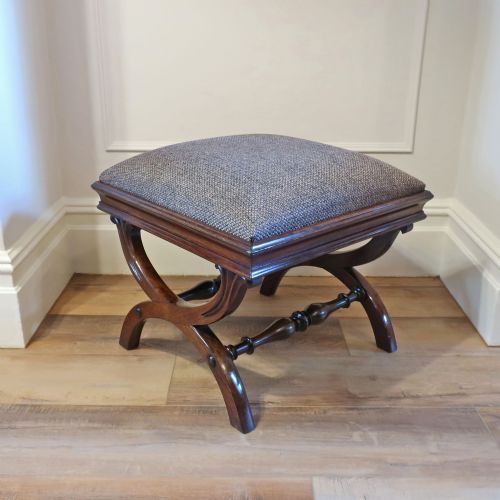
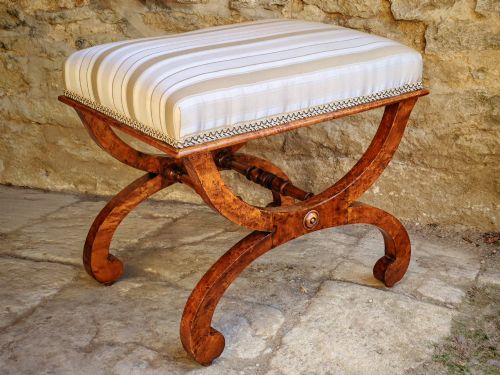
An antique curule footstool takes its structural inspiration from the ancient Roman magistrate's chair, featuring distinctive crossed supporting members that form an X-shape. These pieces appear frequently across the nineteenth century, spanning Regency, Victorian, and Edwardian periods, often taking the form of dressing stools, window seats, or compact footstools.
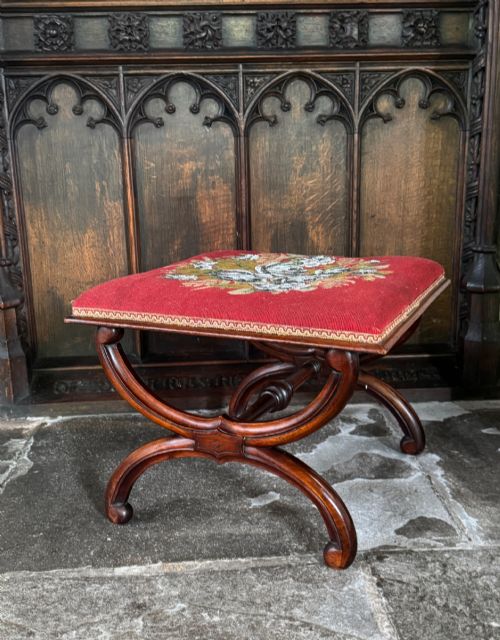
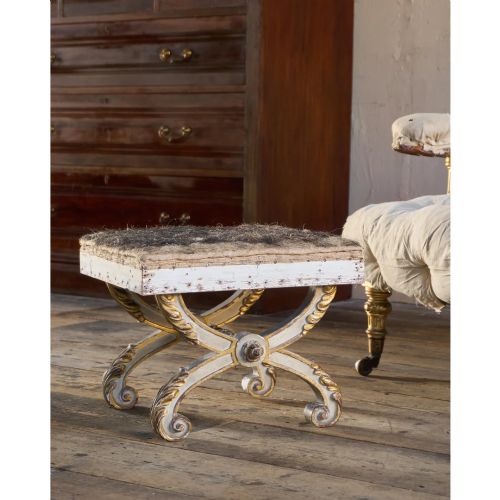
The specimens on this page emerge primarily from English, French, and Scottish workshops, utilising timber frames paired with upholstered seats. Buyers encounter various interpretations of the form, from restrained mahogany frames to elaborately carved walnut and gilt versions adorned with beadwork, tapestry, or damask.
How they were made
Cabinetmakers constructed the frames using dense timbers such as mahogany, rosewood, walnut, oak, and ebonised wood, frequently employing curved or crossed members that required precise joinery to ensure stability under weight. Skilled artisans shaped the timber through turning, carving, and sometimes gilding.
Upholstery completed the piece, utilising traditional webbing and stuffing techniques to support top coverings of leather, velvet, tapestry, fabric, beadwork, and damask. Decorative details such as brass mounts or carved animal heads occasionally enhanced the wooden framework.
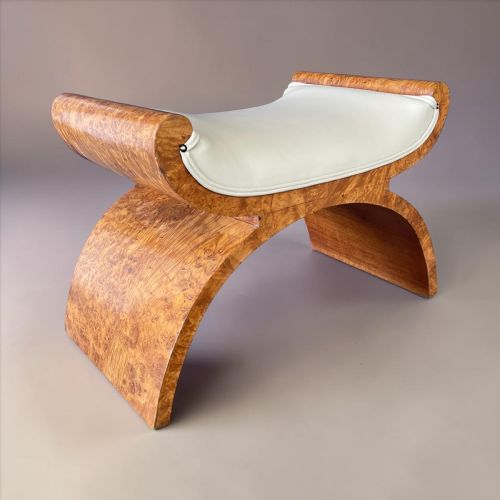
Listings feature woods including mahogany, rosewood, walnut, oak, and burr maple.
What varies in quality
Judicious material selection for the seating surface, such as period-appropriate tapestry, heavy damask, or intricate beadwork, elevates the overall execution. The integration of structural details like gilded accents or carved figural elements further separates everyday examples from masterworks.
Miles & Edwards·Harry and Lou Epstein
The Antique Curule Footstool Glossary
- Curule
- A form of seating characterised by crossing legs or curved supports resembling an X. This ancient design language experienced major revivals during the Regency and nineteenth century.
- X-frame
- A structural configuration where two diagonal supports intersect to form an X shape beneath the seat. This method provides inherent load-bearing strength while maintaining a light silhouette.
- Damask
- A reversible figured fabric traditionally woven on a jacquard loom with patterns formed by contrasting warps and wefts. It frequently appears as upholstery on neoclassical and Victorian seating.
- Ebonised
- Wood treated with a chemical or dark finish to simulate costly ebony. This technique gained particular popularity during the Victorian and aesthetic periods.
- Tapestry
- A thick textile featuring woven pictorial or geometric designs. Many period footstools retain floral or conventionalized tapestry needlework on their seats.
Antique Curule Footstool: Frequently Asked Questions
Where did the curule design come from?
The design originates from the curule seat used by Roman magistrates and officials of high state. European cabinetmakers later revived the X-frame geometry during neoclassical and nineteenth-century design movements.
This classical lineage gives the form its characteristic cross-legged silhouette, which decorators utilised to introduce architectural dignity into domestic interiors.
How do I distinguish Regency examples?
Regency pieces typically feature dark woods like rosewood or mahogany with clean lines and restrained classical proportions. They often reflect the influence of French Empire or English Regency design.
Looking closely at the turning of the timber and the character of the upholstery helps identify pieces dating from the early decades of the nineteenth century.
Where should I place a footstool?
These stools suit placement beside a fireplace, beneath a window as a low seat, or paired with a dressing table. Their compact dimensions allow them to fit easily into smaller spaces.
The decorative X-frame profile ensures the piece remains visually engaging even when viewed from the side in an open room.
What textiles cover these seats?
Original and replacement coverings include floral tapestry, textured velvet, patterned damask, leather, and intricate beadwork. Each material reflects the prevailing taste of its specific decade.
Textiles often provide a direct visual clue to the period of the upholstery, ranging from needlepoint tapestries to rich woven fabrics.