




Antique Cuff Links
Antique cuff links bring the refined detail of Victorian, Edwardian and Art Deco tailoring directly to modern shirt cuffs.
Antique Cuff Links
When browsing for antique cuff links, buyers encounter varied fasteners spanning the Victorian era through the Art Deco period. These objects served functional roles in fastening gentlemen's shirt cuffs while displaying personal style through precious metals and gemstones.
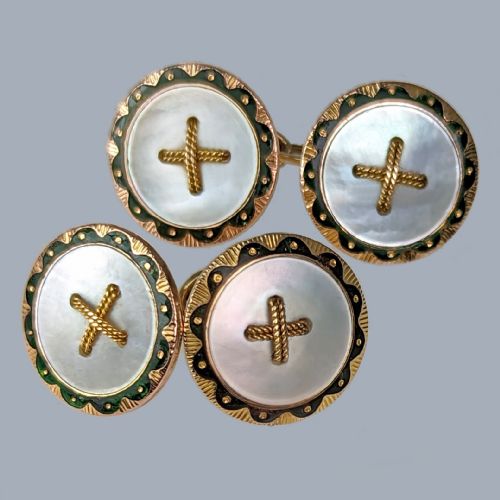
The pieces on this page include robust gold chain-linked designs, enamel-decorated modernist geometric pairs, and delicate mother-of-pearl inserts. Many examples integrate precious stones such as diamonds, rubies, and sapphires into their primary construction.
Originating from British, French, and Scandinavian workshops, these items reflect the changing aesthetics of the late nineteenth and early twentieth centuries. From the engraved belt motifs of the Victorian period to the streamlined enamel of the 1930s, each style captures the prevailing taste of its decade.
Materials and Construction
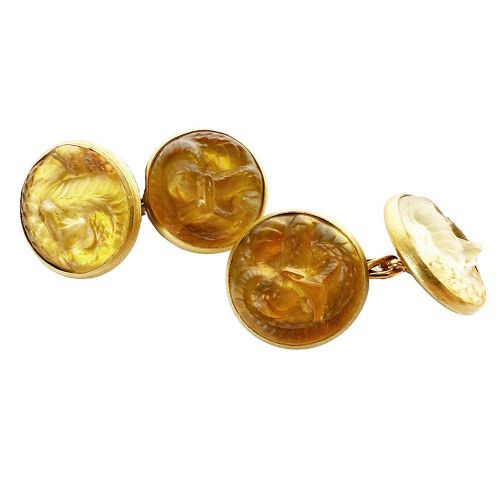
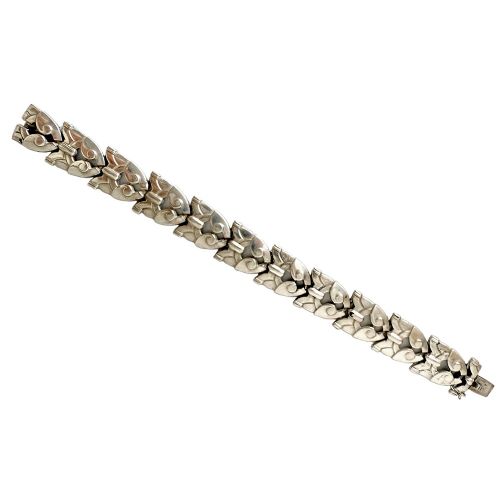
Metals form the structural foundation of these accessories, utilising yellow gold, rose gold, white gold, platinum, and silver alongside durable chrome frameworks. Goldsmiths shaped these metals into torpedo backs, chain links, and rigid hinged mountings.
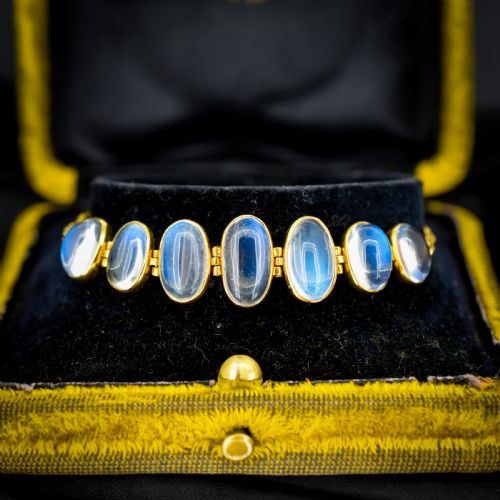
Surface decoration relies heavily on polychrome enamel work, guilloche patterns, and pierced filigree settings. Gemstones including diamonds, emeralds, pearls, and moonstones are flush-set, bezel-set, or mounted in platinum heads atop gold bases.
Elk lodge members once wore miniature painted elks beneath crystal domes on their cuffs.
Distinctions in Quality
Quality reveals itself in the weight of the precious metal and the precision of the mechanical hinges or chain links. Superior pieces maintain crispness in hand-engraved foliate motifs and secure bezel settings that firmly anchor every stone.
The artistry of the enamel work dictates the upper tier of the selection, showing smooth surfaces without chipping or uneven firing. Maker marks and clear assay office hallmarks stamped into the metal add verifiable provenance to finer specimens.
Solomon Blanckensee Son·R Lalique·Jakob Bengel·Tay Kenning Spencer Ltd·Wilson Gill·J Aitkin Son·Alexander Clark·Abraham Meyer Blanckensee
The Antique Cuff Links Glossary
- Guilloche
- A decorative technique where a precise, intricate pattern is mechanically engraved into a metal surface beneath a translucent layer of enamel. This method creates depth and shimmering light reflection across the piece.
- Torpedo back
- A streamlined, oblong closure bar designed to slide easily through buttonholes before pivoting flat to secure the cuff. It remains a hallmark of Edwardian and early twentieth-century tailoring.
- Essex crystal
- A convex piece of rock crystal reverse-painted with a miniature motif, creating a magnified three-dimensional illusion. Subjects often include sporting dogs, lodge insignia, or insects.
- Filigree
- Openwork metal formed from fine gold or silver wire twisted and soldered into delicate lace-like patterns. It is frequently seen supporting gemstones or central enamel panels.
- Hallmark
- An official stamp or series of marks applied to precious metals indicating purity, the assay office, and the date of manufacture. These symbols provide a reliable anchor for dating antique jewellery.
Antique Cuff Links: Frequently Asked Questions
How do I wear antique cuff links?
These pieces fit standard double cuffs on formal shirts by passing the toggle or chain through the buttonholes from the outside. The hinged or rigid bar then anchors the fabric securely in place.
Ensure the decorative face remains outward-facing on the upper cuff layer when fastening. They suit both traditional evening wear and contemporary tailored shirts.
What periods do these pieces cover?
The selection spans from the mid-nineteenth century through the Victorian, Edwardian, and Art Deco eras up to the mid-twentieth century. Each decade brought distinct shifts in metal choice and geometric design.
Victorian examples often feature heavy gold and engraved motifs, while Art Deco pieces favour platinum, enamel, and streamlined modernist shapes.
Are these cuff links suitable for daily use?
Solid gold and platinum models handle regular wear well, provided the connecting chains or hinges remain sturdy. Enamel and gemstone variants require slightly more care to avoid sharp impacts against hard surfaces.
Storing them in original boxes or lined compartments protects the delicate face panels and surface finishes when not worn.
How can I tell Victorian from Art Deco pairs?
Victorian designs lean towards warm rose or yellow gold, featuring foliate engraving, belt motifs, and organic shapes. They often utilise chain links or rigid curved bars.
Art Deco pairs introduce platinum, white gold, geometric enamel patterns, and calibrated gemstones. The overall aesthetic shifts from ornate romanticism to precise, modernist symmetry.