





Vintage Mens Accessories
Vintage mens accessories bring together practical pocket watch albert chains, geometric enamel cufflinks, and silver money clips spanning the Edwardian era to the mid-century.
Vintage Mens Accessories
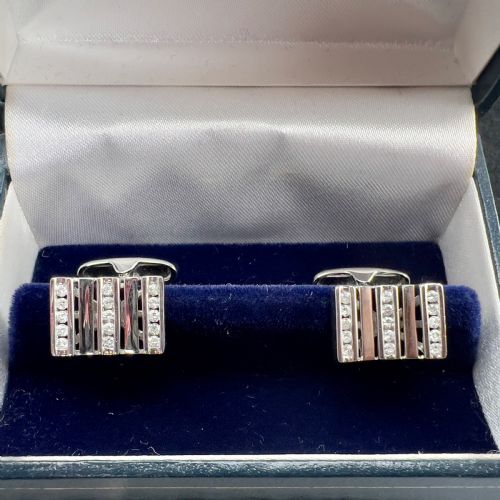
When you search for vintage mens accessories, you look at items designed for personal adornment and utility, ranging from Victorian dress buttons to mid-century silver money clips. Cufflinks and pocket watch albert chains form the backbone of this selection, representing decades of traditional menswear detailing.
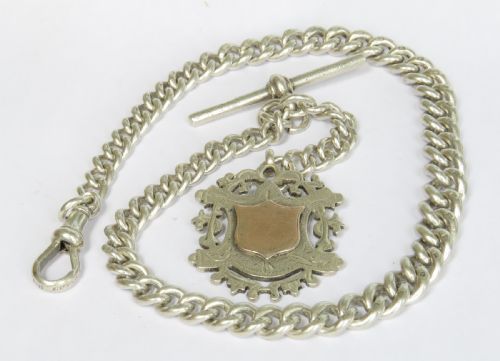
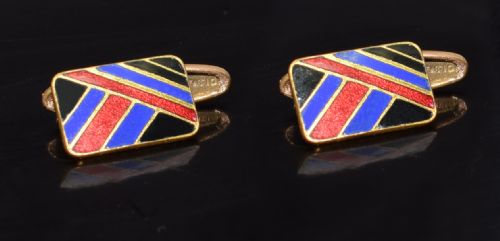
The pieces most frequently met on this page date from the Art Deco period, heavily featuring geometric enamel cufflinks in various colour combinations alongside 9ct gold iterations. Alongside these, Edwardian and early twentieth-century pocket watch chains in silver and rolled gold appear regularly.
Object types span from traditional dress studs and albert chains to contemporary designs and vintage sportswear items. Each piece reflects the shifting functional requirements and decorative tastes of men's attire across the nineteenth and twentieth centuries.
Materials and construction
Makers utilised a range of precious metals including sterling silver, 9ct yellow gold, rose gold, and rolled gold, alongside base metals like brass and chrome. These metals formed the structural foundation for items subject to daily handling and wear.
Enamel work provides the distinctive colour and geometric patterns seen across many Art Deco pieces, bonded directly to metal bases through heat. Chains and fastenings incorporate specialised components such as dog clips, swivel fobs, and T bars to secure pocket watches and garments.
Gentlemen once used tiny chained fasteners to keep their cuffs in order long before modern elastic arrived.
Judging quality in mens accessories
The distinction between standard items and superior pieces rests on the precision of the metalwork and the integrity of applied enamel. Well-executed geometric designs and crisp hallmarks on gold and silver elevate a piece above mass-produced alternatives.
Subtlety of proportion and the mechanical reliability of moving parts, such as swivel fobs and dog clips, separate finer examples from simpler utilitarian objects. Material weight and the depth of precious metal content, from rolled gold to solid 9ct gold, define the upper tier of the range.
Payton Pepper And Co
The Vintage Mens Accessories Glossary
- Albert chain
- A chain attached to a pocket watch, designed to be secured through a buttonhole and tucked into a waistcoat pocket. Named after Prince Albert, these often feature a T bar and dog clip.
- T bar
- A short transverse bar attached to the centre of an albert chain, used to anchor the chain through a garment buttonhole. It sits securely behind the fabric during wear.
- Dog clip
- A spring-loaded swivel fastening used on watch chains and fobs to attach pocket watches or charms. This mechanism allows for quick attachment and detachment.
- Dress studs
- Small decorative fasteners used in place of standard buttons on formal shirts. They frequently match cufflinks in material and style.
- Swivel fob
- A small ornamental pendant attached to a watch chain via a rotating pivot. These often incorporate hardstones such as carnelian.
Vintage Mens Accessories: Frequently Asked Questions
How do I wear an albert chain?
An albert chain is secured by passing the T bar through a waistcoat buttonhole, with the chain draping across the front. The pocket watch itself rests in the lower waistcoat pocket.
For a double albert chain, both ends attach to separate pockets or items while the T bar anchors the centre through the garment.
What is rolled gold?
Rolled gold involves a layer of solid gold mechanically bonded to a base metal core. This technique provides the appearance and wear resistance of solid gold at a different weight and cost.
It differs from gold plating by having a significantly thicker layer of precious metal.
How do I date these accessories?
Dating relies on stylistic markers such as Art Deco geometric motifs, Edwardian proportions, and material choices like white or yellow gold. Hallmarks stamped into precious metals provide precise assay office and year markers where present.
Comparing construction techniques against established periods helps narrow down the manufacturing era.