


Mens Silver Jewellery
Men's silver jewellery brings together heavy watch chains and enamel accessories from the nineteenth and twentieth centuries that carry daily use into the present day.
Mens Silver Jewellery
Mens silver jewellery centres on pocket watch chains, often called albert chains, alongside cufflinks and tie pins. These items span from the Victorian period through the Edwardian era into the Art Deco years of the twentieth century.
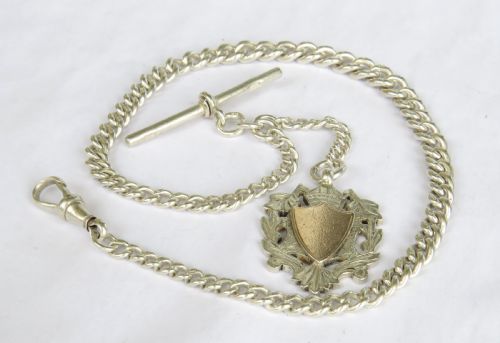
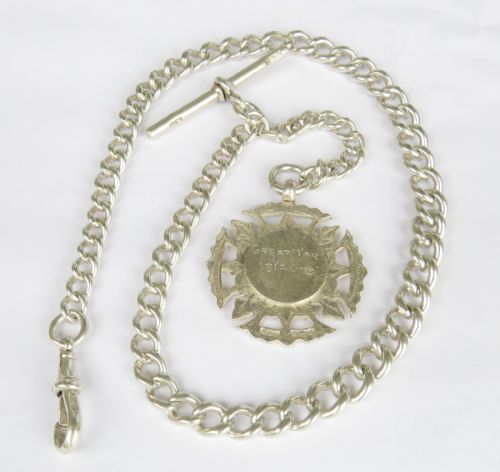
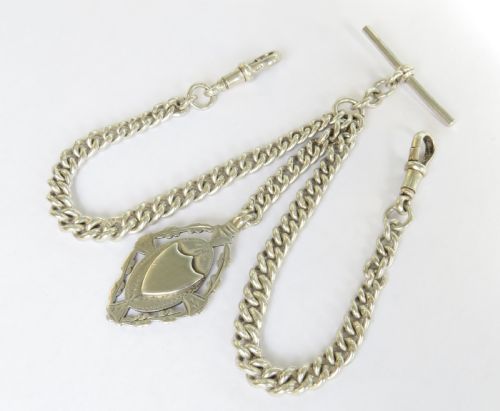
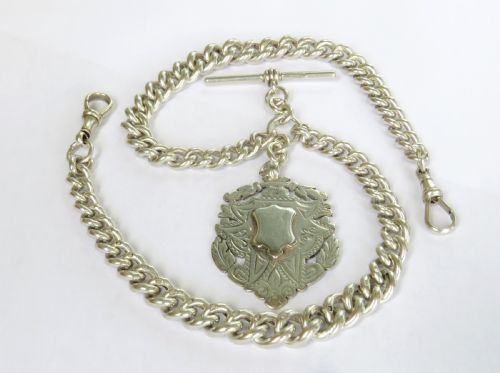
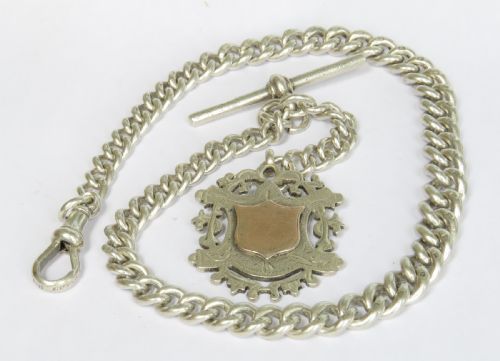
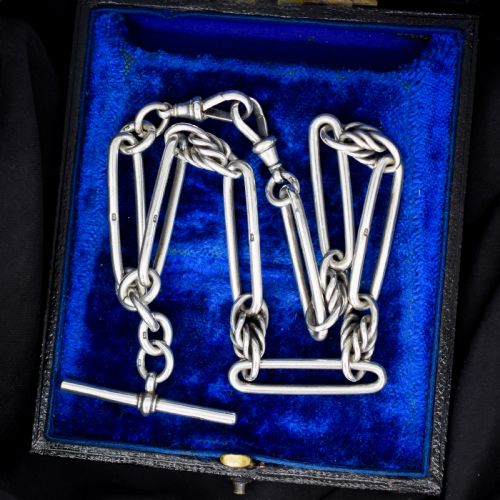
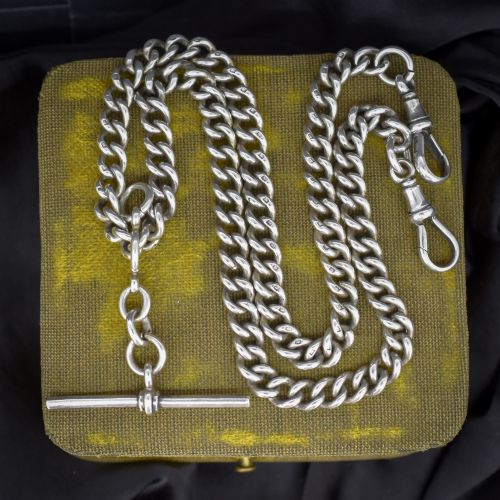
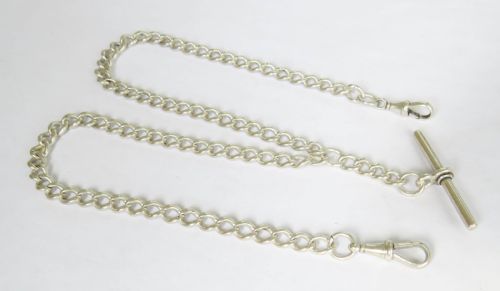
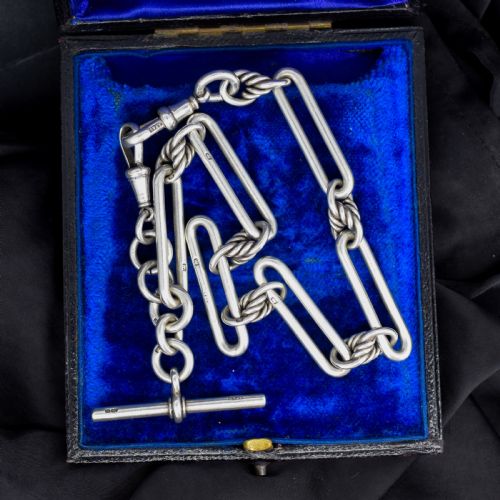
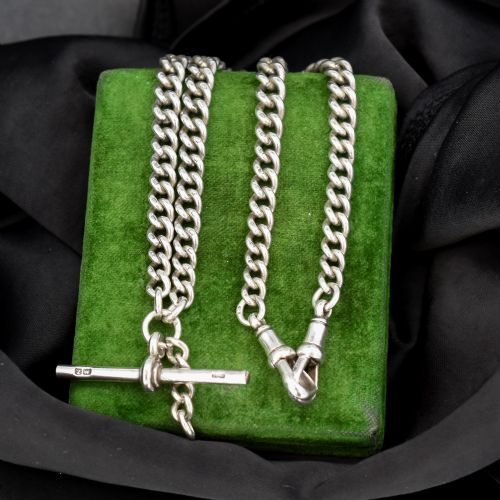
The most common forms found on this page are heavy curb link and trombone link watch chains, frequently fitted with t-bars, dog clips, and decorative fobs. Alongside these chains, enamel gents cufflinks from the 1930s appear regularly in matching pairs.
How they were made
Makers shaped sterling silver into solid curb, trombone, and uniform links, often adding rose gold or gold accents for contrast. Watch chains rely on substantial gauge wire to support daily wear, while tie pins and cufflinks combine base metals or silver with coloured enamel.
Techniques include hand assembly of linked chains, swivel mechanisms for fobs, and kiln-fired enamel applied to metal faces. Pieces frequently incorporate functional components such as spring-loaded dog clips and pivoting t-bars.
Listings span from the 1880s through the Victorian, Edwardian, and Art Deco periods into the 1960s, featuring sterling silver, enamel, and leather.
What varies in quality
Quality rests in the weight of the silver and the crispness of the original links and fobs. Heavier chains maintain tighter tolerances in their swivel clips and retain sharper hallmarks.
Enamel work varies according to the depth of colour and the preservation of the glass surface against chipping. The distinction between everyday utility pieces and finer examples lies in the integrity of the individual links and matching components.
The Mens Silver Jewellery Glossary
- Albert chain
- A pocket watch chain attached to a waistcoat, named after Prince Albert. These chains often feature a t-bar at one end and a swivel clip at the other.
- T-bar
- A short transverse bar attached to a watch chain that slips through a buttonhole to secure the chain. It acts as the anchor point for pocket watches and fobs.
- Dog clip
- A spring-loaded swivel fastener used on watch chains to attach pocket watches, keys, or fobs. The spring mechanism allows for secure attachment and quick release.
- Fob
- A small ornament or medallion attached to a watch chain. Examples include bloodstone swivel fobs and commemorative sports medals.
- Trombone link
- A watch chain link style composed of alternating long rectangular bars and small circular connecting rings. This pattern creates a distinctive geometric rhythm along the length of the chain.
Mens Silver Jewellery: Frequently Asked Questions
What is an albert chain used for today?
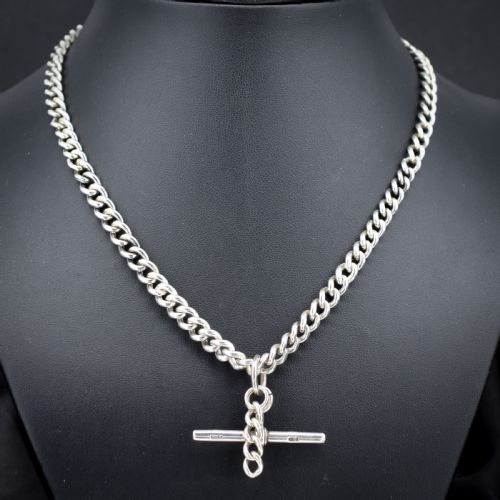
Albert chains function primarily as necklaces or pocket watch accessories, worn across waistcoats or draped around the neck.
Many collectors adapt longer watch chains to be worn as necklaces by securing the dog clip to the opposite end or t-bar.
How do I identify Art Deco cufflinks?
Art Deco cufflinks from the 1930s typically feature geometric patterns, modernist motifs, and coloured enamel panels. These pieces often employ chrome or silver alongside vibrant green, black, or multi-coloured enamel.
They reflect the machine-age design influences of the interwar period, moving away from ornate Victorian floral styles.
What does sterling silver mean on a chain?
Sterling silver indicates a silver alloy containing ninety-two point five percent pure silver by mass, with the remainder consisting of other metals like copper for durability.
Most antique chains carry hallmarks verifying this standard of metal purity.
Can I wear a pocket watch chain as a necklace?
Watch chains of sufficient length, particularly those measuring between fourteen and twenty inches, fit comfortably around the neck as chains.
The inclusion of dog clips and t-bars makes fastening them straightforward without additional hardware.