


Vintage Silver Cufflinks
These vintage silver cufflinks span decades of design, offering tailored fastening for cuffs from the Victorian era to the mid-twentieth century.
Vintage Silver Cufflinks
Vintage silver cufflinks comprise matched pairs and sets designed to secure shirt cuffs, often appearing alongside related items such as trinket boxes and buttons. When searching for vintage silver cufflinks, collectors encounter distinct periods including the Edwardian era, the Victorian period, and the 1930s.
The Art Deco period dominates the selection with modernist enamel designs, geometric patterns, and coloured detailing. Other examples range from George V pieces to 1960s sports-themed items and regimental designs in 9ct yellow gold from 1880.
How they were made
Makers utilised solid silver, sterling silver, and silver plate, alongside silver-tone metal and occasionally 9ct yellow gold. Vitreous enamel and standard enamel provide the colour in geometric and modernist compositions.
Techniques varied from cast metalwork to detailed engraving and enamel inlay, particularly in Art Deco and Maltese styles. Toggle mechanisms and rigid bars serve as the structural fasteners for the cuffs.
The inventory records pieces spanning the Victorian period, Edwardian era, George V reign, 1930s Art Deco, and 1960s sports themes.
What varies in quality
The standard of enamel work distinguishes the output, with smooth, intact vitreous surfaces holding greater fidelity than worn or replaced fillings. Crispness in the modernist lines and geometric cuts determines the visual clarity of Art Deco pieces.
The integrity of the underlying metal, whether sterling silver or solid gold, separates high-grade examples from silver-tone metal alternatives. Heavier gauge metalwork provides superior durability compared to lighter stamped components.
The Vintage Silver Cufflinks Glossary
- Sterling silver
- A silver alloy containing 92.5 percent pure silver by mass and 7.5 percent other metals, usually copper. This standard composition appears frequently in marked pieces.
- Art Deco
- A design style characterised by sleek geometric shapes, streamlined forms, and bold colours that emerged in the interwar period. Pieces from this era often display clean modernist lines.
- Toggle
- A pivoting fastening mechanism attached to the reverse of a cufflink post to secure the piece through buttonholes. This mechanical element allows the toggle to lie flat against the cuff.
Vintage Silver Cufflinks: Frequently Asked Questions
How do I date vintage silver cufflinks?
Dating relies on stylistic markers such as Art Deco geometric forms, Edwardian proportions, or Victorian motifs. Hallmarks and maker marks stamped on the metal provide definitive chronological markers.
Material choices also assist with dating, as specific enamel colours and gold standards align with particular decades in the manufacturing record.
Are all vintage cufflinks made of solid silver?
Listings include items made from sterling silver, silver plate, and silver-tone metal alongside 9ct yellow gold examples. Hallmarks or stamps on the reverse typically indicate the exact metal content.
Pieces lacking silver hallmarks often consist of silver-tone metal or plated base metals rather than solid precious metal.
How should I store my cufflinks?
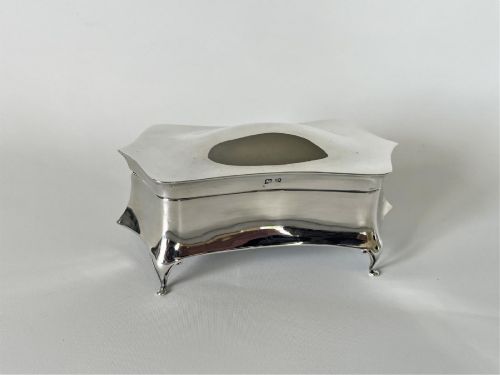
Proper storage involves keeping pairs in dedicated compartments or small boxes to prevent scratching between items. Edwardian trinket boxes and dedicated stud boxes offer historical storage options.
Keeping silver pieces away from high humidity reduces the rate of natural tarnish accumulation on the metal surfaces.
What is the difference between sterling and silver-tone?
Sterling silver is a regulated precious metal alloy containing a high percentage of pure silver. Silver-tone metal describes a base metal finished to resemble silver without containing the precious metal.
Testing or examining hallmarks reveals the distinction between solid precious metal construction and plated or coloured base metals.