



Edwardian Dress Studs
Edwardian dress studs are small, refined fastenings designed for formal wear, offering a subtle touch of period craftsmanship to a gentleman's attire.
Edwardian Dress Studs
When searching for edwardian dress studs, collectors encounter small fastenings intended for formal shirts, often appearing alongside related items such as buttons and cufflinks in the listings.
The evidence shows these pieces span periods from the Victorian era into the 1930s, reflecting the enduring utility of refined gentlemen's accessories.
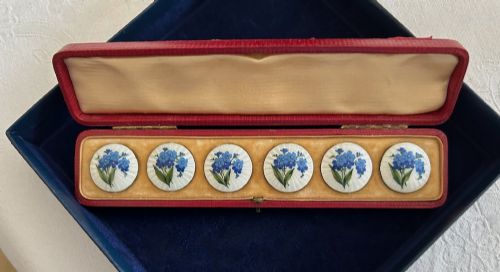
Examples frequently use materials like sterling silver, enamel, and mother of pearl, sometimes housed within their original fitted leather boxes.
How they were made
Maker workshops utilised precious metals such as 9ct and 18ct gold alongside sterling silver to form the structural mounts of the studs.
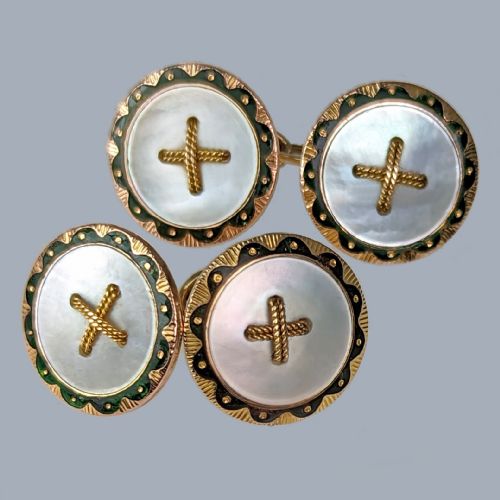
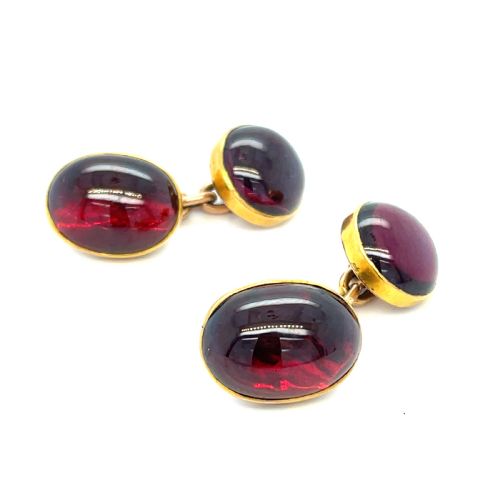
Decorative faces relied on natural materials like mother of pearl, tortoise-shell, and cabochon gemstones, or applied coloured enamel for visual contrast.
Listings for edwardian dress studs incorporate materials spanning sterling silver, enamel, mother of pearl, and gold across the Victorian and Edwardian periods.
What varies in quality
The standard of execution in the metalwork and the precision of any enamel work largely determine the quality of an individual stud set.
Completeness alters desirability, particularly when pieces retain their original fitted cases rather than surviving as loose examples.
Solomon Blanckensee Son·Arthur W Simpson
The Edwardian Dress Studs Glossary
- Guilloche enamel
- A decorative technique involving intricate mechanical engraving beneath a translucent layer of coloured enamel. This method was widely used on turn-of-the-century dress accessories.
- Cabochon
- A gemstone shaped and polished with a smooth, rounded convex surface rather than faceted. Such stones appear frequently in period jewellery mounts.
- Mother of pearl
- The iridescent internal layer of pearl oyster shells, carved into thin plates for decorative inlay. It provides a luminous surface on buttons and cufflinks.
- Sterling silver
- An alloy consisting of silver and other metals, typically copper, standardised for durability and purity. It forms the base of many surviving boxed button sets.
Edwardian Dress Studs: Frequently Asked Questions
What were edwardian dress studs used for?
These small fasteners secured the starched buttonholes of formal dress shirts worn by gentlemen during the Edwardian period and surrounding decades. They served both a practical purpose and a decorative function at formal evening events.
Over time, many sets have survived in domestic collections, often preserved in fitted velvet-lined boxes alongside matching cufflinks or buttons.
How do I date these pieces?
Dating relies on the stylistic markers of the mounts, the presence of metal hallmarks, and the construction of any accompanying storage boxes. Edwardian pieces often combine platinum or gold with delicate guilloche enamel.
Comparing the materials against known manufacturing periods helps distinguish Edwardian examples from earlier Victorian items or later 1930s productions.
Are they still wearable today?
Many sets remain robust enough for occasional use with modern formal wear, provided the fastening mechanisms are handled with care. The materials used, such as solid silver and gold, retain their structural integrity.
Collectors often choose to wear them on special occasions, appreciating the tactile quality of the period craftsmanship against modern alternatives.
Why do some sets include boxes?
Original fitted boxes protected delicate materials like enamel and mother of pearl from damage when not in use. Retailers of the era often supplied complete matched sets of studs and buttons in custom cases.
Surviving boxes add context to the pieces, frequently bearing the stamp of the original maker or retailer on the silk lining.