

Antique Crystal Light
An antique crystal light brings refracted illumination and historical weight to a room, ranging from grand French chandeliers to intimate Edwardian lamps.
What these pieces are
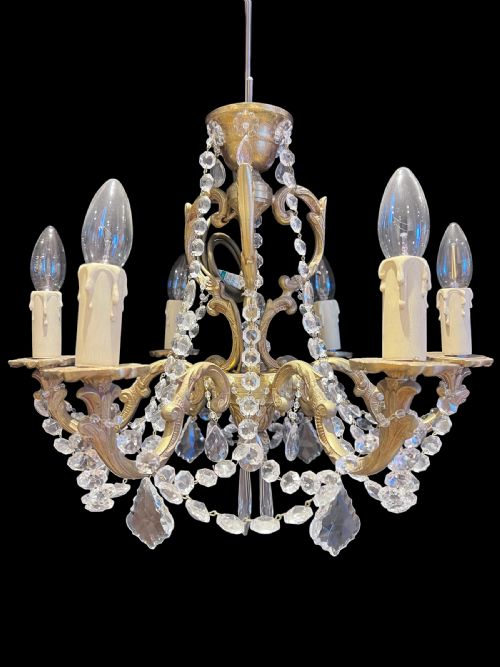
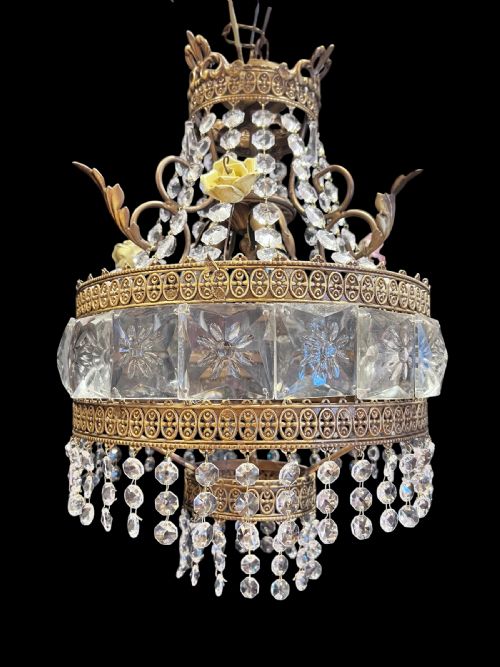
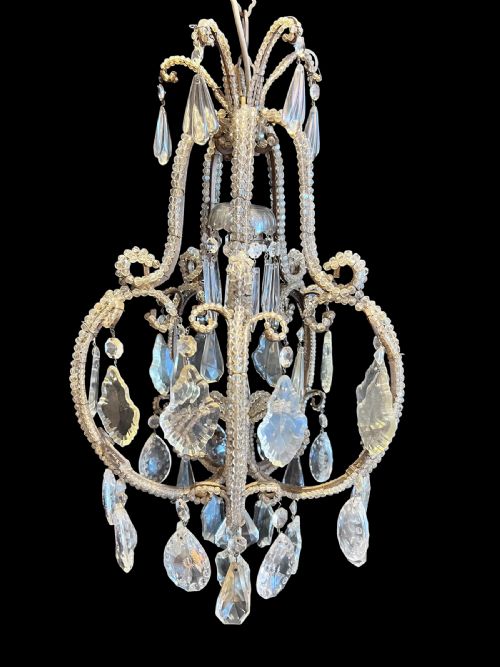
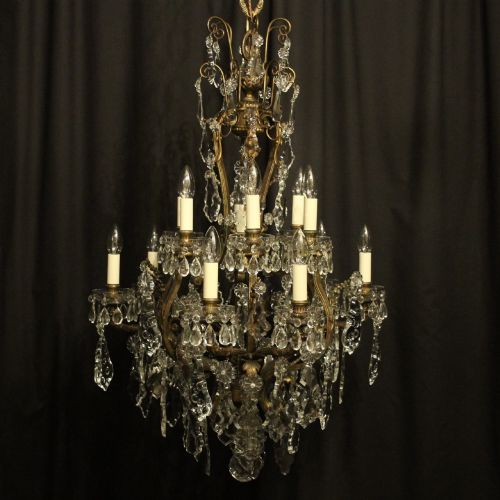
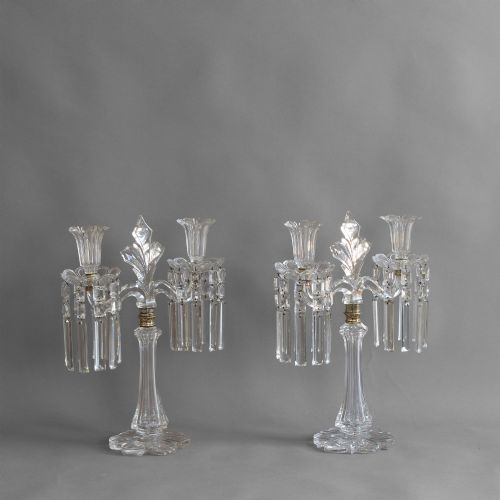
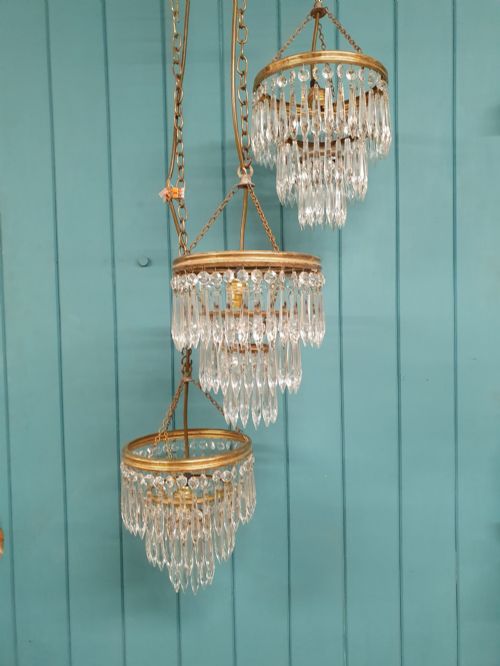
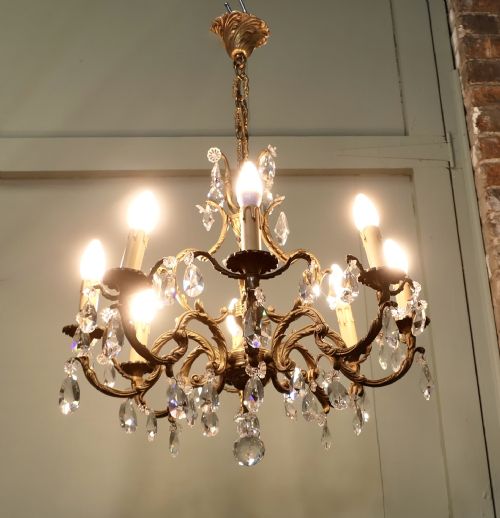
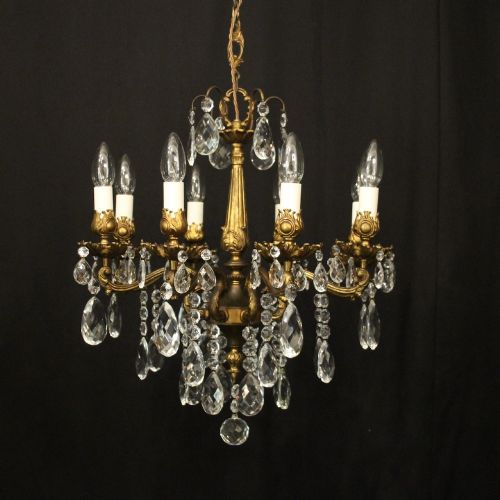
When searching for an antique crystal light, buyers encounter a diverse selection of chandeliers, ceiling lights, table lamps, and wall lights. These fixtures primarily illuminate interior spaces through suspended glass prisms and faceted drops arranged around central metal frames.
The pieces appearing here span multiple eras, including Edwardian examples, 19th-century works, and early 20th-century designs from 1910, 1920, and 1930. French Empire and Rococo styles appear frequently alongside Gustavian and Italian Rococo Revival forms.
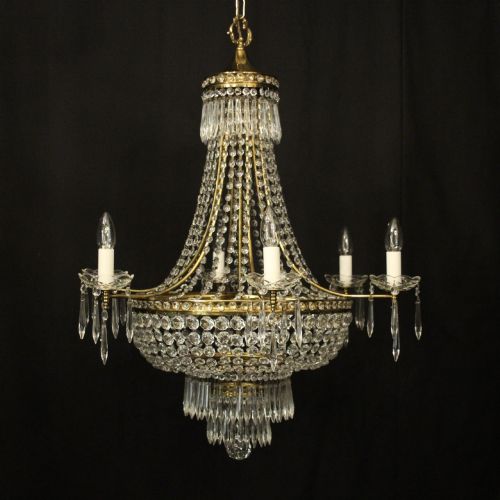
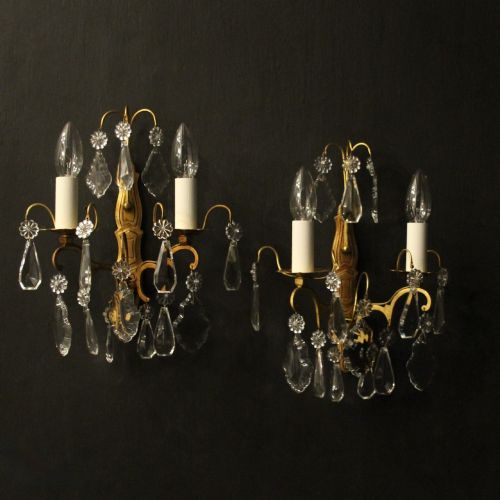
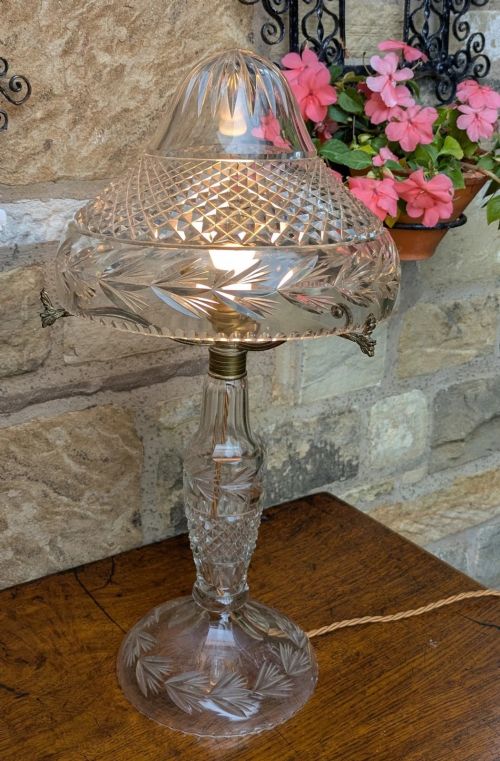
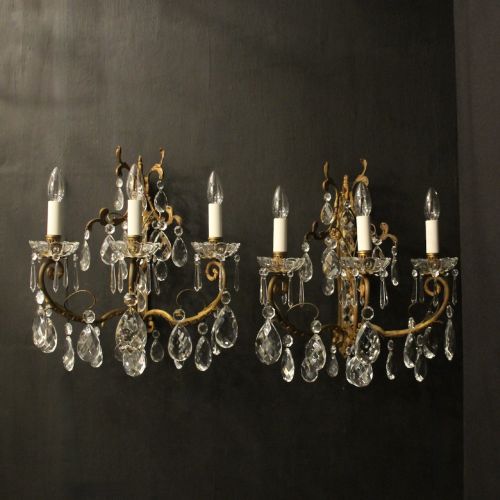
Chandeliers dominate the selection, varying from single-light basket fixtures to multi-branch formats holding up to twenty-five lights. Smaller forms like mushroom lamps and wall sconces also feature in the material record.
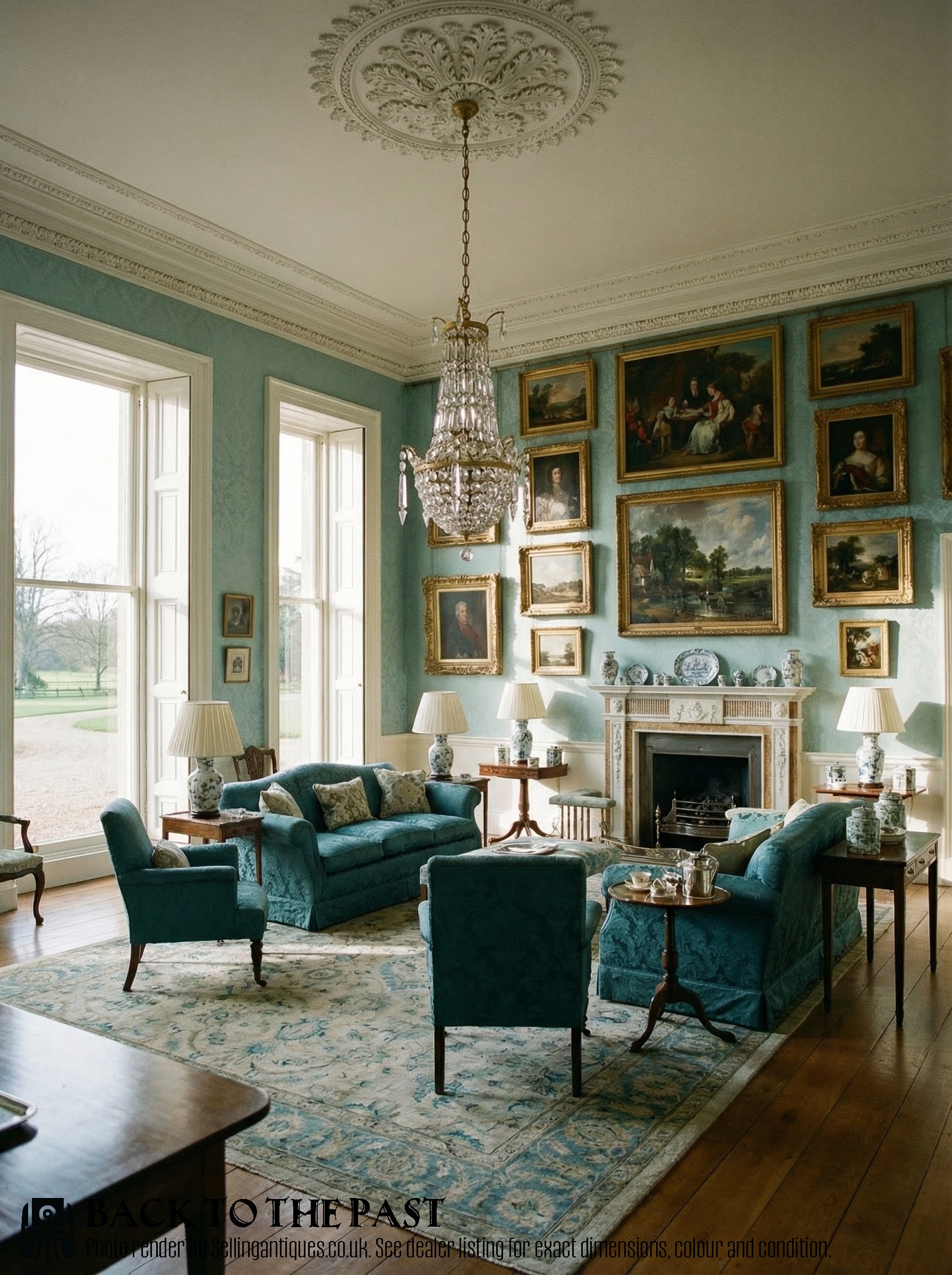
How they were made
The construction of these light fixtures relies on a combination of metalwork and glass-forming techniques. Frames utilise brass, gilded bronze, nickel, toleware, and general metal alloys shaped into structures like birdcages, baskets, and multi-branched arms.
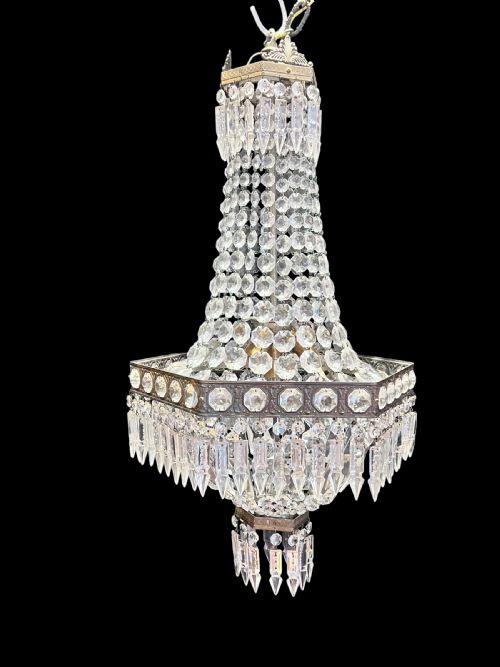
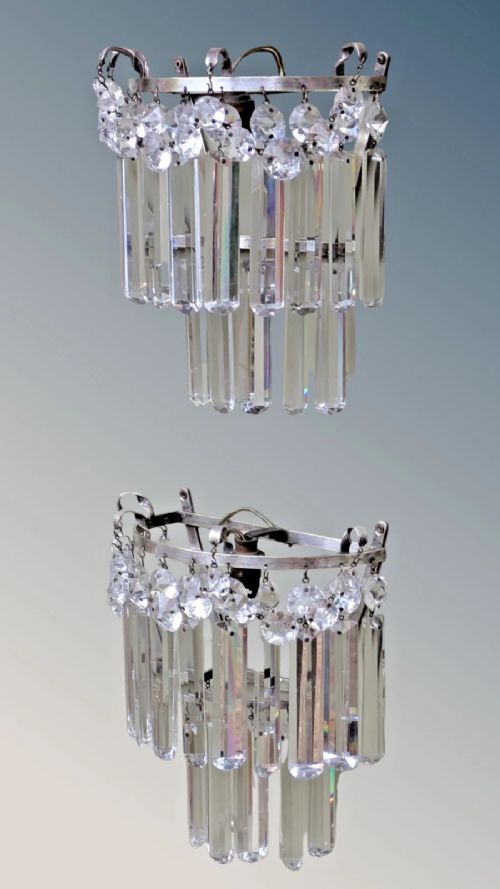
Hanging elements consist of crystal, cut glass, and cobalt glass shaped into prisms, beads, and faceted drops. Artisans wired or pinned these glass components to the metal framework by hand to create cascading tent and waterfall configurations.
Retail Price Guide 2026
Typical UK retail prices for crystal light, calculated from the Sellingantiques database of over a million retail prices indexed since 2003. This retail price guide relies exclusively on Sellingantiques data; no external sources or auction records are used, so the figures do not describe the wider market.
Listings feature brass, bronze, nickel, and toleware paired with cut crystal, cobalt glass, and standard glass.
What varies in quality
The quality of an antique crystal light depends on the clarity and depth of the glass components. Pieces featuring heavily cut crystal glass refract light differently than simpler moulded glass elements.
Metalwork execution distinguishes different tiers of manufacture. Finely chased gilded bronze and heavy brass or gilt-brass frames demonstrate superior metalworking skill compared to basic metal structures.
The Antique Crystal Light Glossary
- Crystal
- High-grade glass containing lead oxide for enhanced brilliance and weight. It allows for deeper, sharper facet cutting.
- Prism
- A geometric glass pendant designed to refract light into spectral colours. These hang from the frame in various shapes.
- Basket chandelier
- A lighting fixture where drops form a dense, bowl-shaped enclosure around the lights. This style directs illumination outward through glass elements.
- Tent and waterfall
- A chandelier arrangement featuring an upper conical section of glass beads above a cascading lower tier. This design creates a layered curtain of crystals.
Frequently Asked Questions
Where should I hang a crystal chandelier?
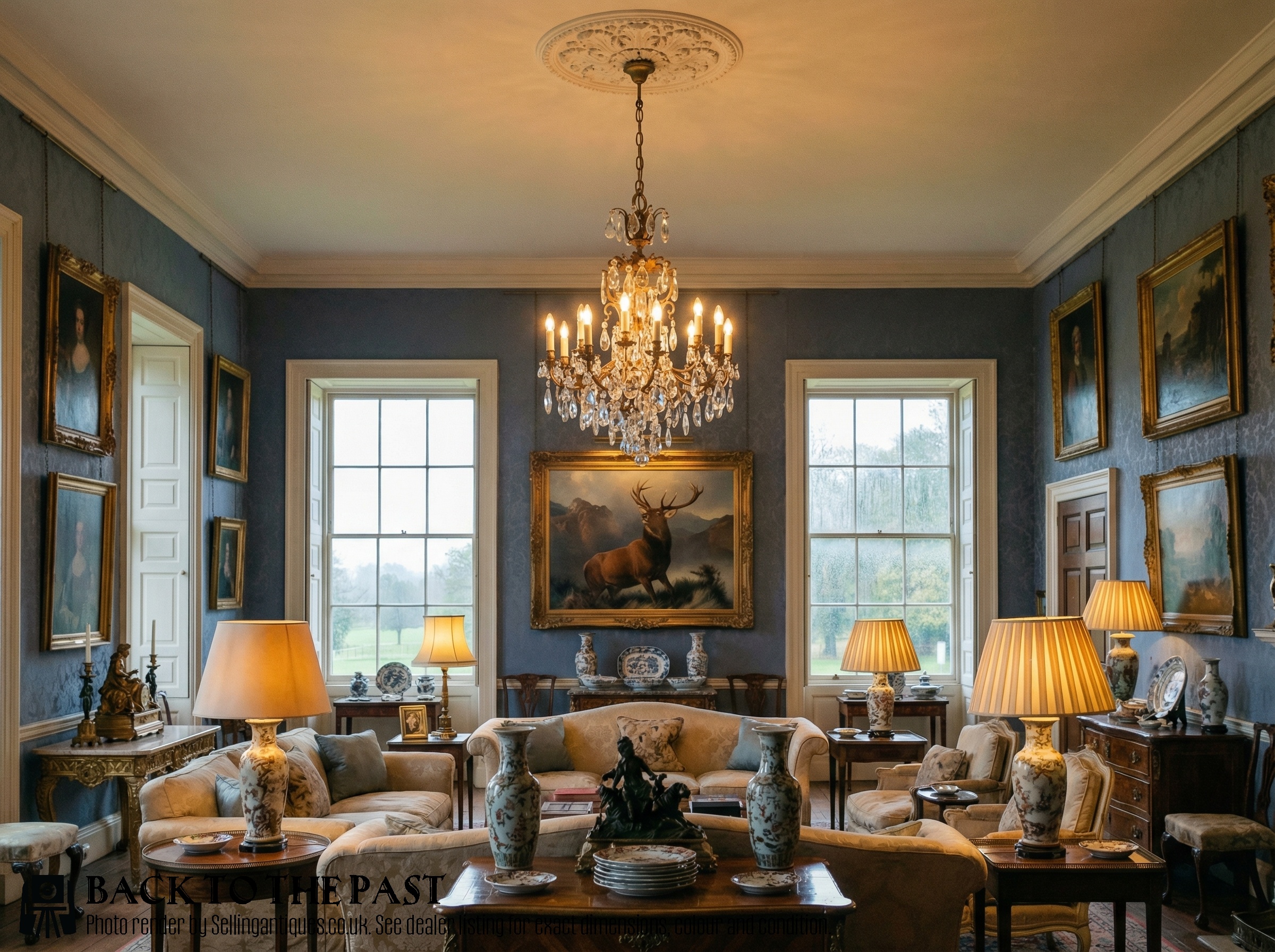
These fixtures suit spaces with adequate vertical clearance, such as dining rooms, entrance halls, and formal living areas. Smaller versions and wall lights fit into narrower hallways or bedrooms.
Ensure the ceiling height accommodates the specific drop of the chandelier to maintain proper proportion within the room.
What styles are common in these lights?
French Empire and Rococo designs appear frequently, often featuring gilded bronze frames and elaborate crystal drops. Edwardian and Gustavian examples offer alternative aesthetics with simpler brass or painted metal structures.
Italian Rococo Revival pieces provide yet another stylistic variation within the broader category of period lighting.
Are these lights compatible with modern wiring?
Most period fixtures require professional rewiring to meet modern electrical safety standards before installation. Qualified electricians can adapt the internal wiring without altering the exterior historic appearance.
Consult a specialist to ensure the mounting structure can support the combined weight of the metal frame and glass components.