


Antique Cross Stitch Wall Art
Antique cross stitch wall art brings enduring domestic history into your home through needlework samplers and framed textile panels.
Antique Cross Stitch Wall Art
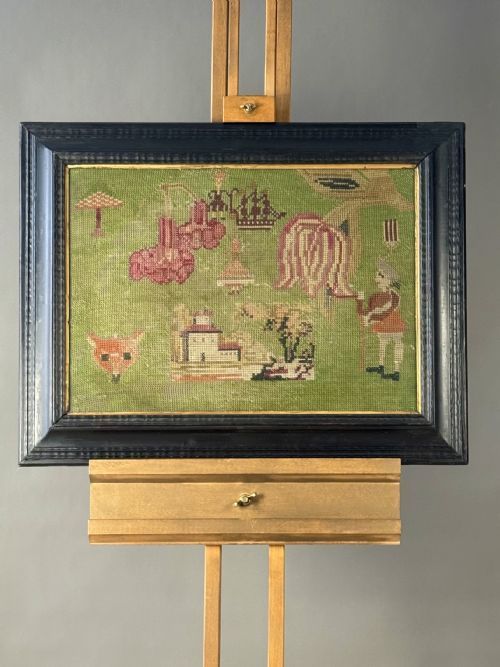
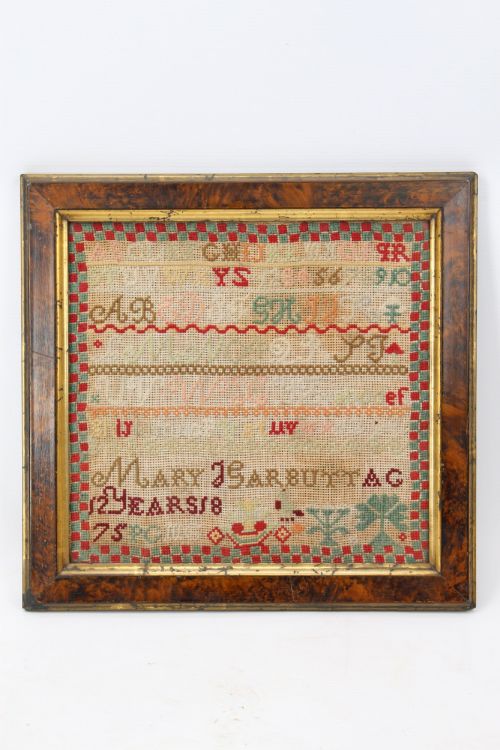
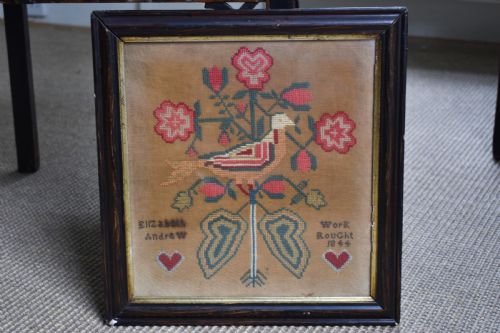
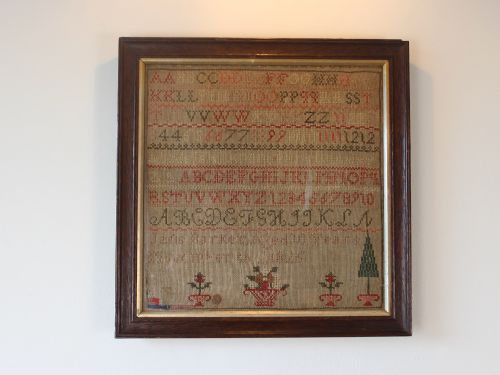
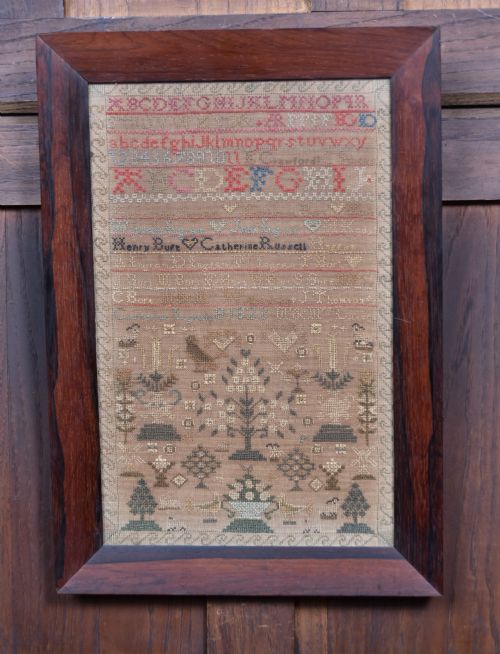
When you search for antique cross stitch wall art, you encounter needlework samplers and framed textile wall art that preserve the handiwork of past generations. These pieces span the Georgian, Regency, William IV, and Victorian periods, capturing decades of domestic education and personal expression. You meet alphabet samplers, pictorial wool work, and Berlin work panels created by young makers such as Mary J Garbutt and Margaret Ann Blackow.
The pieces on this page are predominantly framed wall art and textile panels originating from the eighteenth and nineteenth centuries. You find works dated across the 1820s, 1830s, and 1850s, alongside specific regional examples like early nineteenth-century Scottish needlework and schoolgirl samplers. Each piece serves as a direct record of historical needlecraft, preserved within wood and glass frames.
Materials and construction
Makers constructed these works using linen and canvas as the primary foundation fabrics for stitching. They applied silk thread, wool, and standard thread to execute detailed alphabets, figures, and pictorial scenes. The physical composition relies on natural textiles that hold their structure over centuries.
Framing forms an integral part of how these textiles survived, with examples mounted behind glass inside wood frames such as burr maple. This combination protects the delicate fibres of the wool and silk thread from environmental damage while displaying the textile wall art.
Materials recorded across the inventory include linen, canvas, silk thread, wool, wood, and glass.
Assessing quality in needlework
The complexity of the stitches and the clarity of the composition separate standard schoolroom exercises from exceptional needlework art. Pieces that incorporate detailed pictorial elements, such as animals or figures alongside alphabets, demonstrate higher technical ambition by the maker.
The preservation of the original materials, including the retention of vibrant silk or wool thread colour against the linen ground, dictates the visual strength of the piece. Furthermore, surviving in a period wood frame enhances the historical integrity of the textile.
The Antique Cross Stitch Wall Art Glossary
- Sampler
- A piece of needlework produced as a demonstration or test of skill in various stitches, often featuring alphabets, numbers, and motifs. These works were commonly made by young girls to prove their proficiency in domestic education.
- Berlin work
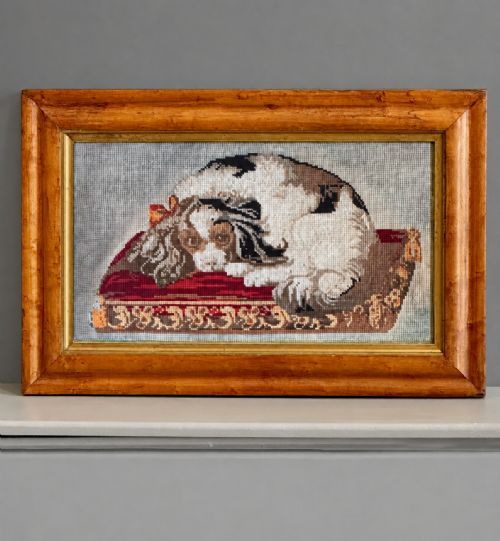
- A type of coloured wool embroidery popular during the nineteenth century, charted on squared paper similar to modern cross stitch. It often depicted figurative subjects like animals or landscapes.
- Needlepoint
- Embroidery stitched on a stiff open-weave canvas ground that completely covers the foundation fabric. It provides a durable and textured surface for wall art.
- Linen
- A strong, durable fabric woven from flax fibres used as the traditional ground cloth for early needlework samplers. Its even weave allowed for precise counting of threads.
Antique Cross Stitch Wall Art: Frequently Asked Questions
How old are these samplers?
The pieces span the eighteenth and nineteenth centuries, including specific dates from the Georgian and Victorian eras.
Many examples record the exact year and the age of the maker, often a young girl around twelve years old.
How should I hang textile art?
Display your framed needlework away from direct sunlight to protect the delicate silk and wool threads from fading.
Keep the pieces in stable room conditions to prevent moisture from affecting the historic linen and wood frames.
What is Berlin work?
Berlin work is a vibrant style of wool embroidery that gained popularity during the nineteenth century.
It utilised painted pattern sheets and wool thread to create detailed pictorial subjects like the King Charles spaniel pieces seen in this collection.
Are these pieces handmade?
Every piece listed is a handmade textile creation executed by individual makers before the advent of industrial embroidery.
The irregular stitches and personal inscriptions reflect the authentic domestic origin of each sampler.