


Antique Corner Seat
An antique corner seat solves the puzzle of awkward angles in a room, turning empty junctions into useful places to sit.
Antique Corner Seat
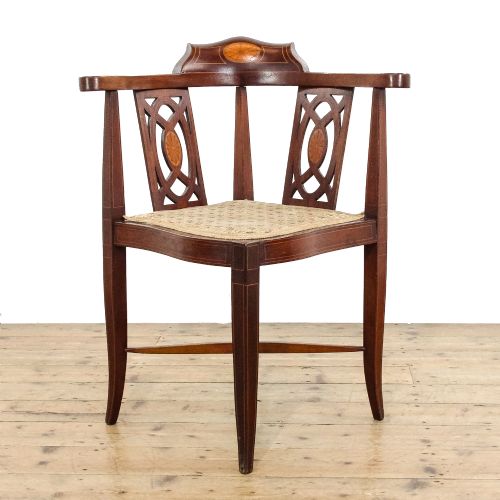
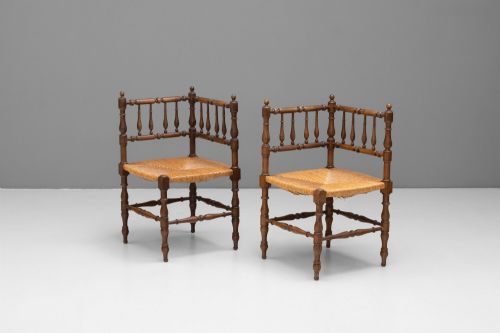
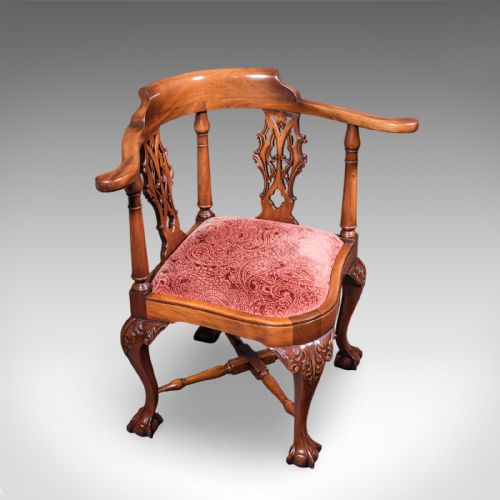
An antique corner seat is built specifically to fit into the right angle of a room, using a square frame set diagonally with a curved back rail supported by spindles or turned columns. The most common versions encountered here are mahogany and oak pieces from the eighteenth and nineteenth centuries, often featuring rush or drop-in upholstered pads.
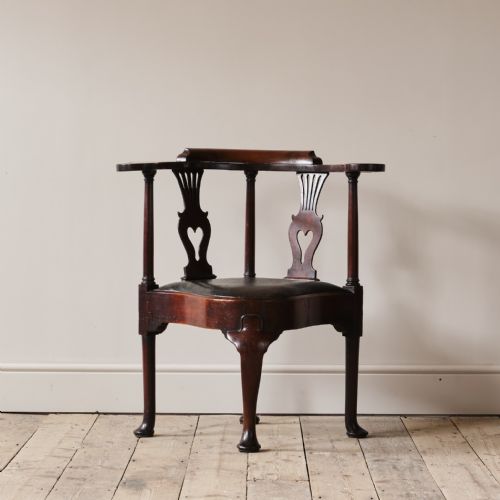
Makers designed these chairs for versatile placement in studies, hallways, and bedchambers where standard straight seating blocked doorways or walkways. Variations range from simple country rush-seated models in oak to elaborate walnut and mahogany examples with carved splats from the Georgian and Edwardian eras.
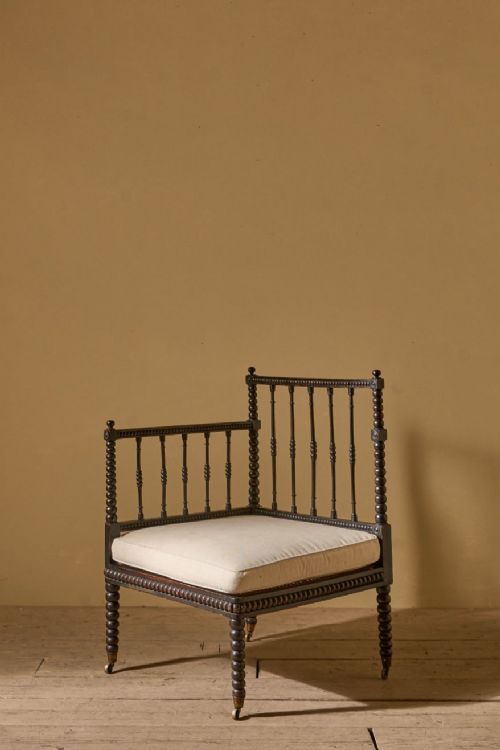
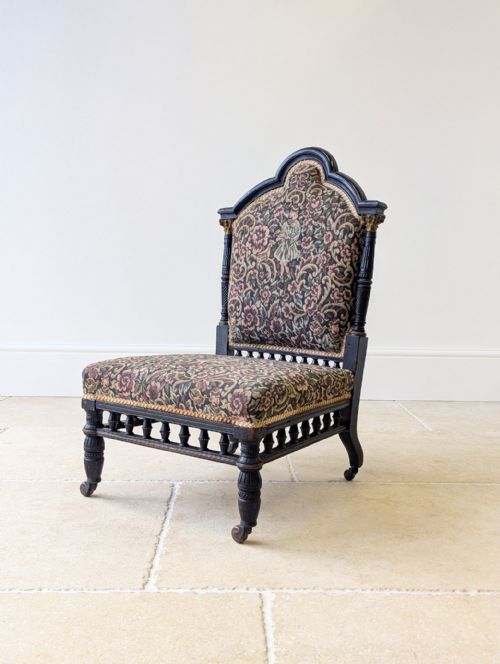
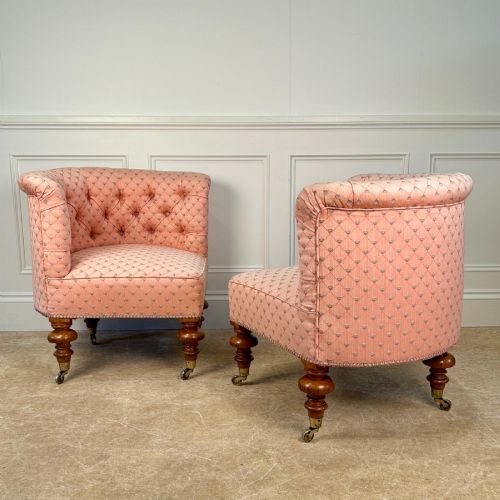
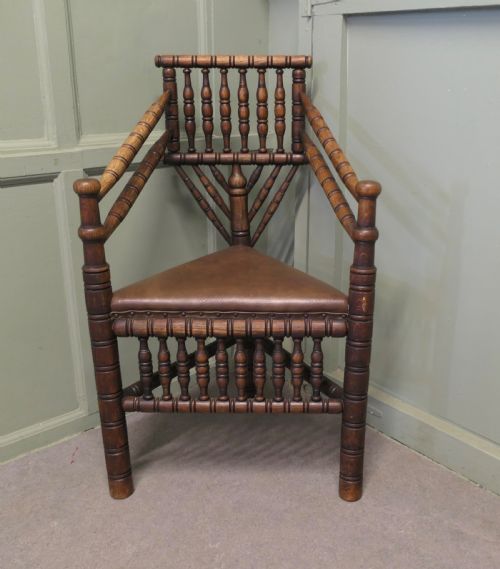
The form evolved through various revival periods, leading to ebonised bobbin-turned frames, aesthetic movement low salon chairs, and inlaid mahogany designs. Buyers also encounter heavier seating forms like turner's chairs and low corner sofas that adapt the diagonal footprint for larger spaces.
Materials and construction methods
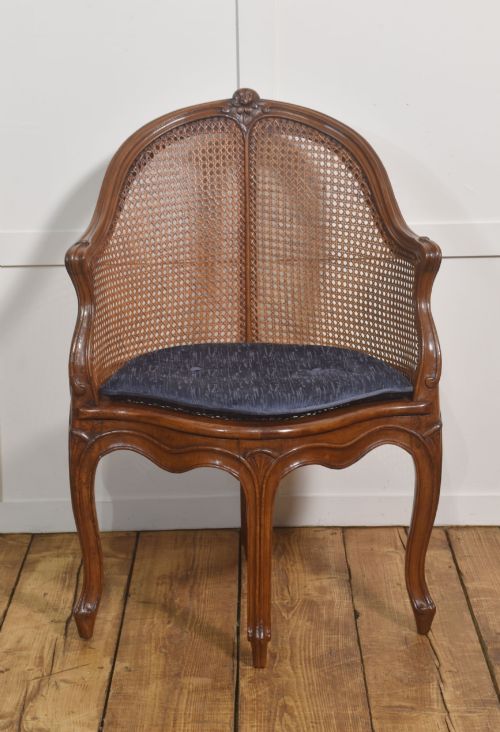
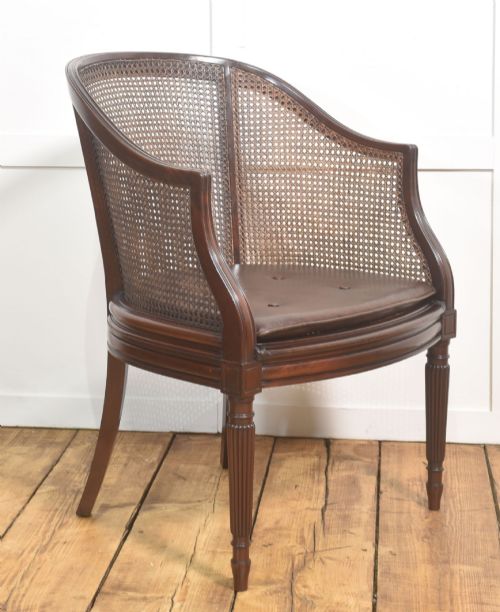
Joiners built these frames primarily using solid timbers like oak, mahogany, and walnut, often shaped with turned spindles, bobbin turnings, or carved splats. Seats were commonly fitted with woven rush, cane panels, or drop-in pads covered in leather, fabric, or velvet.
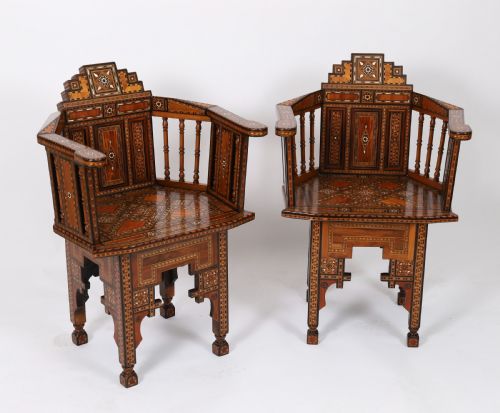
Master craftsmen employed traditional mortise and tenon joinery to sustain the structural stress placed upon diagonal corner joints. Decorative elements relied on parquetry inlay, marquetry, ebonising, and pierced carving rather than applied veneers.
Early turners chairs were sometimes called elbow seats, offering a remarkably solid perch for anyone needing firm support while reading heavy folios.
Distinguishing quality in craftsmanship
Quality rests upon the integrity of the timber selection and the crispness of the carving or turning, where denser grain and deeper relief separate standard workshop production from finer cabinet work. Superior examples exhibit tightly woven rush or intact cane work alongside robust structural framing that resists wobble at the diagonal joints.
The sophistication of the secondary details, such as complex parquetry inlay, figural carvings, or ebonised finishes, elevates a piece beyond utilitarian domestic furniture. Honest patination on exposed oak and mahogany surfaces also indicates age and careful preservation over centuries.
Liberty and Co·Miles and Edward
The Antique Corner Seat Glossary
- Corner chair
- A chair designed with a diagonal seat plan and a semi-circular backrest to fit neatly into the corner of a room. These typically feature three supporting legs and a central front leg.
- Rush seat
- A bottom woven from dried marsh rushes twisted around a frame to create a sturdy, textured surface. This traditional seating material appears frequently on country oak examples.
- Bobbin turning
- A form of woodturning characterised by a series of rounded, spool-like shapes carved along the length of a stretcher or leg. It gained popularity during the seventeenth century and saw revivals in the nineteenth century.
- Turners chair
- A heavy wooden armchair constructed entirely from turned spindles and posts, sometimes referred to as an old Saxon chair. These feature solid wooden seats and triangular or square footprints.
- Marquetry
- Decorative veneer work where pieces of contrasting wood, shell, or ivory are fitted into a wooden background to form geometric or floral patterns. It appears on finer Edwardian and Georgian mahogany frames.
Antique Corner Seat: Frequently Asked Questions
Where did people place corner chairs?
These seats were originally positioned in the corners of panelled rooms, bedchambers, and parlours where wall space was at a premium. Their diagonal orientation allowed them to utilise dead space without obstructing narrow walkways.
Over time, owners also used them near writing desks or as accent pieces in hallways, making them surprisingly versatile items of period furniture.
How do I date an oak corner chair?
Dating relies on examining the construction methods, timber choice, and decorative styles visible on the frame. Earlier pieces from the eighteenth century often display pegged mortise and tenon joints with simple turned supports and rush seats.
Later nineteenth-century and Edwardian iterations frequently incorporate machine-cut elements, revival styling such as bobbin turning or inlay, and upholstered drop-in seats.
Can I use an antique corner seat every day?
Solid timber frames built with traditional joinery remain exceptionally sturdy and tolerate regular daily sitting if the joints are secure. Care must be taken with delicate rush or cane seats, which benefit from sensible weight distribution and avoidance of damp environments.
Upholstered versions with modern internal webbing offer comfortable seating for studies or reading corners without compromising the historic framework.