
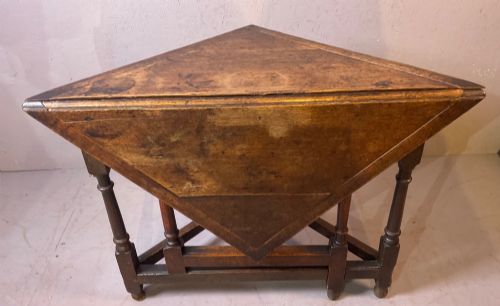


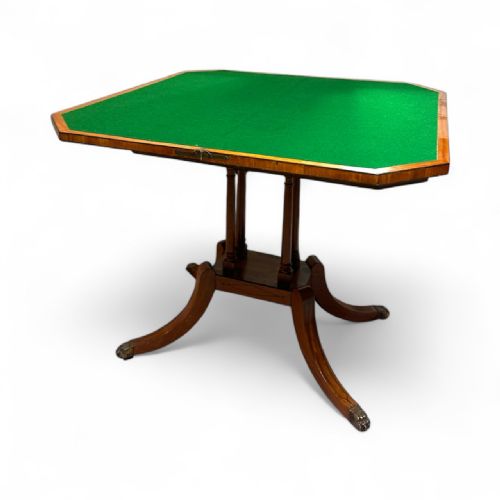


Antique Corner Console Table
An antique corner console table fits snugly where straight furniture fails, turning awkward angles into points of architectural interest using rich period timbers.
Antique Corner Console Table
An antique corner console table transforms neglected architectural angles into useful surfaces, though the listings here show a wider family of related tables sharing similar spaces. Buyers searching for an antique corner console table often encounter corner leg tables, demi-lune display pieces, and occasional tables that adapt to room perimeters.
The periods represented span from the seventeenth century through the Georgian and Regency eras into the Victorian period and the early twentieth century. Construction forms vary from simple oak frames to folding card tables, tea tables, and satinwood or rosewood display consoles.
How they were made
Cabinetmakers constructed these tables using dense hardwoods such as mahogany, oak, walnut, and burr walnut, often selecting Cuban mahogany for its deep grain. Surfaces frequently incorporate decorative veneers of satinwood and rosewood, sometimes enhanced with contrasting brass inlay.
Joining techniques relied on traditional cabinetmaking methods suitable for folding tops, gate legs, and semi-circular demi-lune forms. Painted finishes and delicate marquetry appear on specific continental and revival pieces from later decades.
Some tables hide tiny counter wells beneath their folding tops, ready for eighteenth-century wagers.
What varies in quality
Quality rests upon the selection of timber figures, such as the richness of burr walnut or the depth of Cuban mahogany grain. Superior examples demonstrate crispness in brass inlay and precision in the joinery of folding mechanisms.
Finer pieces maintain proportion and balanced integration of decorative veneers, whereas simpler versions rely on plain oak or straightforward painted pine. The handling of secondary woods and the integrity of original hinges or turning further separate standard items from exceptional ones.
The Antique Corner Console Table Glossary
- Demi-lune
- Having a half-moon shape. This curve allows console tables to sit flush against a wall while projecting gently into the room.
- Card table
- A small folding table designed for playing games. These pieces usually feature a baize-lined interior and counter wells for tokens.
- Campaign
- Portable furniture made for travel. Such pieces often incorporate brass mounts and sturdy handles for transport.
- Serpentine
- A curved line bending outward at the centre and inward at the sides. This contour adds movement to table fronts of the Georgian period.
- Satinwood
- A light yellowish timber from tropical trees. Cabinetmakers used it for contrasting veneers and geometric inlay patterns.
Antique Corner Console Table: Frequently Asked Questions
Where should I place an antique corner console table?
These tables are designed to anchor empty room angles and dead corners where standard rectangular furniture appears awkward. They provide a practical surface for lamps or decorative objects without blocking flow in narrower hallways.
Positioning one in a dining room or entrance hall makes efficient use of peripheral space while introducing period character to a neglected corner.
How do I identify a Georgian console table?
Georgian tables typically display classical proportions, restrained carving, and rich mahogany or satinwood timbers. Look for structural clarity and traditional joinery methods characteristic of the eighteenth century.
Details such as fold-over tops for games or tea, serpentine fronts, and subtle brass hardware often point toward this distinct period.
What is the difference between a console and a side table?
Console tables traditionally stood against a wall, sometimes requiring fastening or brackets for stability, whereas side tables are freestanding pieces. Console forms often emphasise decorative fronts and surfaces.
Many antique examples blur these distinctions through the use of folding tops or gate-leg mechanisms that allow them to function in multiple ways.
Can I use an antique card table for daily dining?
Fold-over card tables are built with pivoting or swinging legs to support the opened leaf, but their hinges and mechanisms are intended for light leisure use rather than heavy daily dining. Opening and closing them requires care to protect old timbers and original cloth surfaces.
They serve well as occasional display surfaces or writing desks when closed, preserving their delicate framework.