
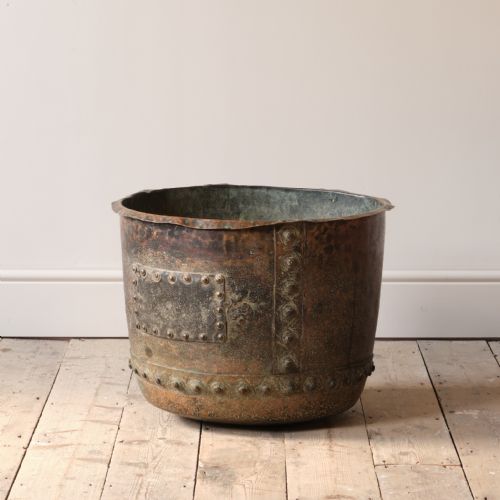
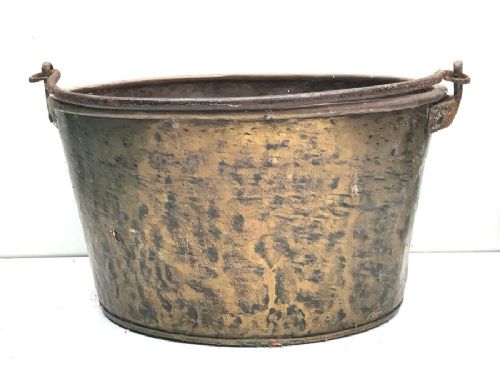
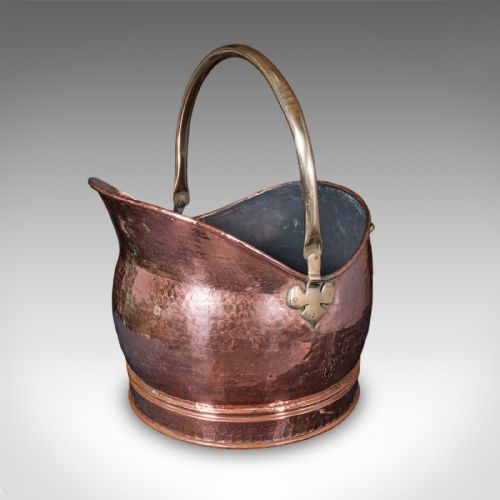
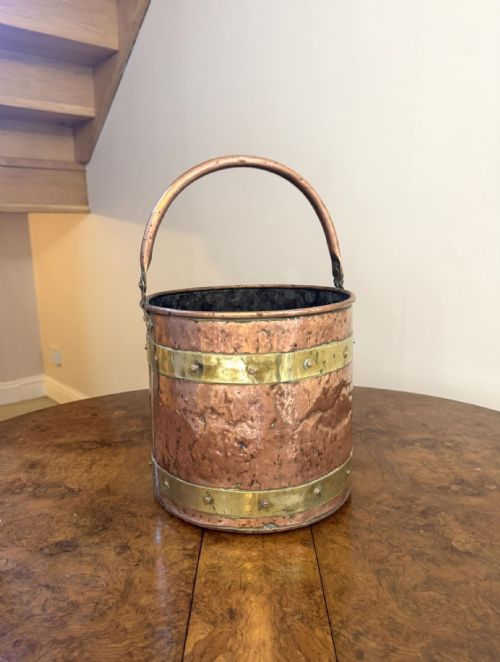
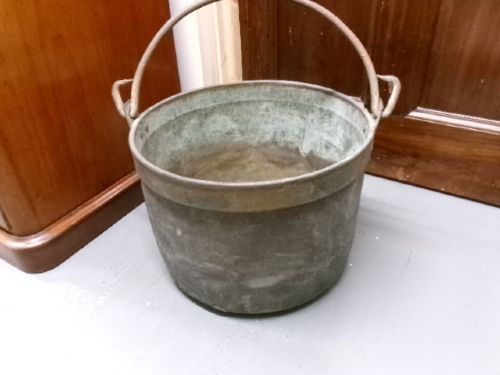
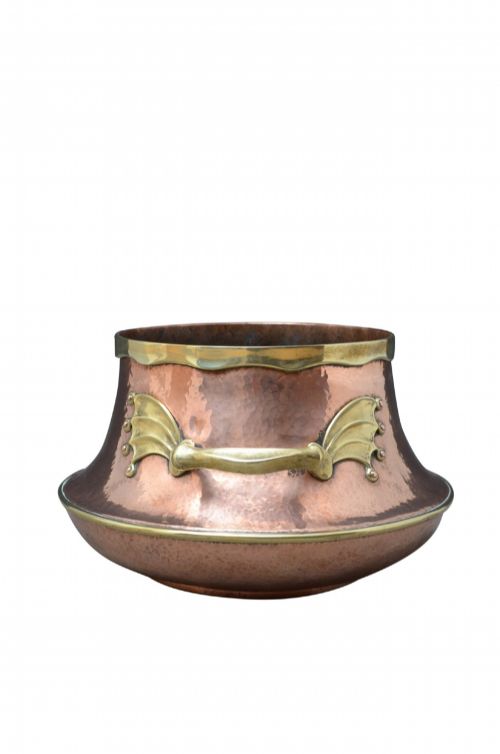
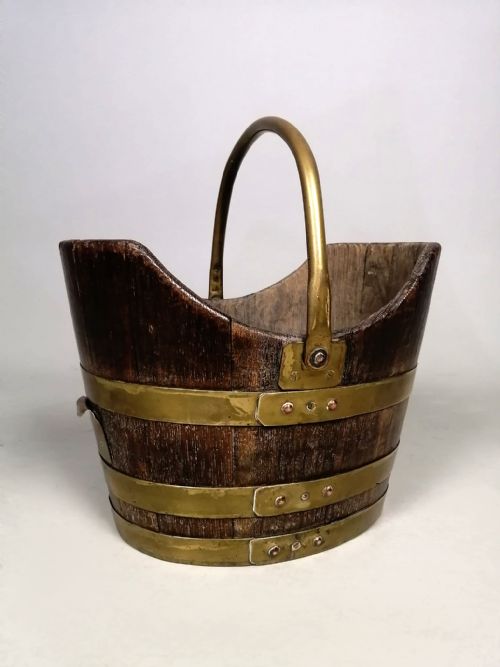
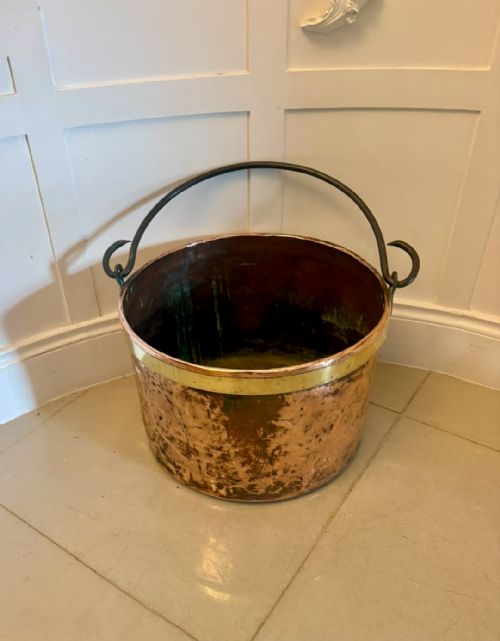
Antique Copper Log Bucket
An antique copper log bucket brings warmth and tactile metal texture to a fireside, combining practical fuel storage with centuries of craftsmanship.

Identifying an antique copper log bucket
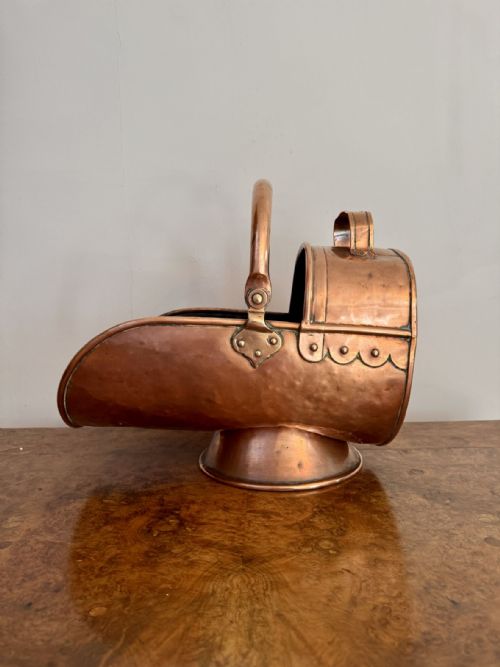
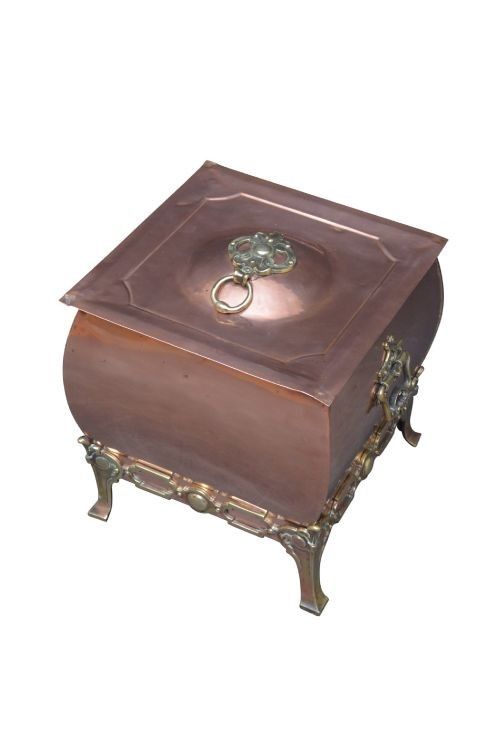
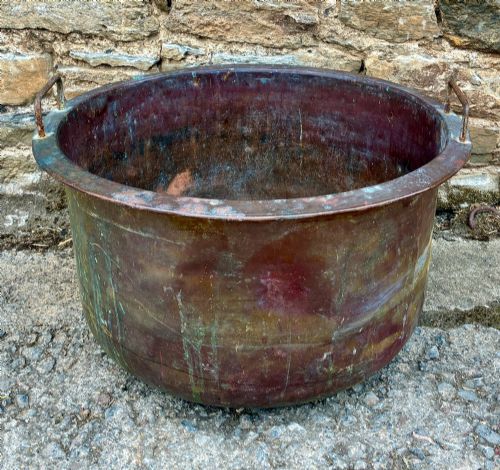
When you search for an antique copper log bucket, you enter a category of heavy domestic hearth vessels built to hold firewood and coal. These pieces cross paths with coal scuttles, helmets, cauldrons, and large planters.
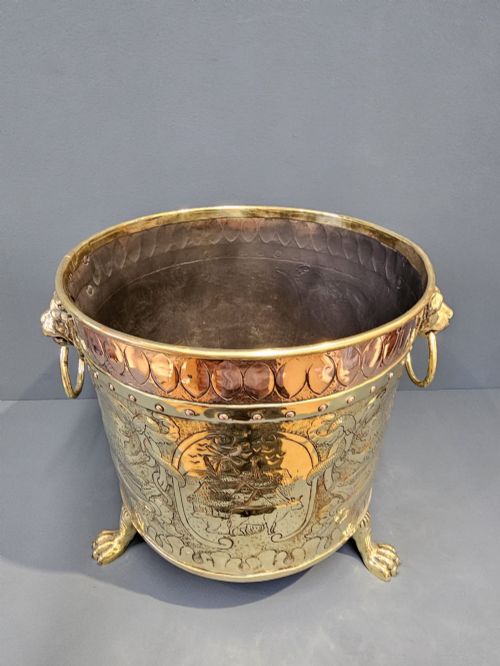
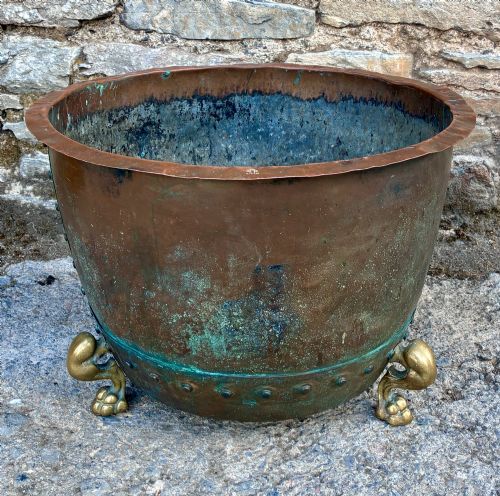
The version you are most likely to meet on this page dates from the nineteenth century or the Victorian period. These vessels frequently feature brass swing handles, claw feet, or iron mounts alongside their primary copper bodies.

Materials and construction
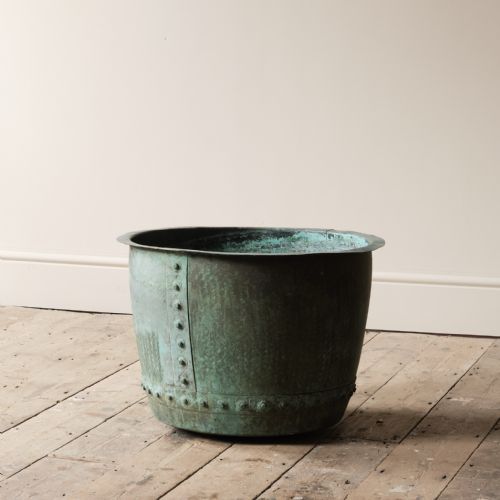
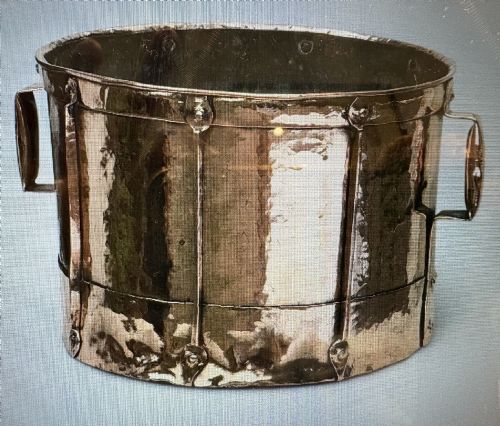
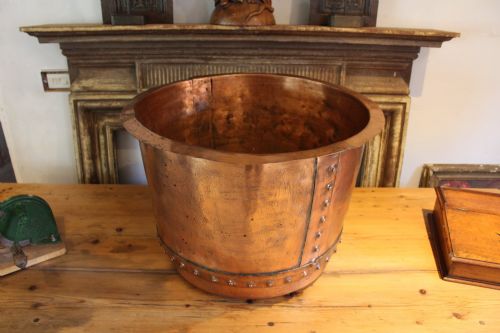
The makers formed these vessels using sheet copper, often shaping them with visible hammer marks or securing overlapping seams with heavy metal rivets. Brass handles, rims, and paw feet provide contrasting metallic detail.
Internal structures commonly incorporate iron for added rigidity, while certain examples integrate wooden elements or ceramic components into the handle design for safe lifting.
Retail Price Guide 2026
Typical UK retail prices for copper log bucket, calculated from the Sellingantiques database of over a million retail prices indexed since 2003. This retail price guide relies exclusively on Sellingantiques data; no external sources or auction records are used, so the figures do not describe the wider market.
Listings feature periods spanning Georgian times, the Victorian era, and Arts and Crafts styles, constructed from copper, brass, iron, and wood.
Judging quality and character
Quality rests in the weight of the metal, the integrity of the riveted joints, and the crispness of any hand-hammered texturing. Substantial gauge copper resists the dents and distortions common in thinner domestic vessels.
Proportion and decorative restraint elevate the better examples above standard utility pieces. Thoughtful detailing on swing handles, claw feet, and brass banding separates fine fireside vessels from ordinary coal bins.
The Antique Copper Log Bucket Glossary
- Riveted
- Joined with heavy metal pins that pass through overlapping sheets of metal. This method ensures structural strength under the heavy load of timber.
- Jardiniere
- An ornamental pot or receptacle designed to hold plants. Many large vessels of this form share construction methods with fireside log holders.
- Cauldron
- A large round metal pot, often with a deep bowl and sturdy carrying handle. Early examples appear frequently in French country styles.
- Coal Helmet
- A fireside scuttle shaped with a high back and sloping front reminiscent of historical headwear. This form allowed clean pouring of fuel into the hearth.
Frequently Asked Questions
How were antique copper log buckets used?
These vessels sat beside open hearths to store and transport firewood and coal for daily household heating. Their robust metal construction withstood the heavy impact of logs and the weight of dense fuel loads.
Beyond utilitarian fuel storage, many functioned as prominent fireside ornaments. Polished metal caught the flickering light of the fire, brightening the chimney corner.
How do I clean an antique copper log bucket?
Maintenance typically involves gentle dusting and occasional cleaning with appropriate metal care products if a bright finish is desired. Many collectors prefer to leave an aged patina intact.
Avoid abrasive scouring pads that scratch the soft surface of the copper. Preserving the historical appearance safeguards the character built over generations of use.
Can I use an antique copper log bucket for logs today?
These vessels remain sturdy enough to hold firewood beside a modern hearth. Checking the interior base for secure seams ensures no debris falls through onto the floor.
Placing logs gently inside prevents unnecessary denting of the antique metal. Using the bucket for storage connects contemporary living rooms directly to nineteenth-century domestic routines.
How do I tell Victorian copper buckets apart from earlier pieces?
Victorian examples often display eclectic styling, machine assistance in sheet rolling, and varied brass fittings like claw feet or swing handles. Earlier pieces from the Georgian period or around eighteen hundred tend toward simpler, heavier hand-beaten forms.
Examining the construction marks and fastener types provides clues to the date of manufacture. Comparing handle mounts and rim folds helps distinguish mid-nineteenth-century work from later productions.