


Antique Colonial Coffee Table
These antique colonial coffee tables bring centuries of global craftsmanship into a room, offering rich timbers and intricate brasswork for daily use.
Antique Colonial Coffee Table
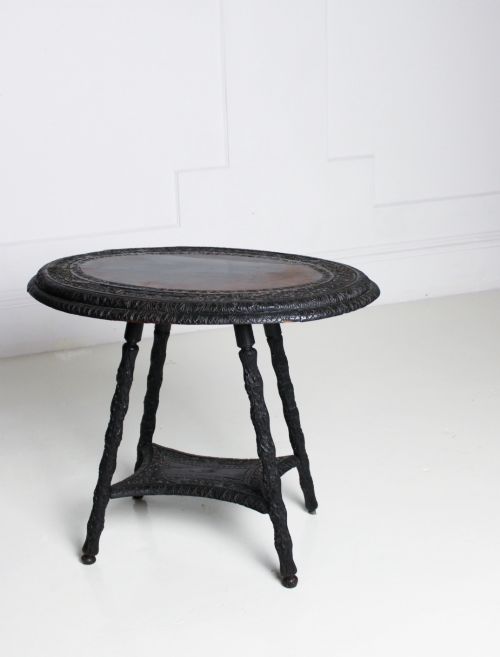
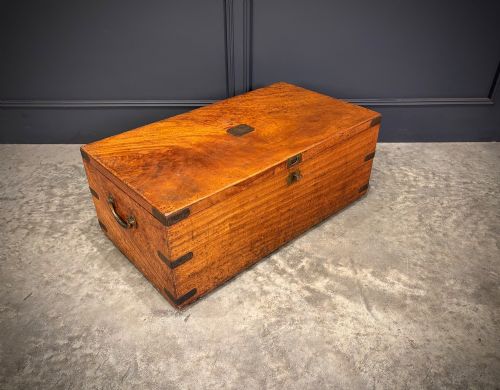
An antique colonial coffee table bridges distant trade routes and modern sitting rooms, often adapting lower occasional tables, trays or converted chests to suit contemporary proportions. The selection draws heavily on nineteenth-century Anglo-Indian, Portuguese and Burmese pieces originally built for expatriate life abroad.
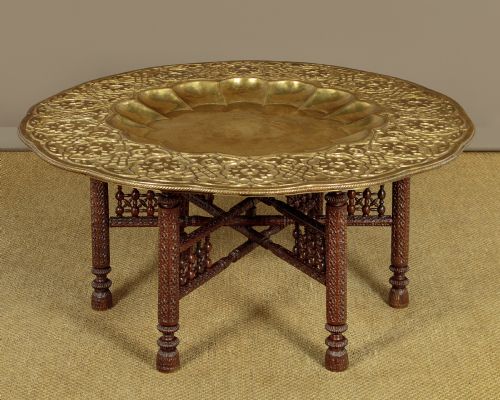
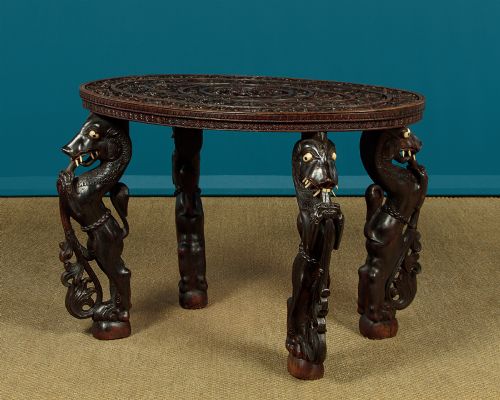
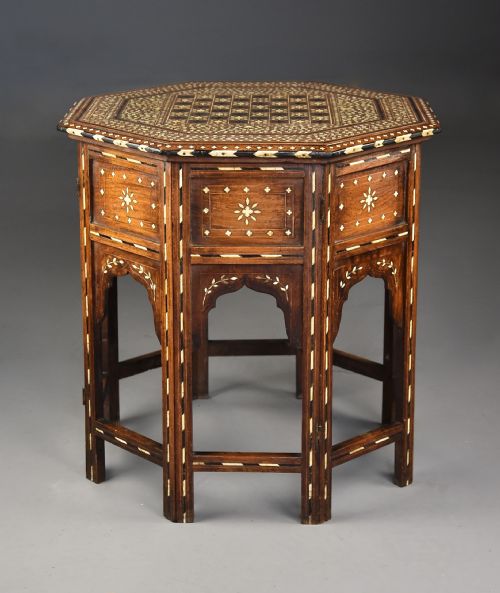
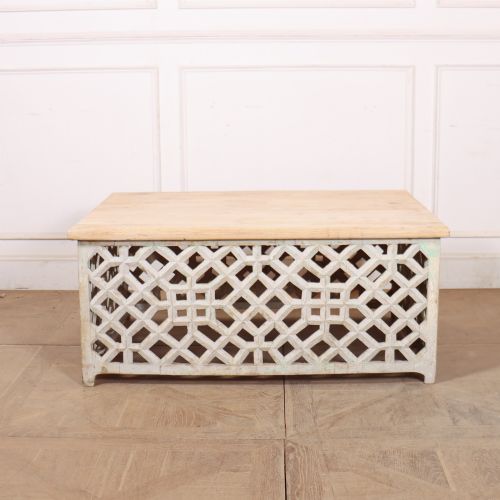
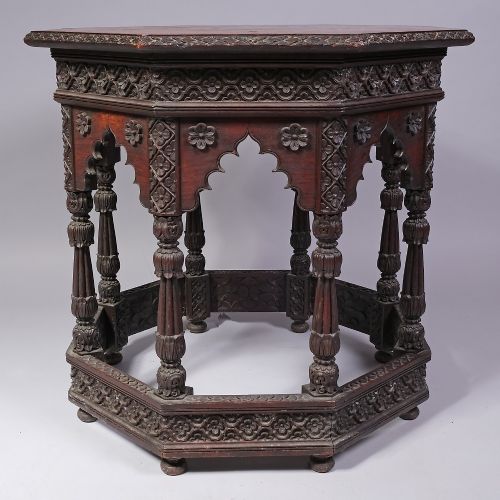
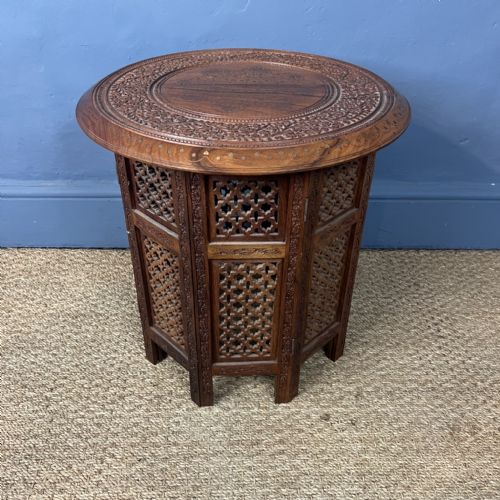
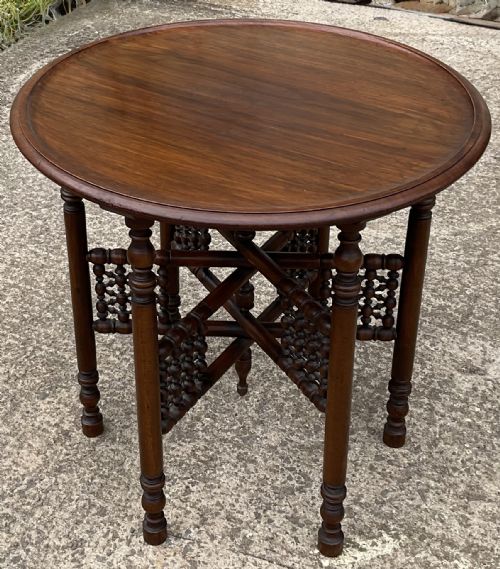
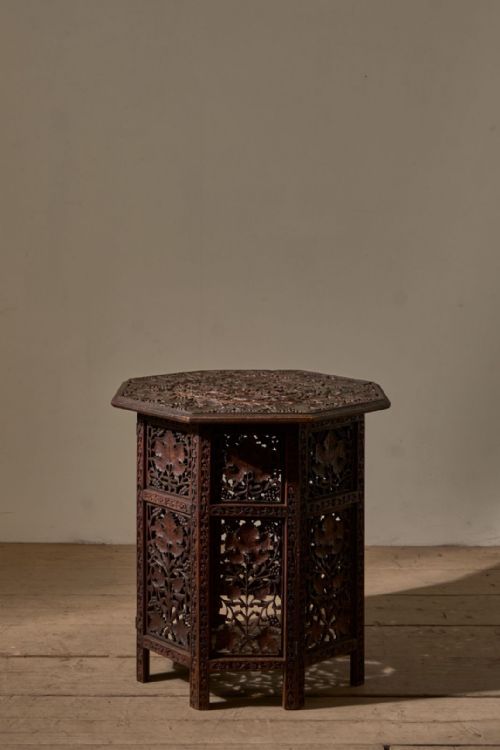
Buyers meet varied forms including octagonal occasional tables, brass-topped folding pieces and low tables resting on carved elephant legs. While older colonial furniture frequently served as dining surfaces, storage chests or tiffin tables, makers today find their sturdy timbers ideally suited for low central placement.
How they were made
Carpenters utilised dense tropical hardwoods like teak, padauk, camphor wood and rosewood to withstand humid climates and long sea voyages. These resilient timbers provided a stable foundation for deep hand-carving and complex structural joinery.
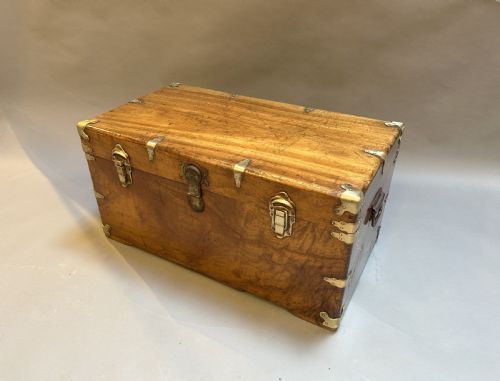
Surface decoration relies on contrasting materials, featuring inlaid brass wire, sheet copper tops, bone inlay and dense geometric carving. Folding bases and campaign-style hardware ensured portability without sacrificing structural strength.
Listings feature teak, rosewood, camphor wood and padauk alongside brass and bone inlay across the nineteenth century.
What varies in quality
Quality rests in the crispness of the hand-carved detail and the selection of timber, where tightly grained rosewood or heavy teak commands attention. Pieces featuring meticulous bone or brass inlay work demonstrate superior workshop skill compared to simpler surface designs.
The integrity of the construction, from the tightness of the joinery to the original patination of the brass and timber, separates ordinary utility items from finer examples. Alterations to height or surface conversions also influence how closely a piece aligns with its original period manufacture.
The Antique Colonial Coffee Table Glossary
- Anglo-Indian
- Descriptive of furniture made in India during the British period, often combining British furniture forms with local decorative motifs. These pieces frequently feature dense floral carving and intricate inlay.
- Campaign furniture
- Portable furnishings designed for military officers on the move, characterised by folding frames, recessed brass handles and robust construction. Such items prioritized practicality and strength during travel.
- Padauk
- A heavy, durable tropical hardwood with a reddish hue, favoured in colonial cabinet making for its resilience and fine grain. It ages gracefully into a deep, rich brown.
- Tiffin table
- A low folding table originally used in colonial households for serving light afternoon meals or tea. The removable tray top made clearing and serving straightforward.
- Hoshiarpur
- A region in northern Punjab renowned for intricate wood carving and delicate inlay work using bone or brass. Tables from this tradition display mesmerizing geometric patterns across every surface.
Antique Colonial Coffee Table: Frequently Asked Questions
How do I use a colonial coffee table today?
These tables anchor a modern sitting room by offering a stable surface for books and everyday objects while adding historical depth to the interior.
Their robust construction handles daily use comfortably, though protecting the timber and metal inlays from excessive moisture remains sensible.
Were these always coffee tables?
Many examples began life as dining trays, low seating furniture, storage chests or side tables before being adapted to modern coffee table heights.
This historical versatility means proportions can vary, offering lower profiles that suit contemporary upholstery perfectly.
How do I care for brass inlaid timber?
Maintain the wood and metal by dusting regularly with a dry cloth and avoiding harsh chemical polishes that might damage the delicate inlay.
Applying a traditional beeswax occasionally helps preserve the natural lustre of dense hardwoods like teak and rosewood.
What defines Anglo-Indian furniture style?
The style blends traditional British furniture shapes with indigenous Indian carving techniques, materials and iconography.
Elephant supports, pierced jali screens and dense foliage patterns typify this distinctive cross-cultural aesthetic.