



Antique Cocktail Credenza
An antique cocktail credenza brings sophisticated entertaining home, offering fitted storage for bottles and glassware behind striking period doors.
Antique Cocktail Credenza
An antique cocktail credenza is essentially a specialised drinks cabinet or side cabinet designed to house glassware and bottles for entertaining. These pieces draw from a wide span of eras, appearing across Art Deco, Edwardian, Victorian, and revival designs.
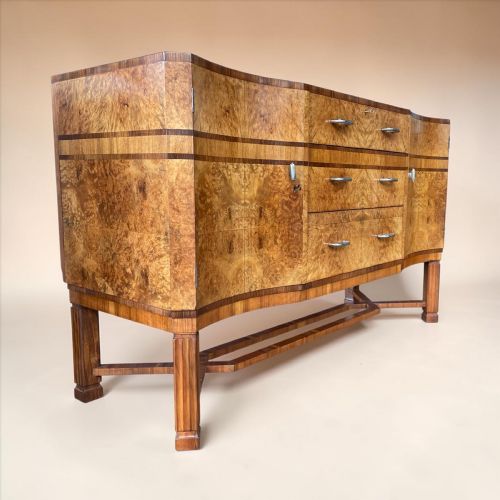
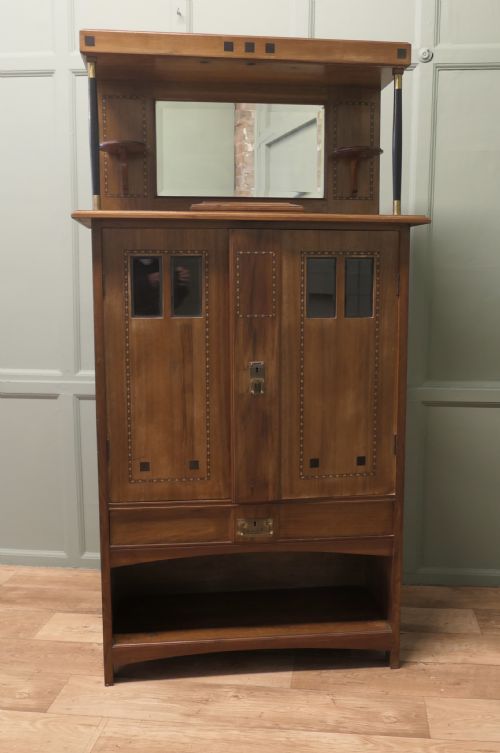
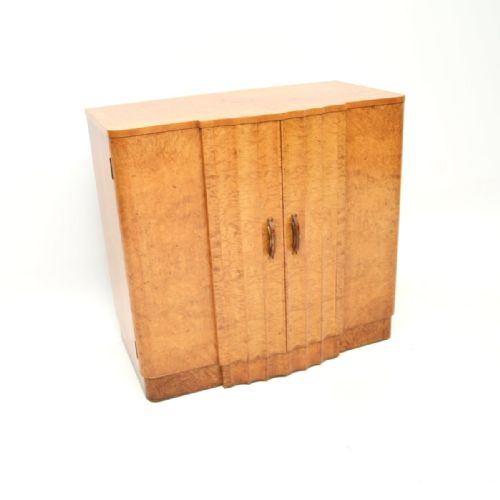
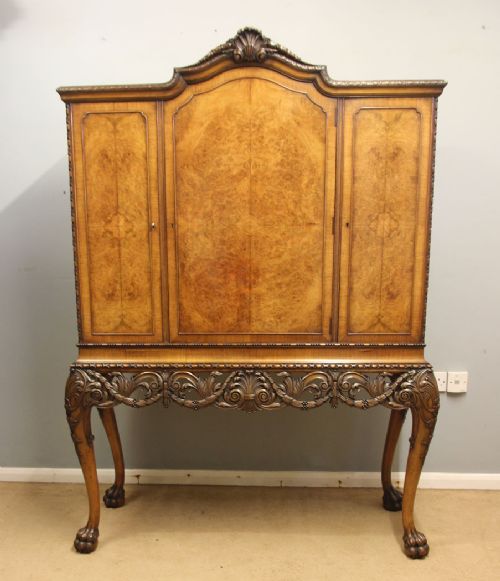
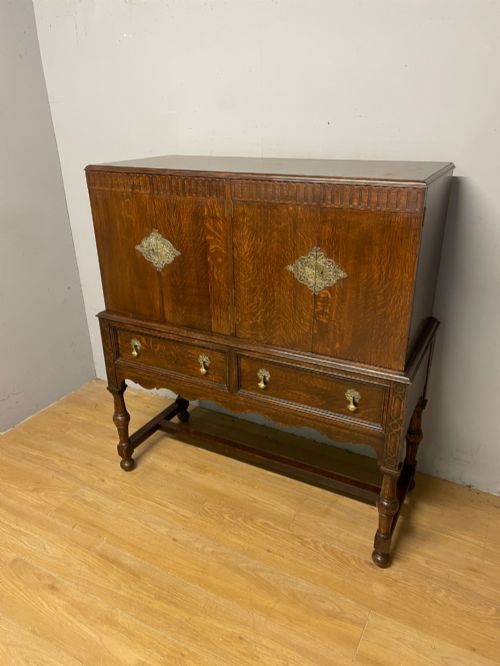
The pieces on this page emerge primarily from the 1920 and 1930 decades, showcasing the bold forms of Art Deco alongside earlier Jacobean and Queen Anne revivals. Makers combined traditional sideboards with drinks storage, resulting in hybrid forms that served dining rooms and reception rooms alike.
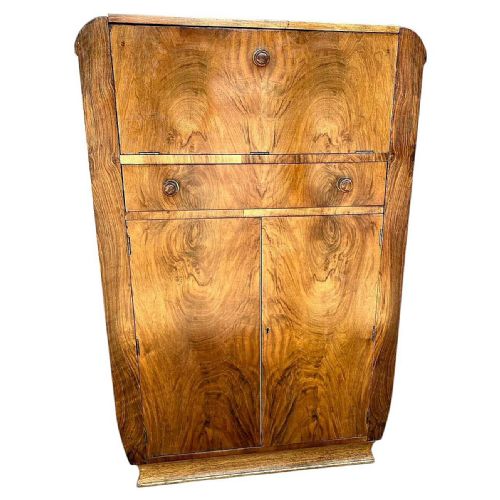
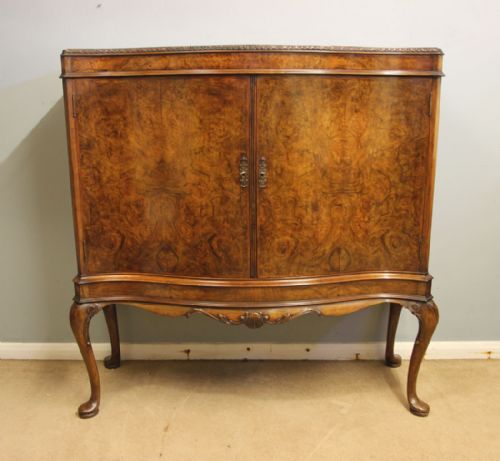
Buyers will encounter sideboards, side cabinets, and dedicated cocktail cabinets sharing similar functional roots in hosting. Walnut, burr walnut, and oak dominate the forms, often elevated with glass, mirror, and brass details.
What varies in quality
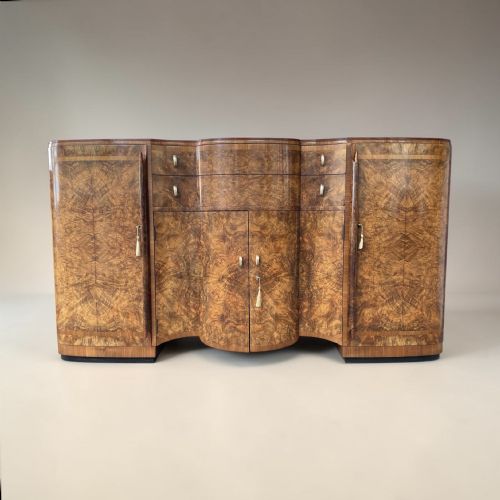
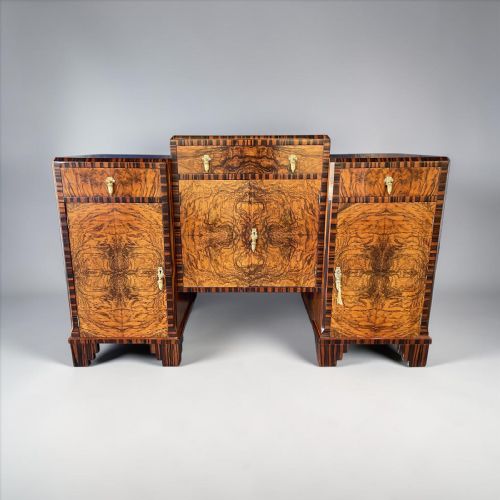
The selection of veneer figures determines much of the visual impact, with matched burr walnut creating a striking symmetry across multiple doors. Simpler solid timber construction offers a different textural weight, seen clearly in oak and mahogany examples.
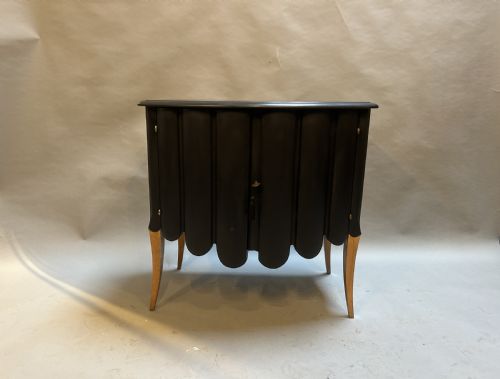
Design attribution introduces another layer of distinction, as pieces bearing workshop or maker signatures carry documented provenance. The complexity of the silhouette, from serpentine curves to demi-lune fronts, dictates the level of joinery skill required.
Materials documented across the current selection include brass, walnut, burr walnut, glass, mirror, oak, and red lacquer.
Maurice Adams·Harry and Lou Epstein·Hamptons of Pall Mall London
The Antique Cocktail Credenza Glossary
- Art Deco
- A design style from the early twentieth century characterised by sleek geometric lines, stylised motifs, and modern industrial influences. It dominates the 1930 pieces on this page.
- Burr Walnut
- A specialised wood grain harvested from the wart-like growths on walnut trees, prized for its swirling, highly figured patterns. Cabinet makers frequently used it as a decorative veneer.
- Credenza
- A sideboard or buffet cabinet historically used for serving food and displaying glassware. In modern collecting, the term often overlaps with side cabinets and drinks furniture.
- Chinoiserie
- A European decorative style reflecting Chinese artistic traditions, often featuring hand-painted lacquerwork and gilt motifs. Red lacquer finishes on stands represent this tradition.
- Demi-Lune
- A half-moon shape used for table and cabinet fronts to soften room geometry. This curved form appears on early twentieth-century drinks furniture.
- Jacobean Revival
- A nineteenth and early twentieth-century style reviving seventeenth-century English motifs, known for sturdy proportions and solid oak construction.
Antique Cocktail Credenza: Frequently Asked Questions
What is an antique cocktail credenza?
An antique cocktail credenza is a specialised storage unit designed for holding bottles, decanters, and glassware during social gatherings. These pieces combine the surface utility of a traditional sideboard with fitted internal compartments for entertaining.
They emerged strongly during the early twentieth century, reflecting changing domestic habits around home hospitality. Today, buyers use them as both functional drinks stations and focal points in living spaces.
How do I date an antique drinks cabinet?
Dating relies on stylistic markers, construction techniques, and materials visible across the piece. Art Deco examples typically feature 1930s geometric veneers and streamlined silhouettes, while Edwardian and Victorian pieces show heavier revival detailing.
Hardware, internal mirror work, and timber preparation provide further clues to the decade of manufacture. Examining the interior fittings often reveals the specific technological standards of the era.
Where were these cabinets placed in the home?
Historically, these cabinets lived in dining rooms, reception rooms, and dedicated entertaining spaces where guests gathered for drinks. Their dual nature allowed them to serve meals from the top while concealing beverage supplies inside.
In modern interiors, they function equally well in sitting rooms, hallways, or dining areas. Their enclosed storage keeps glassware dust-free while presenting an attractive exterior facade.
What is the difference between a sideboard and a cocktail cabinet?
A traditional sideboard focuses on flat surface serving space and general tableware storage behind lower doors. A cocktail cabinet integrates specialised internal fittings like mirror backs, glass shelves, and dedicated bottle racks.
Many listings on this page bridge both categories, offering sideboard proportions combined with interior cocktail storage. This hybrid form evolved to meet the rising popularity of home mixology in the early twentieth century.
How do I care for walnut veneer surfaces?
Walnut veneer requires protection from direct sunlight and excessive moisture to prevent fading and lifting of the wood. Regular dusting with a soft, dry cloth preserves the polished finish without harming the historic timber.
Avoid placing damp glasses directly on the wooden top during use by utilising coasters or serving trays. Proper ambient humidity in the room keeps the underlying carcase and veneer stable over time.