



Antique Coastal View Painting
An antique coastal view painting captures the enduring pull of the shore, bringing maritime light and atmosphere directly into your home.
Antique Coastal View Painting
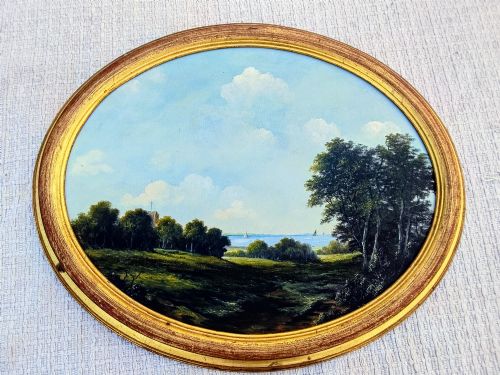
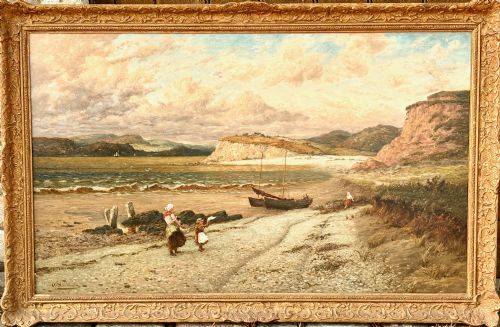
An antique coastal view painting represents harbours, cliffs, beaches and maritime scenes executed across the nineteenth and early twentieth centuries. These works range in style from Victorian realism and British impressionism to continental European scenes.
You will frequently encounter watercolours and oil paintings on canvas depicting British fishing ports like Whitby alongside Mediterranean vistas. The subjects span tranquil seaside promenades to rugged clifftops and bustling docks.
Framed in period gilded wood or simple wood mouldings, these pieces document topographical changes and historical maritime life. They serve as windows into nineteenth-century and Edwardian coastal existence.
How they were made
Artists painted these coastal subjects primarily using oil paint on canvas or wooden panels, and watercolour applied to paper. Canvas works often show textured brushwork suited to capturing stormy seas and changing atmospheric light.
Watercolour pieces rely on fluid washes and delicate paper supports to render translucent skies and coastal waters. Gilded wood and glass protected these fragile paper works from environmental damage.
Supports varied from heavy woven canvas stretched over wooden frames to thick boards and prepared paper sheets. Framing materials matched the prevailing aesthetic of the Victorian and Edwardian periods.
Nineteenth-century artists frequently suffered windblown easels while trying to capture stubborn sheep on windy British clifftops.
What varies in quality
Quality in an antique coastal view painting depends heavily upon the artist's handling of light, atmosphere and perspective. Superior works convey the specific moisture of sea air and the movement of water rather than mere topographical recording.
The sensitivity of the brushwork and the harmony of the palette separate accomplished professional artists from competent topographical illustrators. Strong compositions balance architectural elements like piers and harbours with open expanses of sea and sky.
The integrity of the original support, whether canvas or paper, combined with the quality of the period frame, influences the overall standing of the piece. Well-preserved works retain their original pigment vibrancy without heavy restoration.
George F Pennington·Alfred George Morgan·Frederick William Booty·Stephen John Batchelder·Thomas Rose Miles·Albert Robert Quinton·James Torrington Bell·Owen Bowen·S J Lamorna Birch·Peter Ghent·Rowland Henry Hill·William Sidney Cooper·Harry Wanless·Johan Jens Neumann·Vilhelm Arnesen·Gustav Vermehren·Benjamin Williams Leader·Poul Friis Nybo·William Bright Morris·Alfred Wahlberg·Stanley Montague
The Antique Coastal View Painting Glossary
- Watercolour
- A painting method where fine pigment is suspended in a water-soluble binder and applied to paper. This technique yields transparent washes ideal for capturing shifting coastal light.
- Oil on canvas
- Pigment mixed with drying oil applied to a woven fabric stretched across a wooden frame. This durable medium allowed artists to build rich surface textures and deep maritime tones.
- Gouache
- An opaque water-based paint featuring finer pigment particles and a binding agent like gum arabic. It produces flat, saturated areas of colour frequently used in nineteenth-century Mediterranean views.
- Topographical
- Depicting a specific real-world location with geographical accuracy. Many coastal works served as documentary records of recognizable harbours and piers.
Antique Coastal View Painting: Frequently Asked Questions
How do I identify the period of a coastal painting?
Examine the materials, stretcher frames and clothing styles of any figures depicted within the scene. Victorian works often display heavy dark varnishes and elaborate gilt frames, while Edwardian and later pieces favour brighter palettes.
Signatures, artist registry records and inscriptions on the reverse of the canvas or paper frequently provide precise dates or location names.
Were these paintings created outdoors or in studios?
Many nineteenth-century artists made quick watercolour sketches and pencil drawings directly on location at the seaside. They then used these preparatory studies to complete finished oil paintings back in their studios.
Artists associated with movements like British Impressionism increasingly painted en plein air to capture transient effects of coastal light and weather.
How should I care for an antique watercolour?
Watercolour paintings on paper are extremely sensitive to ultraviolet light and excessive moisture. Hang them away from direct sunlight and damp exterior walls to prevent fading and foxing spots.
Ensure the piece remains sealed behind glass with acid-free backing materials to protect the delicate paper support from atmospheric degradation.
What subjects are most common in these views?
Harbour scenes, fishing docks, sandy beaches and dramatic clifftops dominate these historical works. Painters frequently recorded bustling maritime commerce alongside recreational Victorian pleasure piers and promenades.
British coastal spots like Whitby and Scarborough appear alongside Mediterranean ports in Italy and the South of France.