


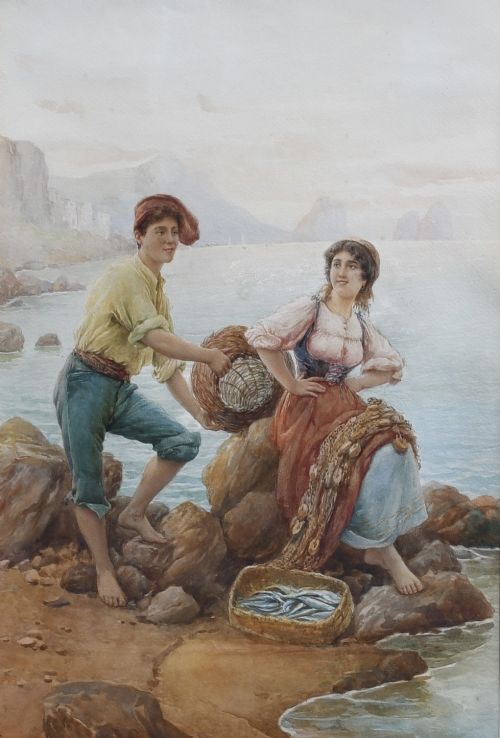
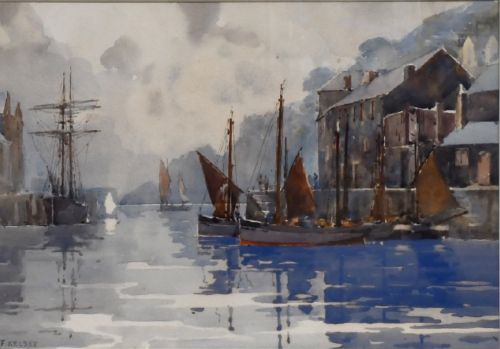


Antique Coastal Scene Watercolour
These works capture the salt air and shifting light of the shore, bringing the enduring appeal of an antique coastal scene watercolour into your home.
Antique Coastal Scene Watercolour
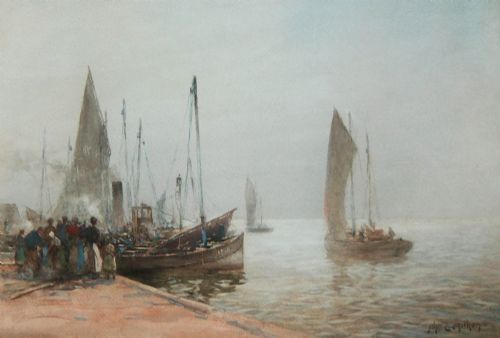
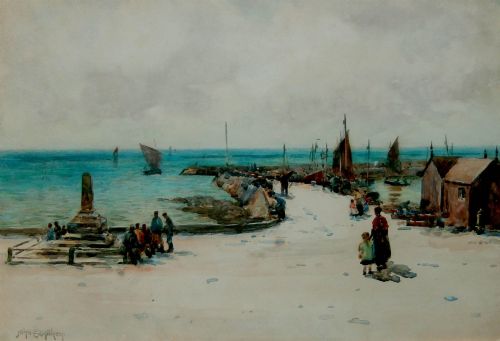
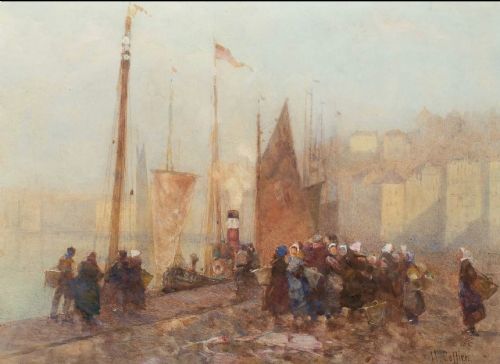
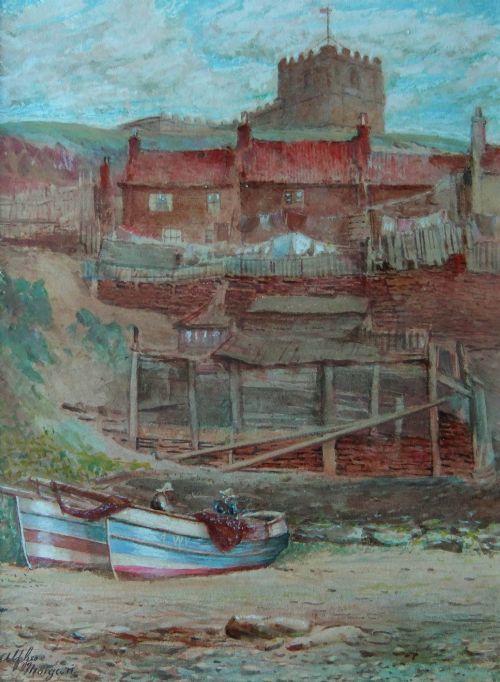
An antique coastal scene watercolour captures maritime life, fishing ports, and shores across Britain and continental Europe from the nineteenth and early twentieth centuries. You will frequently encounter works originating from renowned artistic hubs such as Staithes, Newlyn, and Whitby, reflecting regional maritime traditions.
The subjects range from bustling harbours and fishing boats at low tide to quiet coastal inlets and expansive seascapes. Most examples date from the Victorian and Edwardian eras through to the interwar period, executed on paper and housed behind glass.
Surviving pieces span traditional British watercolours, works influenced by continental impressionism, and occasional orientalist depictions of overseas shores. Collectors often find these paintings preserved in their original wood or ebonised frames, sometimes accented with gold leaf.
Materials and technique
Artists applied watercolour pigment to absorbent paper bases, often combining washes of transparent colour with gouache for added opacity and highlights. This dual method allowed painters to render the translucent qualities of sea spray alongside the solid forms of harbour walls and wooden fishing vessels.
Framing materials typically involved protective glass paired with timber mouldings, preserving the delicate pigments from atmospheric moisture and environmental damage over the decades.
Several artists clearly braved howling North Sea gales to paint, judging by the brisk movement in the rigging and the hunched shoulders of the fisherfolk.
Distinctions in quality
Quality rests upon the artist's ability to command light and atmosphere with fluid brushwork rather than laboured detail. Superior examples convey the specific mood of the weather and the topography of the coast with economy and confidence.
The handling of pigment density and the preservation of the paper's luminosity separate exceptional works from more formulaic topographical records. Original framing in keeping with the period also enhances the integrity of the piece.
James Orrock·James E. Aitken·John E. Aitken·William Banks Fortescue·Hector Caffieri·Alfred G. Morgan·Carlo Ferranti·Frank Kelsey·George F Pennington·Paul Delvaux·Richard Harry Carter·William Lee Hankey·Arthur Tucker·Thomas Bush Hardy·William Tuck·Colin H Greenwood·James Watson·George Hamilton Constantine·Sir William Russell Flint·Frederick William Hattersley·James Thomas Watts·Leslie Rackham·Kate E Booth·Frederick Stuart Richardson·Percy Brooke
The Antique Coastal Scene Watercolour Glossary
- Watercolour
- A painting method in which fine pigment is suspended in a water-soluble binder and applied to paper. It relies on the white of the paper to provide luminosity through translucent washes.
- Gouache
- An opaque water-based paint composed of pigment, water, and a binding agent such as gum, often used alongside watercolour to add solid highlights and body.
- Staithes Group
- A loose association of artists influenced by impressionism who worked in the Yorkshire fishing village of Staithes. Their output is noted for plein-air studies of local fisherfolk and harbour scenes.
- Newlyn School
- An art colony based in Cornwall during the late nineteenth and early twentieth centuries. Painters associated with this movement focused on realistic depictions of local maritime life and coastal communities.
- Ebonised
- Wood finished to resemble ebony, frequently utilised for nineteenth-century picture frames to provide a dark, contrasting border around works on paper.
Antique Coastal Scene Watercolour: Frequently Asked Questions
Where were most of these coastal watercolours painted?
The majority originate from notable fishing ports and coastal settlements around the British Isles, particularly active harbours in Yorkshire, Cornwall, and Scotland. Painters frequently set up along the shoreline to capture daily maritime labour.
Some artists also travelled further afield to European waterways and Mediterranean shores, producing scenes of Venetian canals, French ports, and North African landscapes.
How should I display watercolour paintings safely?
Watercolours are sensitive to light and should be hung away from direct, strong sunlight to prevent the pigments from fading over time. Maintaining a stable room temperature helps protect both the paper support and the surrounding frame.
Ensuring the framing remains properly sealed protects the paper from airborne dust and moisture fluctuations.
How can I tell the period of a coastal painting?
Stylistic cues, clothing styles of figures on the shore, and the design of the watercraft depicted often point toward a specific decade or movement. Victorian and Edwardian works frequently display distinct palette choices and brushwork conventions.
Framing materials and backing papers can also offer additional clues to the age of the piece, alongside signatures or inscribed locations on the mount.
What is the difference between watercolour and gouache?
Watercolour relies on transparent washes where the white paper shines through to create luminosity and light effects. It produces delicate atmospheric transitions ideal for skies and open water.
Gouache includes an added white pigment that makes the paint opaque, allowing artists to build solid areas of colour and sharp highlights on top of the paper.