



Muted Brown Landscape Artwork
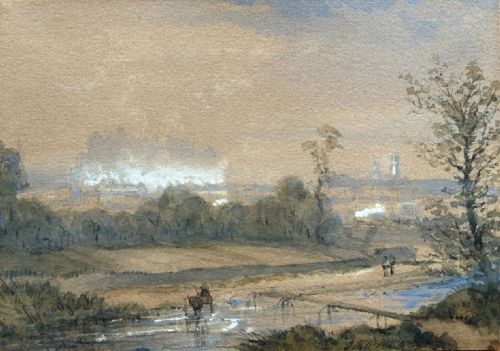
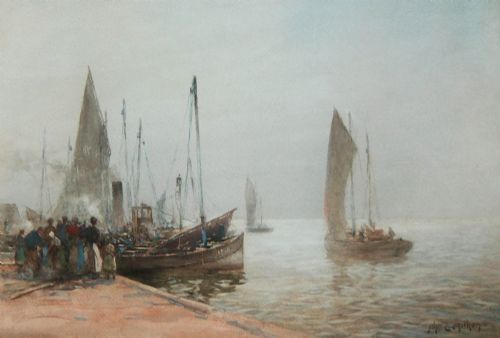
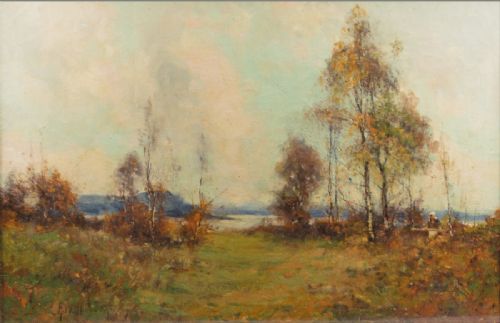
These pieces of muted brown landscape artwork capture earth and stone through oil and watercolour, offering a subdued palette that grounds a room.
Muted Brown Landscape Artwork
When buyers search for muted brown landscape artwork, they encounter paintings spanning from the nineteenth century into the mid twentieth century. These works capture rivers, harbours, and rural fields using a restrained palette of earthy tones.
The selection includes framed oil paintings on canvas and board alongside delicate works on paper. British and Scottish impressionist traditions heavily shape the selection, bringing coastal views and agricultural scenes into focus.
Works originate from various periods including the Victorian era and the 1920s, demonstrating a consistent preference for natural light and historical settings. Painters apply pigment to build up textures of soil, weathered timber, and stone.
Materials and Techniques
Artists utilise watercolour pigment on paper to achieve translucent washes of umber and sienna, often defining subjects with rapid brushstrokes. Other works employ oil paint applied to canvas or board, allowing for heavier impasto and layered earthy tones.
Support materials range from heavy paper sheets to rigid wooden boards and stretched canvas frames. These traditional mediums determine how the brown pigments settle, age, and retain their matte or satin finish over decades.
Several artists preferred painting docks and stormy harbours on days when the weather matched their brown pigments.
Distinctions in Quality
Quality rests in the economy of line and the confidence of the brushwork rather than the subject matter alone. Skilled painters capture the atmosphere of a Yorkshire valley or a Scottish estuary with minimal pigment.
The interaction between light and shadow distinguishes superior compositions, where muted browns avoid looking flat by incorporating subtle undertones of ochre and grey. Handling of the medium on paper or board dictates the overall depth.
Kenneth Cozens·John R Prentice·James E Aitken·Alfred George Morgan·Gyrth Russell·Fred Lawson·Ernest Pile Bucknall·Tom Clough·James Orrock·Louie Stanley Maurice Prince·Arthur Winter Shaw·Henry Charles Fox·Edmund Morris Wimperis·John D Walker·Owen Bowen·Fred Mayor·Edward Killingworth Johnson·Ernest Higgins Rigg·George Graham·Robert Lesley Howey·William Greaves·William Collins·Arthur Netherwood·Maurice Asselin·William A Macdonald
The Muted Brown Landscape Artwork Glossary
- Watercolour
- A painting method where fine pigment is suspended in a water-based solution and applied to paper. It allows for translucent layers of earthy washes.
- Impasto
- Paint applied thickly to a canvas or board so that it stands out from the surface. This technique gives texture to elements like ploughed fields or stone walls.
- Board
- A rigid flat surface used as a support for oil paintings instead of stretched canvas. Painters frequently utilised this material for smaller plein air landscapes.
- Impressionism
- An art style focused on capturing the visual impression of a moment, paying attention to shifting light and natural scenes. British practitioners adapted this approach for rural and coastal views.
Muted Brown Landscape Artwork: Frequently Asked Questions
How do I care for antique watercolours?
Keep works on paper away from direct sunlight to prevent the watercolour pigments from fading over time. Maintain stable indoor humidity levels to protect the paper substrate from warping.
Ensure framing uses acid-free mounts so the paper does not discolour near the edges. Professional framing with UV-protective glass preserves the integrity of these delicate historical pieces.
Where were these landscape scenes painted?
Painters recorded rural and coastal views across Britain and Europe, capturing specific locations such as Yorkshire harbours, Scottish rivers, and Dutch waterways. Artists travelled to rural valleys and fishing ports to paint en plein air.
These topographical views document nineteenth and early twentieth century topography before industrial expansion altered the landscape. Each title often names the exact geographic spot depicted by the artist.
How do I date an antique painting?
Examine the materials, including the type of paper, canvas preparation, and the wooden stretcher or board. Pigment analysis and framing styles also provide clear clues regarding the decade of creation.
Signatures, exhibition labels on the reverse, and artist records help narrow down the production period. Stylistic markers such as brushwork techniques align the piece with specific nineteenth or twentieth century movements.
What is the difference between oil and watercolour?
Oil paint utilises a drying oil binder that sits on the surface of canvas or board, offering rich textures and deep tones. Watercolour uses water-soluble binders on paper, creating lighter, translucent layers that rely on the white paper underneath for illumination.
Oils allow for continuous reworking and thick impasto applications, whereas watercolours require deliberate, swift application. Both mediums achieve muted brown palettes through different chemical compositions and handling techniques.