

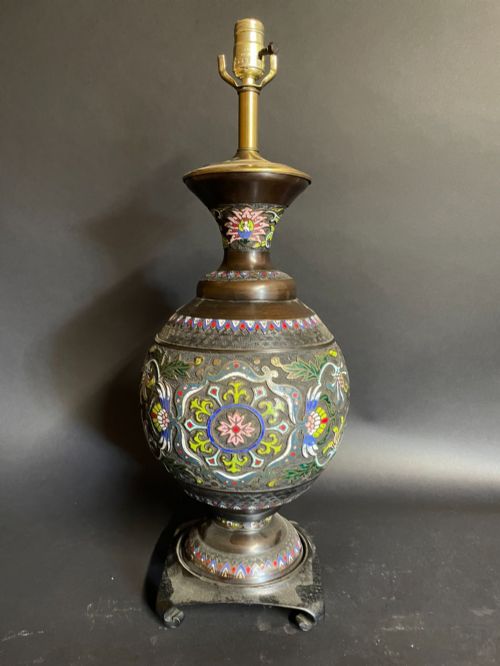


Antique Cloisonne Lamps
Antique cloisonne lamps are decorative lighting formed from converted metal vessels, bringing vibrant colour and intricate patterns into a room.
Antique Cloisonne Lamps
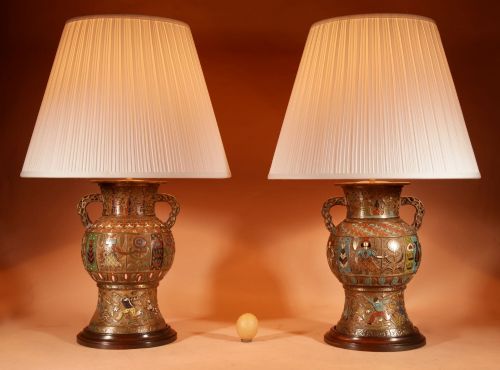
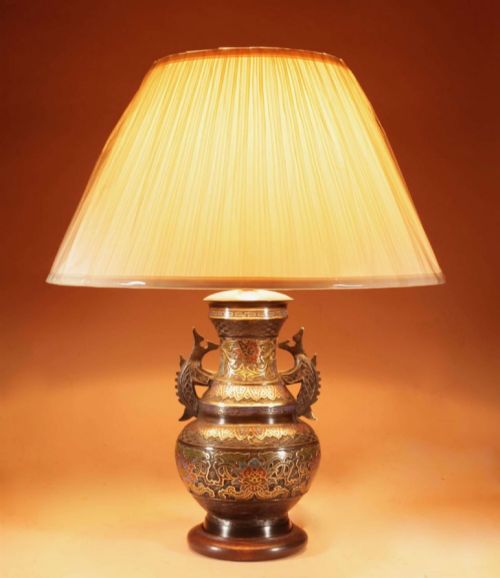
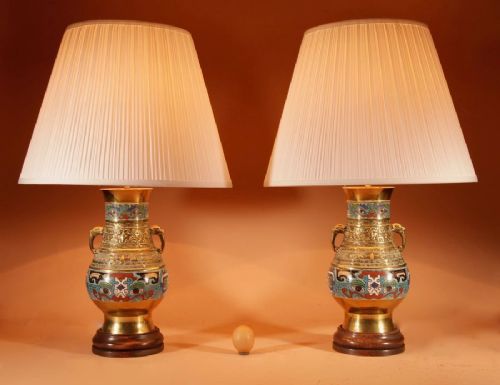
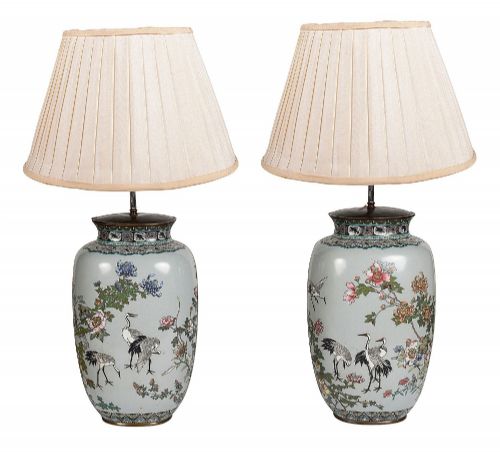
When buyers search for antique cloisonne lamps, they encounter a range of table lights created from converted Japanese and Chinese vases. These pieces span the nineteenth century into the early twentieth century, incorporating periods such as the Meiji era and the Qing dynasty. The common form is a table lamp mounted on a metal or wooden base, often wired for modern use while retaining its original vessel body.
The selection frequently includes pairs of matching lamps alongside individual table lights. Originating from Chinese export workshops and Japanese Meiji period studios, these items often display distinct cultural styles, including Chinoiserie and Oriental designs. Many of these lighting pieces started life as vases before being adapted with electrical fittings.
How they were made
Craftsmen built these lamp bodies using a metal foundation of bronze, brass, copper, or gilt bronze. They soldered thin metal wires, known as cloisons, onto the exterior surface to create intricate cellular compartments. These individual cells were then filled with coloured enamel pastes before being fired in a kiln.
Following the firing process, the surface was ground down and polished to achieve a smooth finish where the metal wires remained flush with the hardened enamel. Many pieces were subsequently mounted onto fabric, wood, or ormolu mounts to transform them into stable table lights. This traditional technique required steady hands and precise temperature control during firing.
Listings feature items spanning the nineteenth century, the Victorian era, and the early twentieth century up to nineteen twenty, utilising brass, bronze, copper, and enamel.
What varies in quality
The precision of the wirework defines the upper tier of these lamps, where thin metallic lines create crisp, complex motifs without distortion. Lower quality examples often display uneven cell boundaries and thicker, clumsier wire outlines that disrupt the pattern. The clarity and depth of the coloured enamel pastes also separate standard production pieces from finer studio creations.
The integration of the mountings plays a significant role in the overall execution. Superior items feature bronze, brass, or ormolu mounts that complement the body without damaging the delicate enamel surface beneath. The condition of the polished metal and the crispness of the firing directly reflect the skill of the original workshop.
The Antique Cloisonne Lamps Glossary
- Cloisonne
- Enamelwork in which coloured pastes are applied within compartments formed by soldered wires on a metal base. This technique creates a detailed, multi-coloured decorative surface.
- Champleve
- An enamelling technique where troughs or cells are carved directly into the thick bronze or brass body rather than using applied surface wires. The recessed areas are then filled with enamel and fired.
- Meiji Period
- A Japanese historical era spanning from eighteen sixty-eight to nineteen twelve, noted for exceptional metalwork and enamel production exported to Western markets. Pieces from this time often exhibit highly refined craftsmanship.
- Ormolu
- Gilded bronze mounts applied to decorative objects and lamp bases to add structural support and decorative elegance. It provides a rich golden contrast to the colourful enamel bodies.
- Chinoiserie
- A European artistic style reflecting Chinese motifs and decorative techniques, frequently seen in the ornamentation of export wares. It captures an imaginative interpretation of Eastern aesthetics.
Antique Cloisonne Lamps: Frequently Asked Questions
Are antique cloisonne lamps heavy?
These lamps typically feature solid bronze, brass, or copper foundations filled with dense enamel, giving them a substantial weight. This heavy construction ensures they remain stable when used as table lights.
The inclusion of wooden or metal bases further adds to their overall heft, distinguishing them from modern resin or ceramic alternatives.
How do I identify a Japanese Meiji period lamp?
Japanese pieces from the Meiji era often display distinct naturalistic motifs, such as birds, flowers, and intricate geometric borders executed in fine wirework. The underlying metal is commonly bronze or brass with precise enamel fills.
Studying the complexity of the cloisons and the specific style of the flora or fauna helps separate Japanese workshop output from Chinese manufacturing.
Were these always electric lamps?
Most of these pieces began their lives as decorative vases or vessel bodies during the nineteenth and early twentieth centuries. They were later converted into lamps by adding electrical wiring and secure mounts.
This adaptation preserved the antique enamel work while giving the vessels a practical function for modern interiors.
Where should I place an antique cloisonne lamp?
These lamps suit side tables, desks, or living room surfaces where their vibrant enamel colours can catch the light. Their decorative patterns add a focal point to traditional or eclectic interior schemes.
Placing them away from high-traffic areas protects the delicate wire and enamel body from accidental knocks.