

Antique Clock Mount
An antique clock mount brings sculptural definition and decorative weight to a timepiece case, transforming simple timber or marble into a gilded focal point.
Antique Clock Mount
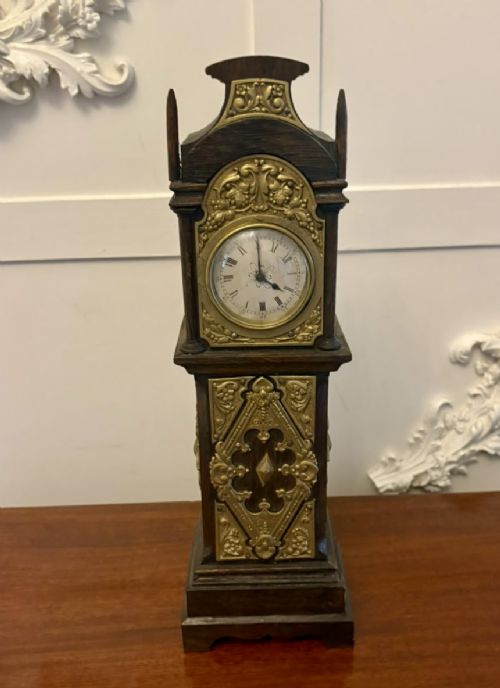
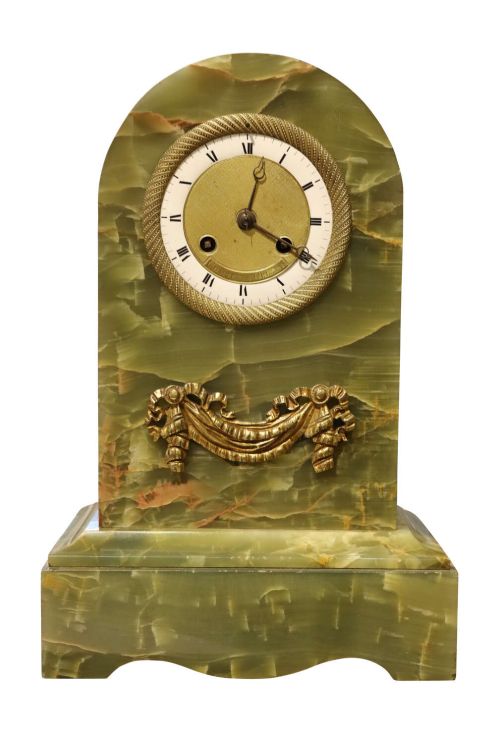
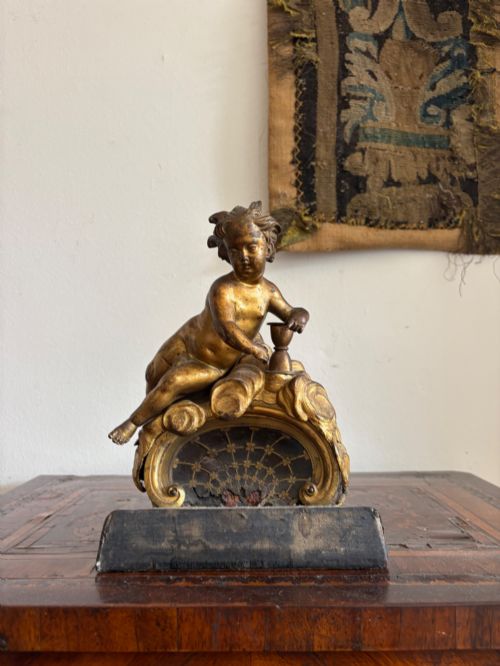
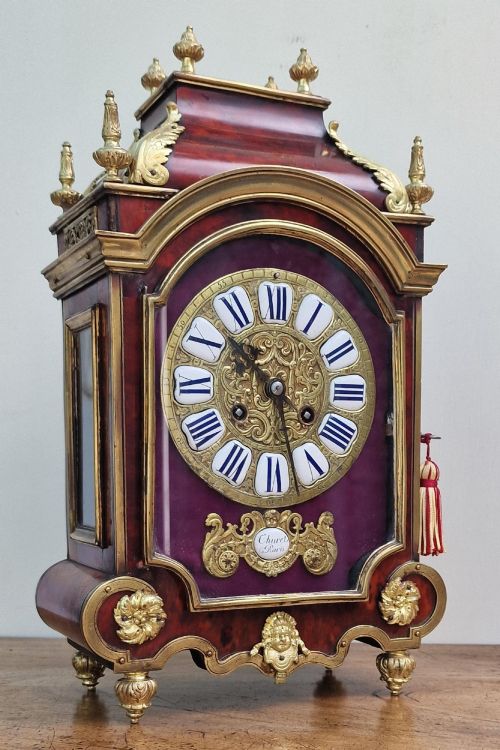
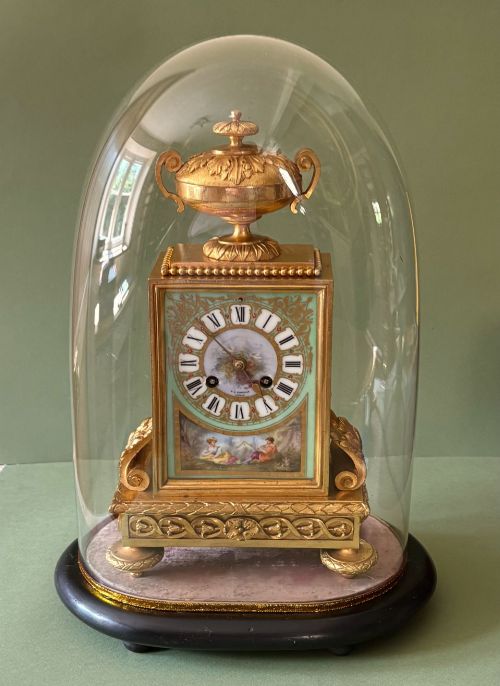
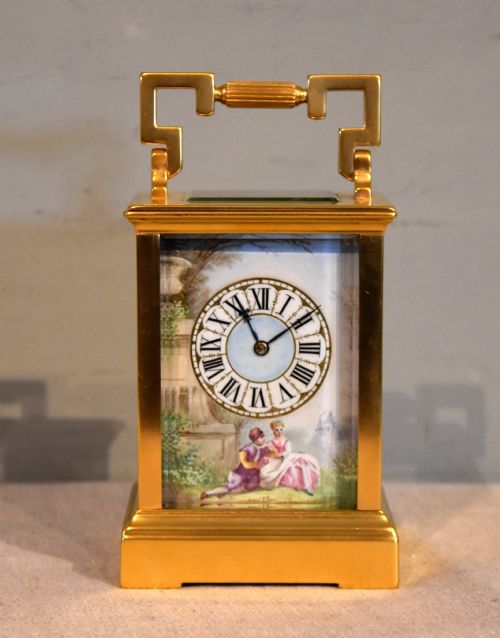
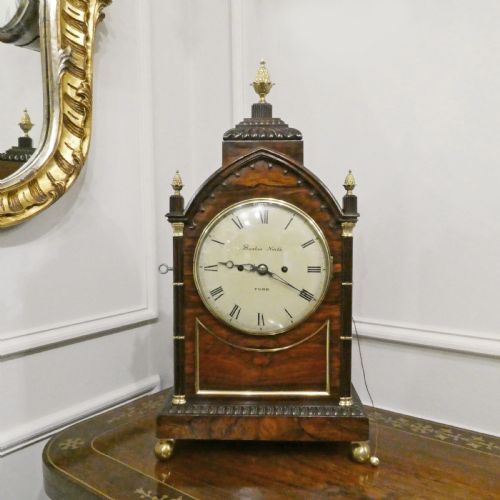
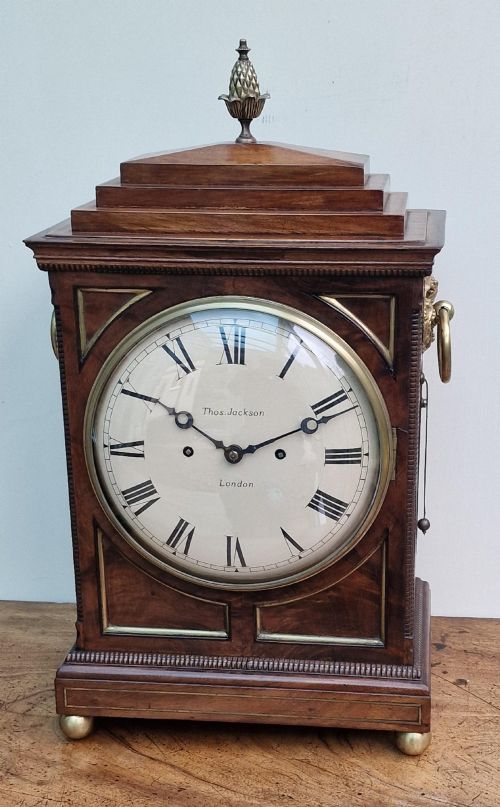
When browsing an antique clock mount selection, buyers encounter cast metal ornaments, decorative bezels, and applied architectural feet designed to adorn or complete a timepiece. These elements range from individual bronze finials and floral brass castings to comprehensive ormolu decorative programs adorning French and English clock cases.
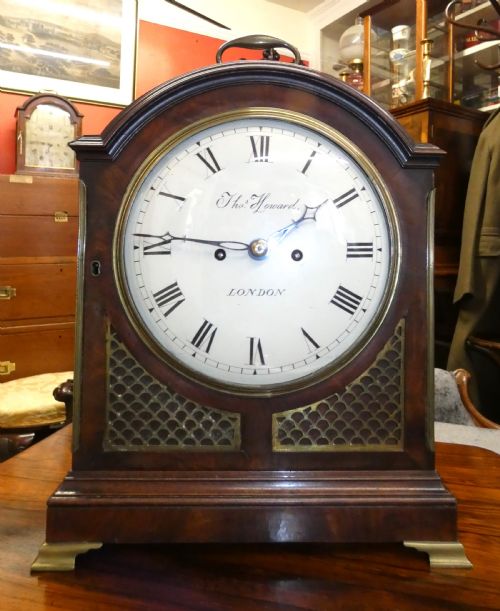
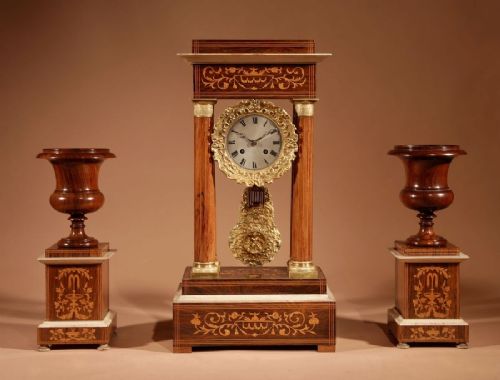
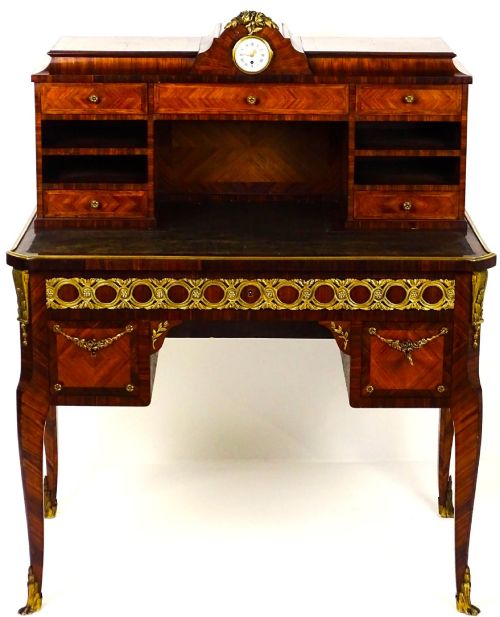
Many items survive as components detached from their original cases, whilst others remain integrated into mantel clock garnitures and bracket timepieces. The selection reflects both standalone decorative hardware and complete clock assemblies where metal mounts provide structural emphasis and stylistic contrast.
Materials and construction methods
Makers utilised brass, gilt bronze, and ormolu for mounts, applying mercury gilding or lacquer to achieve a durable, lustrous surface finish. These metals were shaped through lost-wax casting or sand casting, capturing intricate foliage, putti, and scrollwork before receiving hand-chased surface detailing.
Woodwork foundations combine dense hardwoods such as mahogany, rosewood, and ebonised timber with exotic veneers like tortoiseshell and kingwood. Metal mounts were pinned, screwed, or pegged directly into these timber and marble housings, securing decorative elements to the primary case structure.
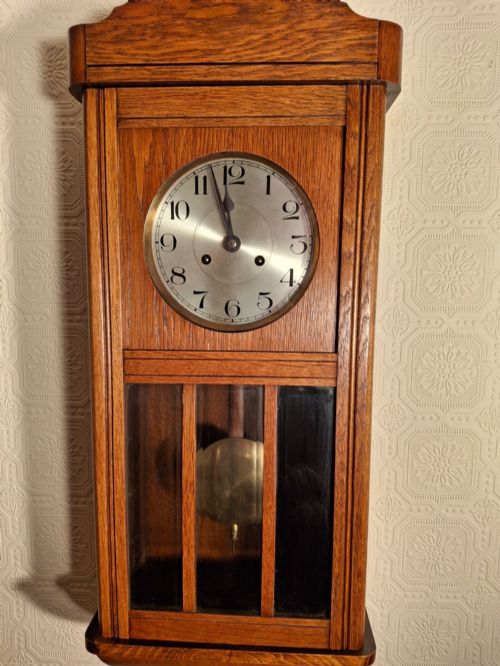
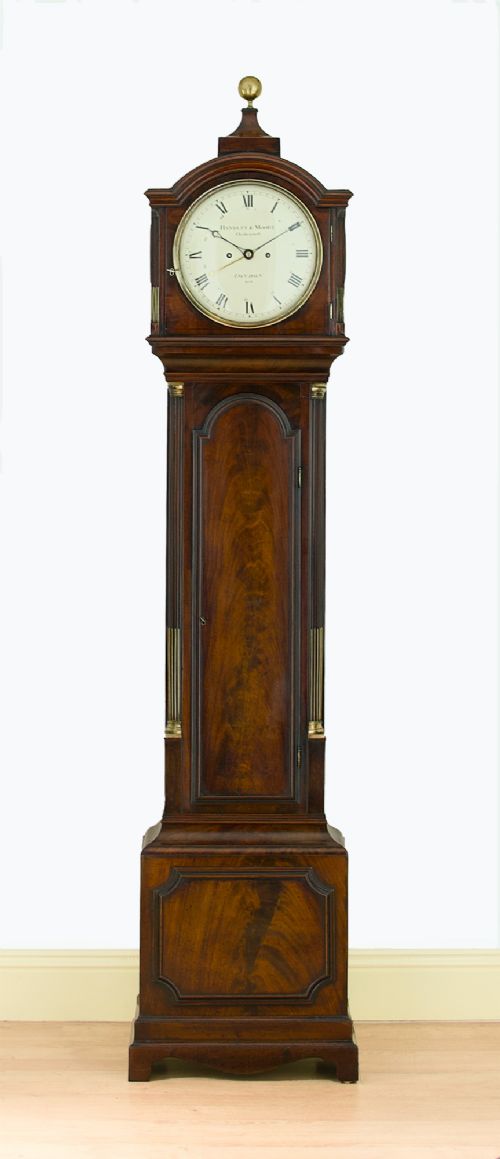
Listings feature mahogany, walnut, and ebonised wood housings embellished with gilt bronze mounts.
Distinctions in craftsmanship
The integration between the mount and the case substrate reveals the maker's precision. Finer examples sit flush against marble or timber housings with bespoke fastening, whereas lesser pieces rely on generic mass-produced fittings that disregard the underlying contours of the clock case.
Paul Sormani·Handley & Moore·Desbois & Wheeler·Winterhalder & Hofmeier·Lenzkirch
The Antique Clock Mount Glossary
- Ormolu
- Finely ground high-carat gold applied to a bronze base using a mercury amalgamation technique. This historic process yields a warm, durable golden lustre distinct from modern electroplating.
- Boulle
- A marquetry technique employing tortoiseshell and brass inlaid in contrasting patterns. Named after the royal cabinetmaker André-Charles Boulle, it defines opulent French clock cases.
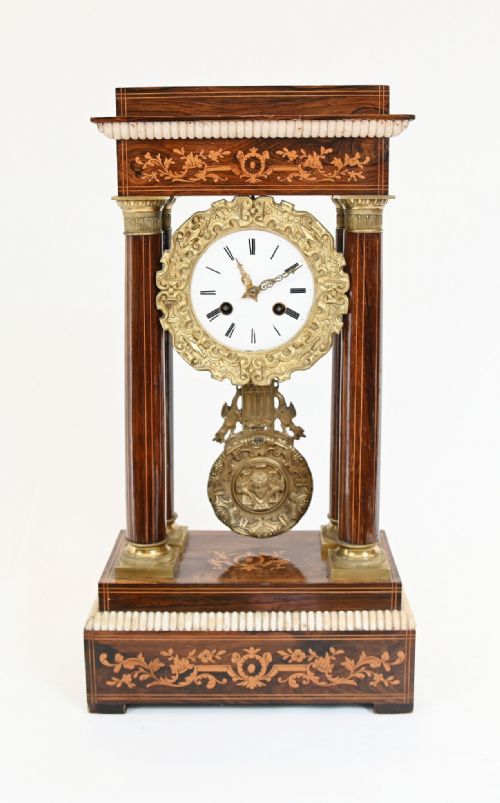
- Portico clock
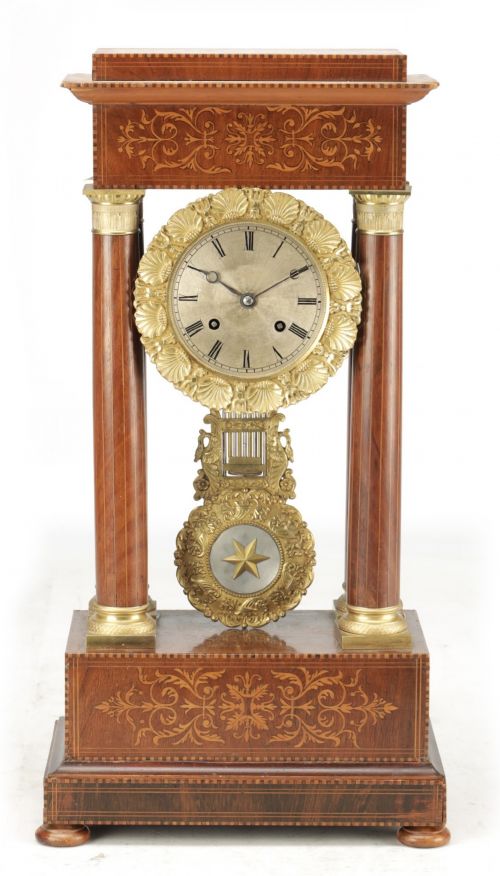
- A monumental clock design styled like a classical temple with supporting columns. These architectural pieces often feature prominent pendulum mounts and decorative bezels.
- Garniture
- A set comprising a central clock accompanied by matching side ornaments or vases. Such suites share unified metal mounts and decorative motifs.
- Finial
- A decorative ornament fixed to the topmost point of a clock case. These elements are frequently cast in the form of urns, flame motifs, or figural mounts.
Antique Clock Mount: Frequently Asked Questions
What is an ormolu clock mount?
An ormolu clock mount is a decorative cast bronze element finished with gold leaf or mercury gilding. These pieces were applied to the exterior of wooden and marble clock cases to enhance their visual richness.
Craftsmen created these ornaments using detailed moulds before hand-chasing the metal surface to sharpen the design. They appear as corner brackets, feet, bezels, and figurative sculptures on clocks from the eighteenth and nineteenth centuries.
How do I care for antique metal mounts?
Maintenance requires gentle dusting with a soft, dry brush to prevent the accumulation of dirt within intricate crevices. Avoid chemical cleaners, abrasive cloths, and polishes that strip historical patination and gilding.
Preserving the original surface depends on minimal intervention and stable indoor humidity. Excessive rubbing wears away thin layers of mercury gilding, exposing the base bronze underneath.
Are clock mounts period specific?
Metal mounts often reflect the prevailing design movement of their manufacturing era. Georgian mounts lean towards restrained classical symmetry, whilst Victorian and Second Empire examples favour ornate French Rococo Revival exuberance.
Comparing the casting style, fastener types, and secondary materials helps determine the era. Stylistic shifts in foliage, symmetry, and figural proportions provide reliable chronological markers.
Can I mount an antique clock ornament on a wall?
Certain items function as wall brackets or decorative architectural shelf mounts designed to support a timepiece from beneath. These structural pieces feature flat rear surfaces and robust fixing points built to bear weight.
Distinguishing structural shelf brackets from case-mounted ornaments prevents improper installation. Structural wall mounts incorporate heavy-duty backplates engineered for vertical wall attachment.