





Putto Wall Bracket
A putto wall bracket holds a small shelf or light in carved wood, gilt, plaster, or porcelain, bringing dramatic sculptural presence to a room.
Putto Wall Bracket
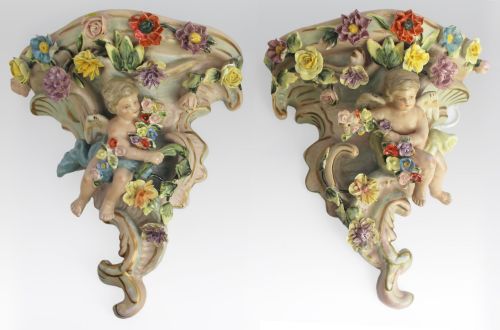
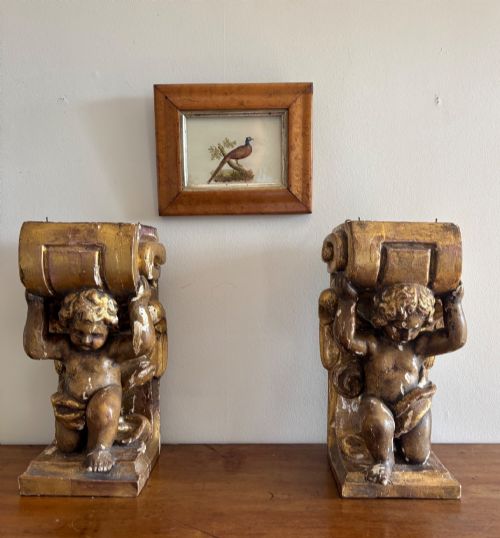
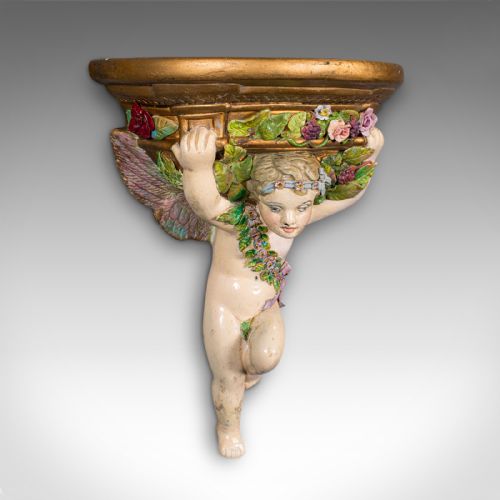
A putto wall bracket combines utility with figurative sculpture, featuring carved or moulded cherubs supporting a small shelf or sconce. When you search for a putto wall bracket, you will encounter pieces designed to hold clocks, mirrors, small vessels, or lighting. The selection spans single brackets and symmetrical pairs intended to flank a central architectural feature.
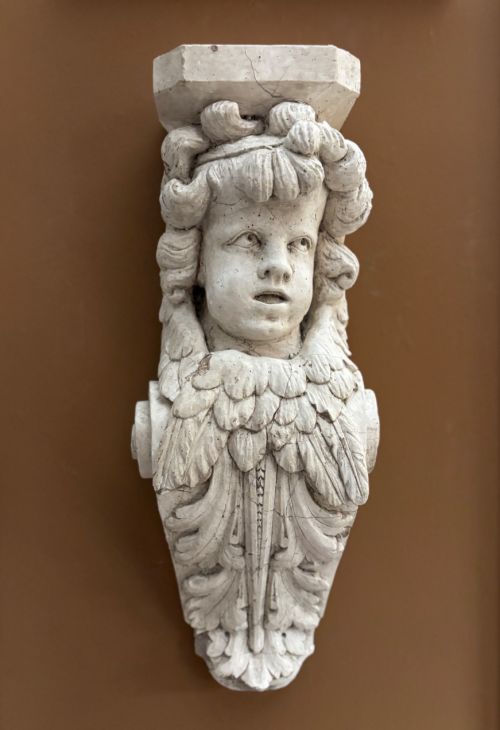
Most examples found here date from the nineteenth century into the early twentieth century, reflecting revivals of earlier European styles. You are most likely to meet pieces executed in carved wood, giltwood, plaster, gesso, or porcelain, drawing on Baroque, Rococo, and Victorian neoclassical idioms. These sculptural supports range from small decorative clock mounts to substantial gilt wood shelves.
Originating in domestic interiors to display valued objects or provide auxiliary lighting, these pieces function equally well in modern settings. The forms vary from Italian and French revival designs to English plaster mounts, each utilising the winged child figure as a load-bearing or decorative console. Selecting the right piece depends on whether you require a pair for balance or a single bracket for a focal point.
Materials and construction methods
Carved wood and giltwood examples rely on skilled hand-carving, often finished with gold leaf applied over gesso to create a reflective surface. Artisans shaped timber such as pine or hardwood to form the complex contours of the cherub's body and the supporting bracket beneath.
Plaster and composition pieces utilise moulds to cast the intricate details of the putto figure before hand-finishing and gilding or painting. Porcelain versions, such as those in the Meissen or Majolica styles, undergo high-temperature firing and hand-glazing to achieve their characteristic glossy finish.
Winged cherubs occasionally double as stern architectural load-bearers, looking remarkably put-upon by their small wooden shelves.
Quality factors in sculptural brackets
The integrity of the surface finish, whether original gold leaf, gesso, or glaze, greatly influences the overall character. Finer pieces retain crisp gilding and smooth transitions between the structural shelf and the figurative support, showing careful attention to proportion.
Meissen·Minton
The Putto Wall Bracket Glossary
- Putto
- A plump, often winged child figure derived from classical art and frequently seen in Renaissance and revival decorative schemes. This figure forms the central support of the bracket.
- Giltwood
- Timber treated with a thin layer of gold leaf or gold paint applied over a prepared gesso surface. This material is common in nineteenth-century decorative brackets.
- Gesso
- A plaster-like mixture used as a base for paint or gold leaf on wood surfaces. It provides a smooth ground for intricate detailing.
- Corbel
- A structural piece of stone, wood, or metal projecting from a wall to carry a weight. In this context, it functions as an ornamental wall bracket.
- Majolica
- A type of earthenware glazed with tin enamel and painted with colourful designs. This technique appears in nineteenth-century figural wall pieces.
Putto Wall Bracket: Frequently Asked Questions
What did they hold originally?
These brackets originally supported small decorative objects such as clocks, porcelain figurines, vases, or candlesticks. They were placed in parlours and halls to display items at eye level.
Over time, many were adapted to hold electric wall lights or mirror frames. Their sturdy construction allowed them to bear moderate weight safely.
How do I hang a heavy wooden bracket safely?
Wall brackets require secure fixing into wall studs or masonry using appropriate wall anchors. The weight of carved wood and giltwood pieces demands robust hardware to prevent pulling away from the wall.
Consulting a professional installer ensures the bracket supports the intended weight without damaging historic plaster. Balance the load placed upon the shelf evenly.
How do I distinguish plaster from carved wood?
Carved wood displays natural grain under magnification and tool marks from hand chiselling. Plaster and composition materials feel cooler to the touch and show no wood grain.
Tapping the surface gently can also reveal the difference, as wood produces a dull thud while plaster sounds harder and more resonant.
Are pairs harder to find than single brackets?
Symmetrical pairs of brackets are scarcer because one half of a matched set often became separated or damaged over the centuries. Surviving pairs were originally designed to flank a mirror, doorway, or mantelpiece.
Single brackets remain more common as standalone decorative accents. Finding a matching pair usually commands greater interest from collectors.