
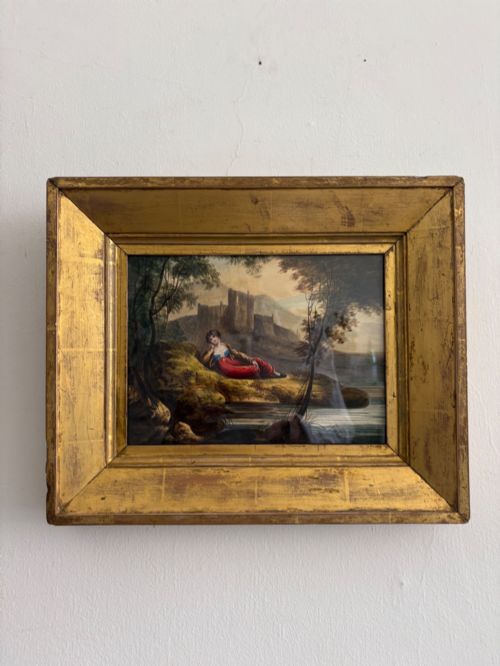


![Pen and Ink Sketch - Female Nudes by William Edward Frost [1810-1877]](https://www.sellingantiques.co.uk/photosnew/dealer_kendallhouse/dealer_kendallhouse_full_1758970795762-8493507346.jpg)
Antique Classical Watercolour
These antique classical watercolour works bring ancient ruins, mythological scenes and idealised landscapes into domestic interiors.
Antique Classical Watercolour
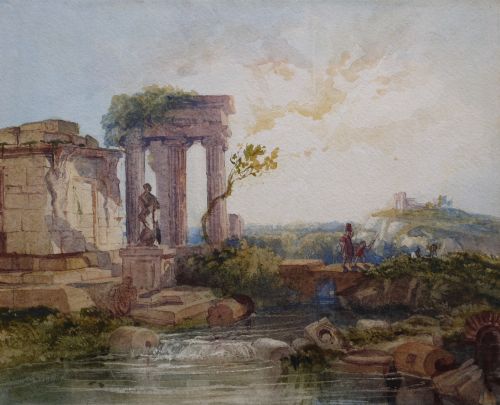
An antique classical watercolour focuses on subjects drawn from antiquity, including Roman ruins, architectural studies from Grand Tours, and mythological figures rendered in pigment and ink on paper. Buyers seeking this aesthetic encounter architectural views of sites such as the Forum of Nerva and the House of the Vettii alongside figures draped in classical attire.
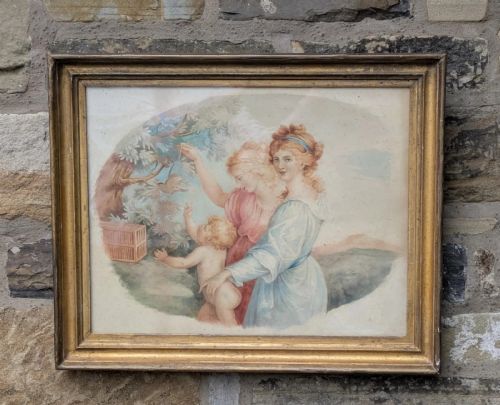
The material record spans the eighteenth and nineteenth centuries, moving from Regency and Georgian works through Victorian interpretations and the Grand Tour tradition. Many examples arrive framed in gilt wood under glass, preserving the delicate paper supports and water-soluble pigments from atmospheric damage.
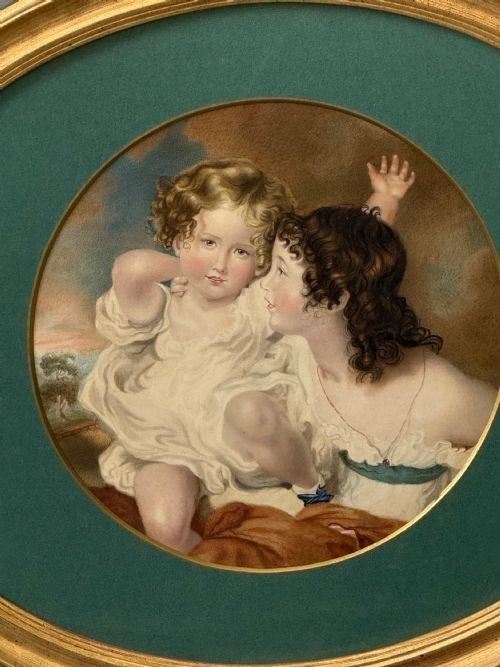
Framed artwork in this category ranges from intimate miniature paintings and ink sketches to large architectural drawings and pastoral scenes. These pieces frequently reflect the scholarly interest in classical antiquity that characterised European travel and education during the nineteenth century.
Materials and execution
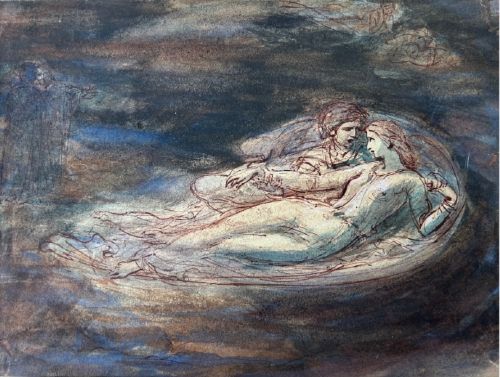
Artists built these compositions upon paper supports using water-soluble pigments, often combining transparent washes of watercolour with precise pen and ink lines for architectural detail. Monochrome wash and sepia ink appear alongside brighter palettes in works depicting Italian ruins and classical landscapes.
Protective framing typically involves glass set within wooden frames, frequently finished with gilt to complement the academic or romantic tone of the artwork. This combination of paper, pigment, ink, and gilt wood defines the physical survival of these pieces across the centuries.
Common materials include handmade paper, iron gall ink, watercolour pigments, and gilt wood frames dating from the nineteenth century.
Factors separating pieces in the range
Quality rests upon the draughtsmanship of the architectural elements and the fluency of the brushwork in the figures. Works by named artists demonstrate a surety of line and perspective that elevates them above anonymous student copies or mass-market souvenirs.
The survival of the pigment and the condition of the paper surface also determine distinction. Strong contrast in ink and wash, minimal foxing, and original period framing contribute to a more resolved visual presence.
Richard Principal Leitch·Charles Bellay·Albin R Burt·Martinetti·Franz Knebel·William Edward Frost·Augustus Jules Bouvier·Pio Panfili·Jabez Bligh·Arturo Orselli·William Crouch
The Antique Classical Watercolour Glossary
- Grand Tour
- An extended journey through Europe, principally Italy, undertaken by wealthy young men to study classical art and architecture. Watercolours produced during these travels often recorded specific ancient monuments and archaeological sites.
- Gilt Wood
- Wood treated with gold leaf or metallic paint to create a reflective surface on the frame. This finish was standard for displaying significant works during the nineteenth century.
- Ink and Wash
- A drawing technique combining brown or black ink lines with diluted pigment applied with a brush to create shadow and depth. It provides the structural clarity seen in architectural sketches.
- Monochrome Wash
- A painting method utilising a single colour of pigment, often sepia or grey, applied in varying dilutions. This technique mimics the appearance of classical sculpture and ancient relief carvings.
- Pre-Raphaelite
- An artistic movement associated with detailed observation and intense colour, influencing certain nineteenth-century depictions of literary and mythological subjects on paper.
Antique Classical Watercolour: Frequently Asked Questions
What is a Grand Tour watercolour?
A Grand Tour watercolour is a topographical or architectural view purchased by travellers visiting ancient sites in Italy and Greece during the eighteenth and nineteenth centuries.
These paintings served as visual records of classical monuments like the Colosseum or the Roman Campagna before the era of photography.
How should I frame and hang antique watercolours?
Antique watercolours require protection from direct sunlight to prevent the fading of delicate pigments and the yellowing of old paper supports. Acid-free mounts and framing under glass help maintain the stability of works executed on paper.
Display them away from damp environments and fluctuating heat sources to preserve both the painting and its period frame.
What distinguishes architectural drawings from landscape watercolours?
Architectural drawings focus on precise measurements and structural details of buildings, ancient ruins, and monuments. They often utilise ink lines alongside washes to emphasise perspective and stone texture.
Landscape watercolours prioritise atmospheric effects, foliage, and natural topography, even when classical ruins appear within the composition.
How do I identify a Regency period watercolour?
Regency watercolours often feature restrained palettes, precise ink outlines, and subjects influenced by archaeological discoveries of the early nineteenth century. The paper stock and handwriting on the reverse, where present, help anchor the date.
Stylistic links to Neoclassical ideals and picturesque composition further define works from this era.