




Romantic Period Painting
Romantic period painting captures expressive human emotion and dramatic landscapes through delicate watercolour or rich oil on canvas.
Romantic Period Painting
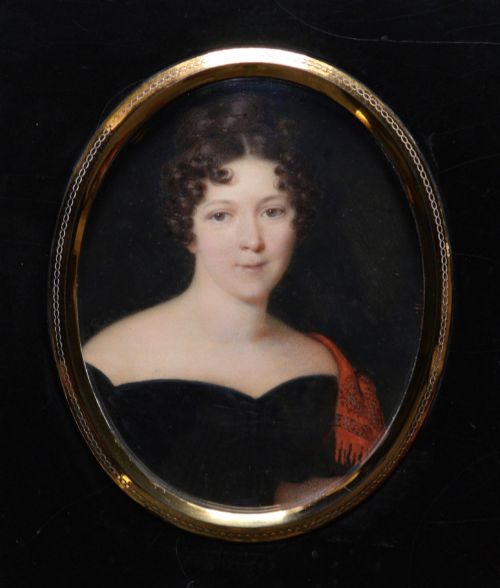
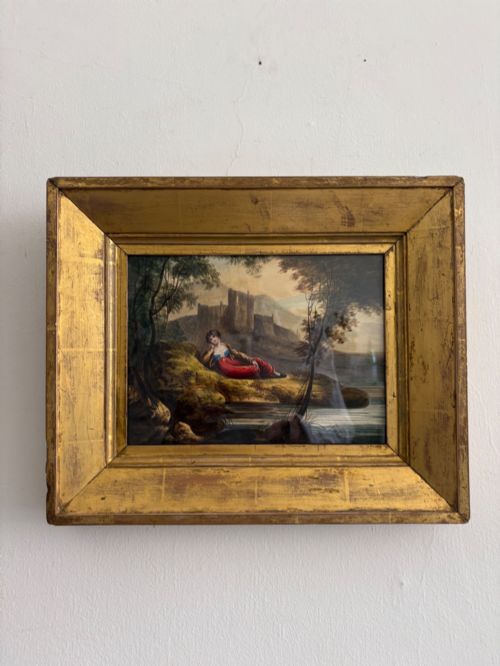
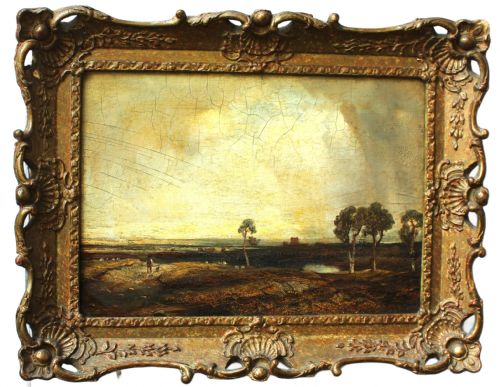
A romantic period painting reflects the artistic focus on emotion, nature, and historical portraiture prevalent during the nineteenth century. Buyers searching this phrase encounter works ranging from intimate portrait miniatures to expansive coastal landscapes.
The selections available here showcase diverse regional schools, including British and French works executed in oil or watercolour. These pieces frequently capture figures in contemplative poses or dramatic natural settings.
Portraits of individuals with distinct attire, such as feathered hats, sit alongside pastoral scenes and coastal views. Each object carries the characteristic sensibility of nineteenth-century artistic expression.
Materials and technique
Artists of this era utilised canvas, paper, and wood panels as the primary supports for their compositions. Oils and watercolours were applied to build depth, texture, and tonal variation across the surface.
Many works retain their period framing, utilising giltwood and gesso to complement the visual impact of the artwork. Glass is frequently employed to protect delicate works executed on paper.
Assessing quality
The strength of the composition and the fluidity of brushwork distinguish superior examples within this category. Mastery in rendering light and atmospheric conditions elevates a canvas or watercolour above standard workshop output.
The integrity of the original support material and the preservation of the pigment contribute significantly to the standing of a piece. Original gilt framing that matches the era of the painting enhances the overall cohesion of the object.
Charles Zacharie Landelle·James H Hulse·John Constable·Sir Thomas Lawrence
The Romantic Period Painting Glossary
- Watercolour painting
- A method where paints are made of pigments suspended in a water-soluble vehicle, typically executed on paper supports.
- Portrait miniature
- A small, highly detailed painting, often a portrait, created on materials such as paper or vellum during the nineteenth century.
- Giltwood
- Wood that has been treated with gold leaf or a gold-coloured metallic finish, commonly found on period frames.
- Gesso
- A plaster-like mixture applied to wood frames to prepare a smooth surface for gilding.
Romantic Period Painting: Frequently Asked Questions
What defines a romantic period painting?
These works focus on emotional expression, dramatic landscapes, and human figures, originating primarily from the nineteenth century. They encompass diverse subjects from coastal views to intimate portraits.
Artists utilised oil and watercolour to achieve atmospheric effects, often housed within original giltwood frames.
How should I display watercolour paintings?
Watercolours require protection from direct sunlight to prevent the fading of delicate pigments on paper. Framing behind glass helps shield the surface from atmospheric pollutants.
Maintaining stable humidity levels in the room preserves both the paper support and the associated gilt frame.
What is a portrait miniature?
A portrait miniature is a small-scale painting that captures the likeness of an individual with fine detail. These works were often created on paper during the nineteenth century.
Their compact size allowed for personal display or portable keepsake usage.
How are these paintings dated?
Dating relies on stylistic evidence, artist signatures, framing techniques, and material composition typical of the nineteenth century. Comparative analysis with documented works by schools or named artists provides further context.
Inscriptions on the reverse or accompanying documentation occasionally offer precise creation years.