


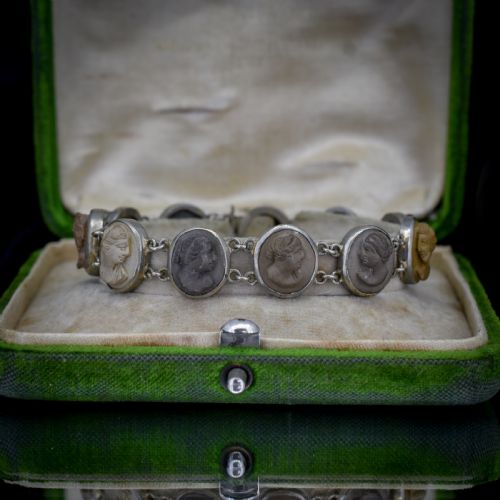


Antique Classical Profile
An antique classical profile brings the refined features of ancient deities and emperors into personal ornaments and cabinet displays.
Antique Classical Profile
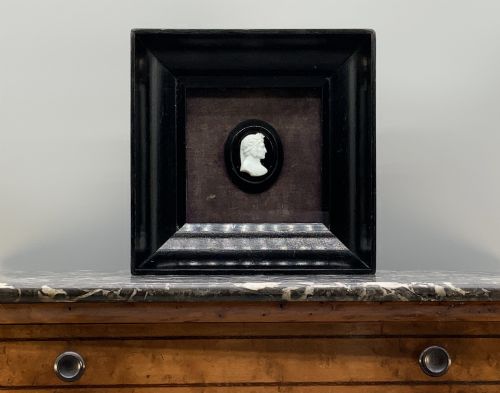
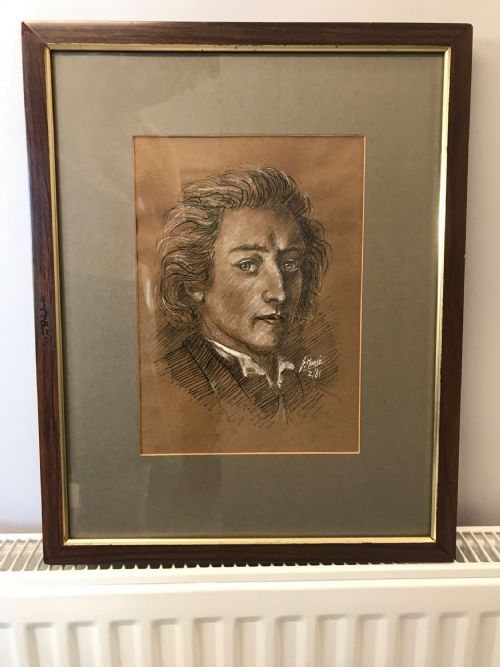
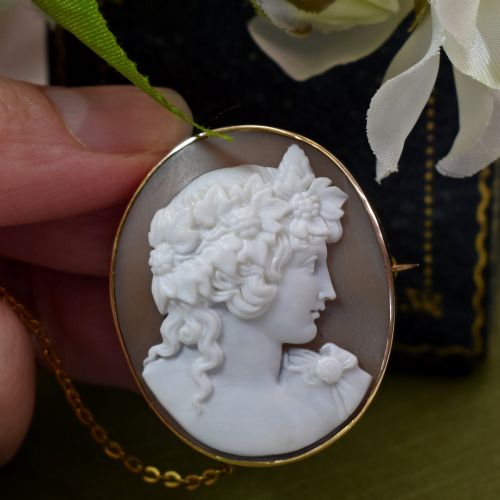
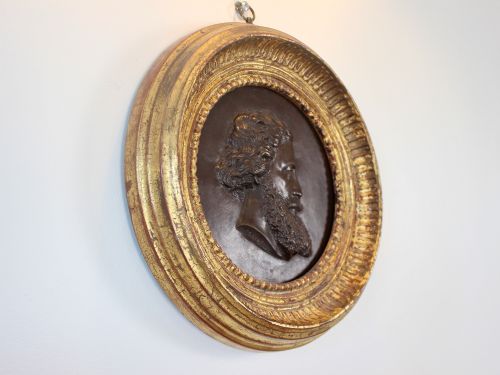
An antique classical profile captures the sculpted likeness of a historical or mythological figure viewed from the side, a motif drawn directly from antiquity. Buyers seeking these pieces encounter carved shell brooches, hardstone rings, and marble wall plaques spanning the eighteenth and nineteenth centuries. The Grand Tour influence dominates the selection, reflecting the souvenirs collected by travellers in Italy.
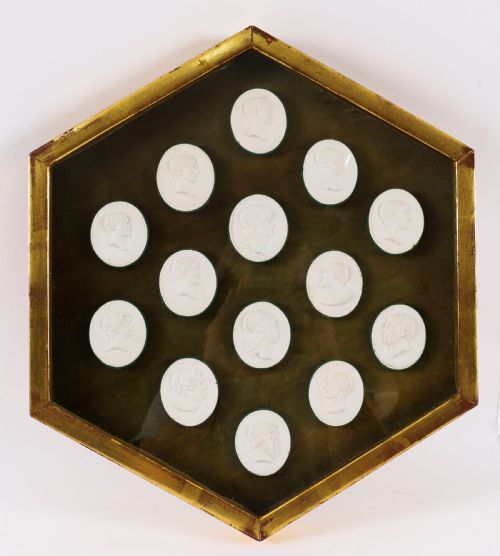
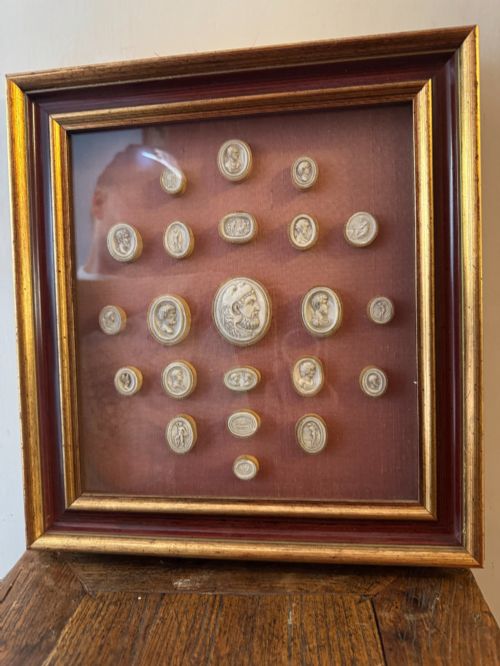
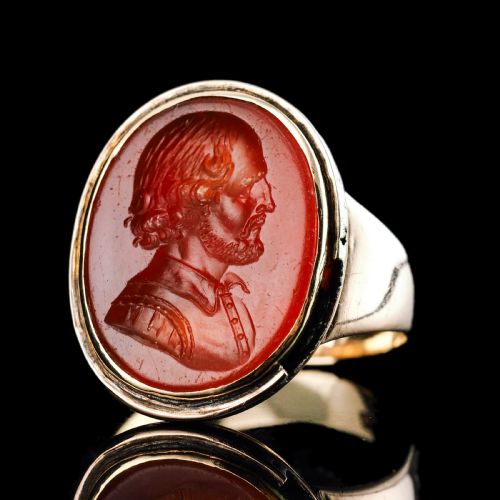
Smaller personal items include gold rings and earrings set with intaglios or cameos depicting classical subjects like Zeus, Flora, and Roman emperors. Larger examples take the form of framed plaster intaglio collections and carved marble or bronze relief panels. These objects merge neoclassical style with portraiture across various materials.
Materials and techniques
Carving and engraving define the construction of these pieces, utilising natural media such as shell, lava, hardstone, and marble. Shell and lava cameos rely on layering to contrast the profile figure against a darker background. Intaglios are reverse-carved into stones like carnelian and agate to function as signet seals.
Mounts and settings utilise precious metals including nine-carat and eighteen-carat gold, silver, and pinchbeck. Heavier decorative elements employ cast bronze, gypsum plaster, and carved coquilla nut. Artisans combined precision lapidary work with traditional metal-mounting techniques.
Listings feature 19th Century, Victorian, and Georgian periods alongside materials like shell, lava, marble, and 18ct gold.
Judging quality in profile carvings
The integration of the portrait with its mount indicates the workshop standard, as well-secured bezels and original clasps demonstrate coherent craftsmanship. Signed pieces by recorded makers or workshops carry distinct attribution value. The clarity of the subject matter ensures the profile remains legible from a distance.
Pietro Bracci·Thorvalsen Workshop·MAINFROY·John Miers
The Antique Classical Profile Glossary
- Cameo
- A method of carving where a relief image projects upward from a background of a different colour or material. Layered shells and hardstones are typical mediums.
- Intaglio
- A design engraved into the surface of a gemstone or glass so that an impression can be pressed into wax. These served practical purposes as seals.
- Grand Tour
- A cultural journey through Europe, particularly Italy, undertaken by young upper-class men during the eighteenth and nineteenth centuries to study classical art.
- Lava
- A lightweight, porous volcanic rock used primarily during the Victorian period for carved portrait brooches and bracelets. It ranges in colour from grey to terracotta.
- Hardstone
- A semi-precious gemstone such as carnelian, agate, or jasper used for detailed engraving and glyptic art.
Antique Classical Profile: Frequently Asked Questions
What is an antique classical profile?
An antique classical profile is a sculpted or engraved side-view portrait inspired by ancient Greek and Roman art. These pieces depict gods, emperors, and historical figures on jewellery and decorative objects.
They reflect the neoclassical revival periods of the eighteenth and nineteenth centuries, particularly items brought back from European travels.
How were intaglios and cameos worn?
Intaglios were frequently set into rings and fob seals designed to stamp wax for sealing correspondence. Cameos appeared primarily as brooches, pendants, and bracelets mounted in gold or silver.
These ornaments allowed wearers to display their appreciation for classical literature and antiquity.
What materials are most common?
Shell and carnelian are the most frequent materials found in rings and brooches. Lava, marble, and plaster appear often in larger wall plaques and framed Grand Tour sets.
Gold and silver mount these materials, ranging from nine-carat yellow gold to pinchbeck.
How do I date a classical profile piece?
Dating relies on the metal mount styles, fastening mechanisms, and the carving characteristics of the period. Georgian pieces often feature closed-back gold settings, while Victorian examples introduce cast silver and lava.
Subject matter alone is insufficient for dating, as classical themes recur across centuries.