


White Profile Cameo
White profile cameo pieces are classical portrait plaques and reliefs in carved ivory, plaster, glass paste, marble, and wax, prized for bringing neoclassical elegance to any wall.
White Profile Cameo
When you search for white profile cameo items, you encounter framed wall art, portrait miniatures, and decorative plaques stemming from the eighteenth and nineteenth centuries. These works draw heavily on neoclassical styles and the Grand Tour tradition, depicting classical figures, Roman emperors, and literary icons like Virgil, Dante, and Lord Byron in crisp relief.
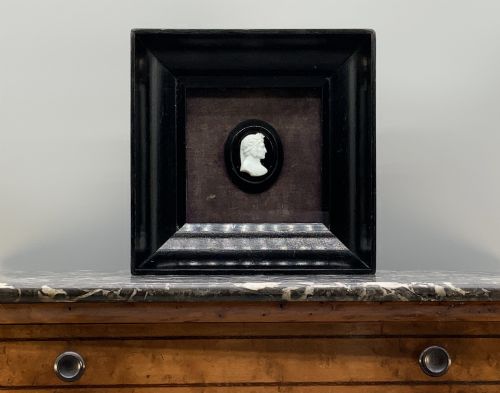
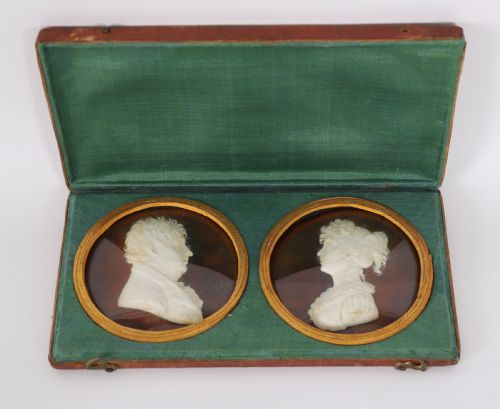
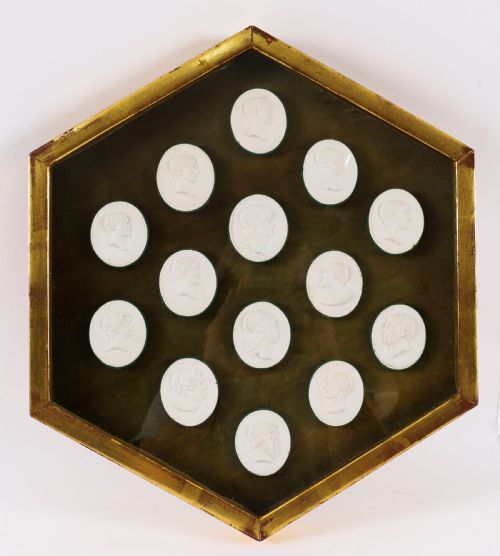
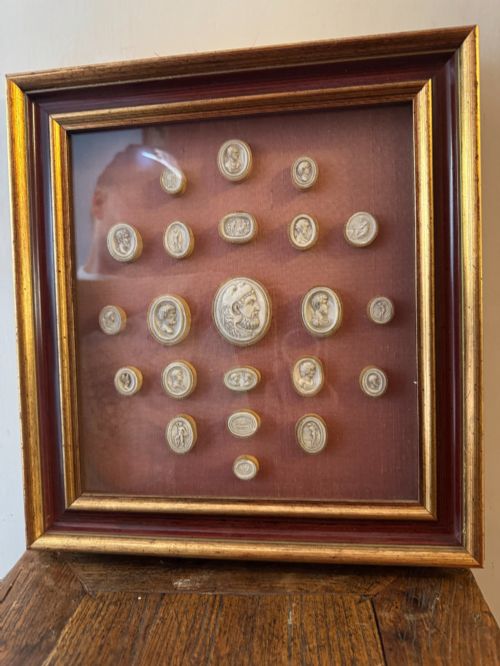
The most frequent examples on this page are Grand Tour souvenirs and portrait reliefs housed in wood frames, sometimes backed in velvet or trimmed with gold leaf and brass. You will find single portrait plaques, matched pairs, and larger sets of twelve or fourteen intaglios.
Originating largely from Italian workshops and British studios inspired by classical antiquity, these objects serve primarily as framed wall art and decorative plaques. Their monochrome white profiles against contrasting dark backgrounds offer a direct link to ancient carved gems and sculptural traditions.
How they were made
Many of these reliefs are mounted within timber frames, occasionally incorporating brass elements, velvet backing, and delicate gold leaf highlights to enhance the display. The juxtaposition of the bright white portrait against a dark background is achieved through skilled moulding and careful placement on marble or fabric.
Dante and Virgil stare eternally across a marble room from their nineteenth-century frames.
What varies in quality
The distinction between ordinary and superior pieces rests on the crispness of the carving or moulding and the fidelity of the portrait. Master carvers and skilled plaster casters capture subtle musculature, expression, and drapery folds that lesser hands render flat and lifeless.
Original period framing and mounting elevate a piece significantly. Intact groupings, such as matched pairs or complete sets housed in their contemporary timber and brass-mounted frames, command greater appreciation than isolated or later-framed plaques.
Pietro Bracci·Thorvalsen Workshop·Wedgwood
The White Profile Cameo Glossary
- Cameo
- A method of carving an object such that a relief image stands out distinctly from a contrasting background. In these pieces, the white profile forms the raised element.
- Intaglio
- A design engraved into material so that the impression sinks below the surface, functioning inversely to a cameo. Several listings comprise plaster and gypsum examples of these recessed intaglios.
- Grand Tour
- A traditional trip of Europe undertaken by upper-class European young men of sufficient means during the eighteenth and nineteenth centuries. Travellers collected classical portrait plaques and relief panels as souvenirs of their journeys.
- Neoclassical
- A Western cultural movement in the decorative arts that drew inspiration from the classical art and culture of ancient Greece and Rome. This style dictates the subject matter and profile presentation of these portrait plaques.
- Glass Paste
- A compound of powdered glass and fluxes melted into moulds to replicate carved gemstones and classical cameos. Georgian makers utilised this technique to produce crisp white portrait pastes.
White Profile Cameo: Frequently Asked Questions
What periods do white profile cameo pieces date from?
The pieces available here primarily date from the late eighteenth century through the nineteenth century, with occasional mid-twentieth-century productions.
Most items reflect the neoclassical taste of the Grand Tour era between eighteen hundred and eighteen fifty.
How were these portrait plaques originally displayed?
Grand Tour reliefs and intaglios were typically framed as wall art for display in studies, libraries, and drawing rooms.
Collectors often mounted pairs or larger sets together in custom wooden frames lined with velvet.
What materials make up the white profiles?
The white profiles are formed from carved ivory, marble, plaster, gypsum, pressed glass paste, and wax.
Each material offers a different texture and degree of detail, from the fine grain of carved ivory to the matte finish of plaster.