


Antique Chinoiserie Jug
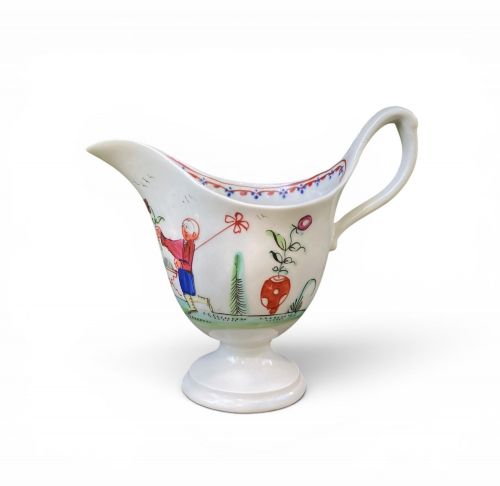
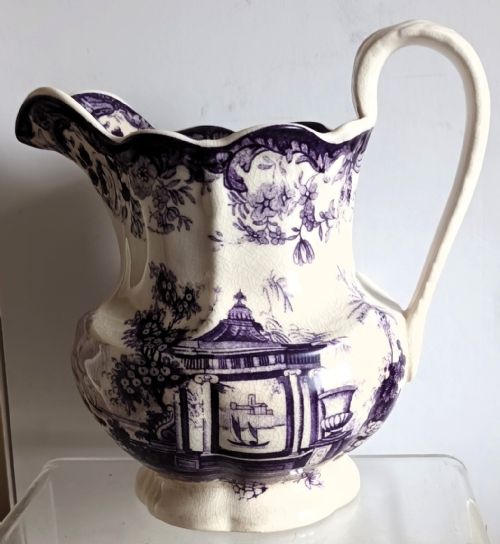
An antique chinoiserie jug brings spirited oriental scenes and rich cobalt pigments into the home, prized for centuries of imaginative ceramic design.
Antique Chinoiserie Jug
An antique chinoiserie jug is a vessel decorated with European interpretations of East Asian motifs, ranging from small milk pitchers to large basin ewers. Buyers exploring this selection encounter pieces spanning multiple centuries, from late seventeenth-century Dutch delftware to Georgian porcelain and Victorian ironstone.
The forms vary considerably depending on function and period, appearing as sparrow beak jugs, hydra shape pitchers, and complete washbasin sets. Most examples on this page reflect British production, alongside continental delftware and Staffordshire earthenware.
How they were made
Potters shaped these vessels using earthenware, ironstone, and porcelain, applying glazes and enamels to achieve smooth surfaces. Artisans frequently employed transfer printing alongside hand-painted cobalt blue and polychrome details to render oriental scenes.
Moulded elements such as grotesque handles and serpent spouts appear on ironstone bodies, while tin-glazed earthenwares rely on pigment absorption across a white ground.
Several jugs on this page feature serpentine hydra handles and grotesque spouts, proving that nineteenth-century potters loved a mythical beast as much as a floral motif.
What varies in quality
Quality rests in the crispness of the transfer or the precision of the hand-painted brushwork, which defines the clarity of the oriental figures and landscapes. The complexity of the vessel moulding, such as the sculptural handling of hydra spouts and serpent handles, dictates the maker's ambition.
The durability of the ceramic body also marks the grade, distinguishing porous earthenware and tin-glazed faience from dense ironstone and fine porcelain.
New Hall·Masons Ironstone·Baggerley and Ball
The Antique Chinoiserie Jug Glossary
- Chinoiserie
- European decorative style reflecting imaginative, whimsical interpretations of Chinese and East Asian artistic traditions. It appears frequently on ceramics across the Georgian and Victorian periods.
- Ironstone
- A heavy, durable ceramic patented in the nineteenth century to imitate Chinese porcelain. It forms the body of many large ewers and washbasin sets.
- Tin-Glazed Earthenware
- Pottery coated with a tin oxide glaze that fires to an opaque white, providing a smooth ground for cobalt blue painting. Dutch delftware relies on this technique.
- Sparrow Beak Jug
- A small eighteenth-century porcelain milk or cream jug featuring a pinched, bird-like spout. Worcester factories produced notable examples with oriental decoration.
Antique Chinoiserie Jug: Frequently Asked Questions
What were antique chinoiserie jugs used for?
These vessels served practical domestic purposes, functioning as milk jugs, creamers, water pitchers, or components of large washbasin sets for the bedroom.
Over time, many transitioned from daily utility to decorative display cabinets, valued for their colourful painted scenes and sculptural forms.
How do I tell seventeenth-century delftware from nineteenth-century ironstone?
Seventeenth-century Dutch pieces utilise tin-glazed earthenware, which presents a softer body and distinct glaze pooling beneath the base. Nineteenth-century ironstone is heavier, denser, and often bears factory stamps related to firms like Mason's.
The cobalt blue on earlier delftware tends to bleed slightly into the tin glaze, whereas Victorian transfer printing offers sharper, more uniform outlines.
Can I use an antique jug for serving liquids?
While structurally sound, antique jugs often develop microscopic hairline cracks in the glaze, known as crazing, which can absorb liquids and stain the porous ceramic body underneath. It is generally safer to keep them as display pieces rather than using them for daily dining.