





Antique Chinese Nephrite Jade
Antique Chinese nephrite jade comprises carved hardstones and vessels shaped through centuries of traditional craftsmanship.
Antique Chinese Nephrite Jade
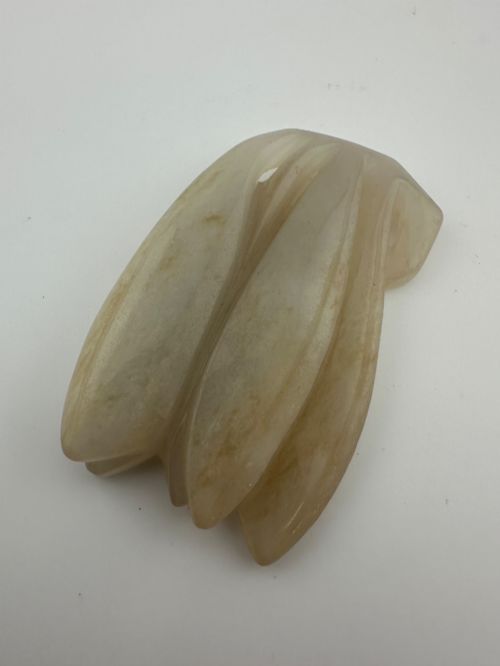
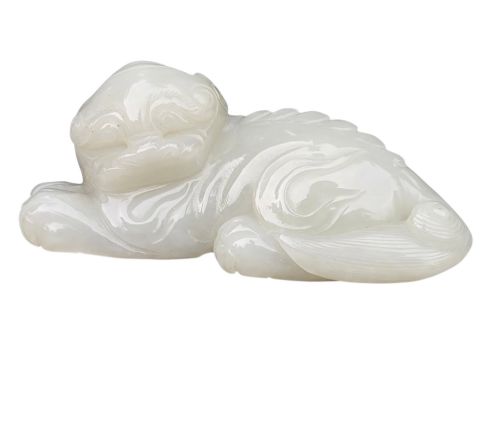
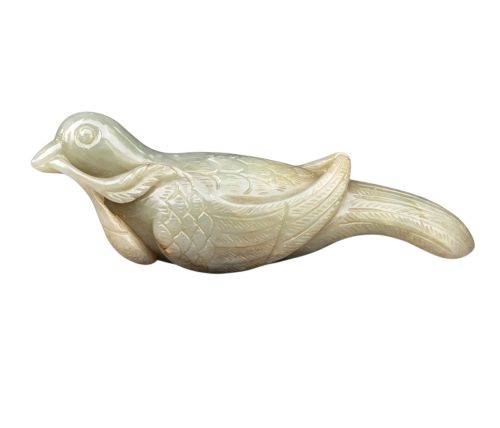
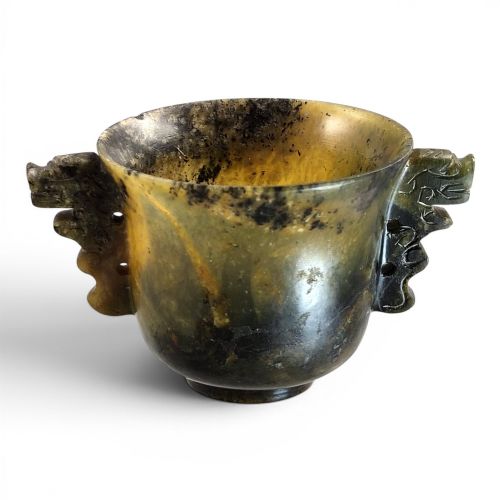
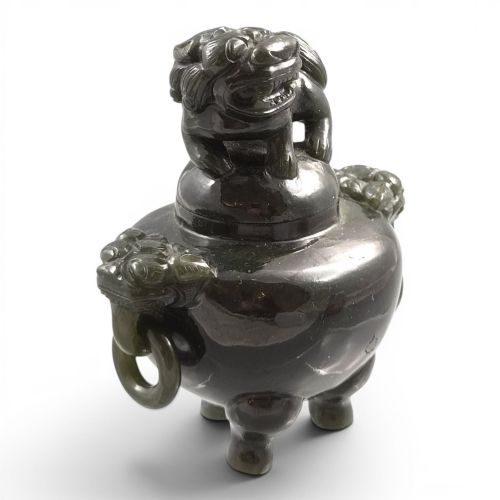
Antique Chinese nephrite jade encompasses carved objects, vessels, and ornaments produced across multiple periods, including the Qing Dynasty and the Chinese Republic Period. You are looking at items that range from small pendants and amulets to larger mountain landscape sculptures and tripod censers.
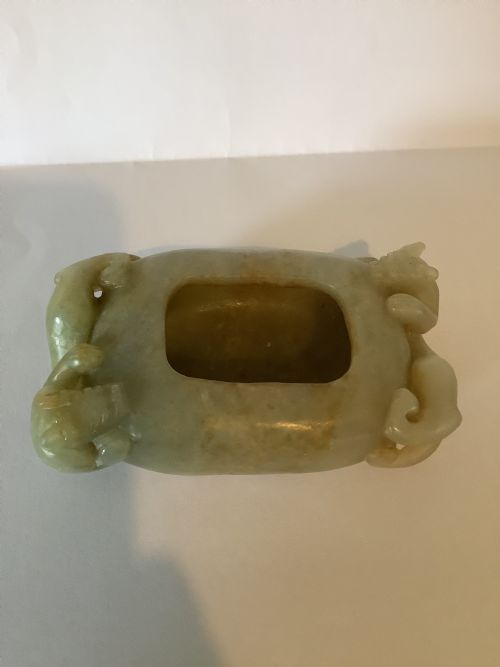
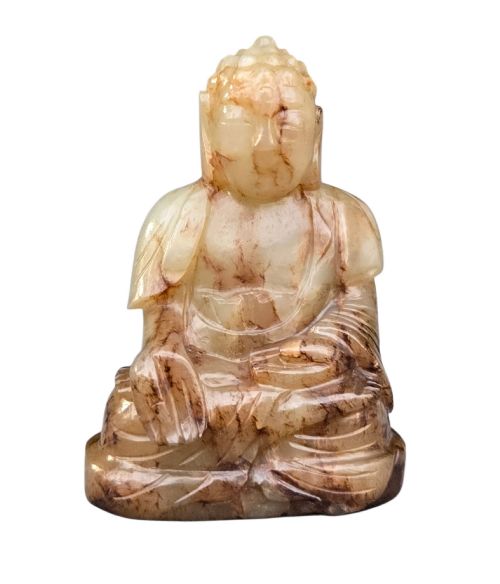
The material appears in various tones, most frequently as pale celadon, white jade, and dark green nephrite. Forms include functional scholar's items such as brush washers alongside decorative sculptures of mythical beasts, figures, and animals.
How they were made
Carvers shaped nephrite and hardstone using abrasive sand and water alongside rotating tools, exploiting the natural toughness of the mineral to achieve intricate undercut details. Artisans often incorporated the natural russet skin of the stone into the final composition of figures and vessels.
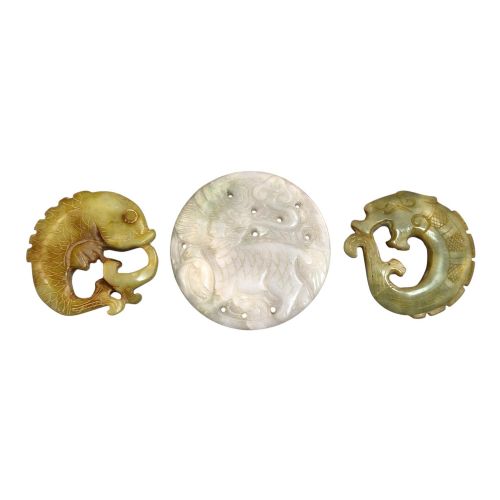
Many works incorporate traditional motifs such as the Taotie, Qilin, and dragon, whilst others sit upon fitted hardwood stands designed specifically for the sculpture.
Available forms include brush washers, bi discs, belt buckles, and mountain landscape sculptures.
What varies in quality
Quality rests upon the purity of the nephrite, the subtlety of the colour transition, and the precision of the carving. Superior examples demonstrate a fluid integration between the natural contours of the stone and the sculpted subject.
The depth of relief and the crispness of archaistic details distinguish standard decorative objects from imperial-style or finely detailed scholar's pieces.
The Antique Chinese Nephrite Jade Glossary
- Nephrite
- A dense, tough amphibole mineral utilised for traditional Chinese carvings. It differs chemically from jadeite whilst sharing similar historical appreciation.
- Celadon
- A pale green or grey-green tone found in jade and ceramics. This colour variation occurs naturally within the mineral matrix.
- Archaistic
- A style that emulates ancient ritual bronzes and jades from earlier dynasties. Makers often utilised these ancient forms during later periods.
- Bi disc
- A flat circular jade ring with a hole in the centre. These ancient forms symbolised heaven and recur in later decorative pieces.
Antique Chinese Nephrite Jade: Frequently Asked Questions
How do I identify nephrite jade?
Nephrite is a dense mineral that feels cool to the touch and resists scratching from steel tools due to its fibrous micro-structure.
Examining the surface under magnification reveals interlocking crystal fibres rather than a glassy fracture.
What is a brush washer?
A brush washer is a scholar's vessel designed to clean ink brushes during calligraphy and painting sessions.
These pieces often take organic forms such as lotus leaves or hollowed out naturalistic boulders.
How should I display jade carvings?
Jade pieces benefit from stable indoor humidity and indirect lighting that highlights the translucency of the stone.
Many sculptures sit securely on custom carved hardwood stands which should remain paired with the object.
What does archaistic mean?
Archaistic describes items made in a later period that consciously imitate the style and motifs of much older dynasties.
This aesthetic reflects a cultural reverence for antiquity among Qing dynasty scholars and collectors.
Does russet skin affect the value?
Russet skin refers to the weathered exterior layer of river-boulder jade that carvers intentionally retain.
Skillful incorporation of this coloured skin into the design demonstrates high artistic control.